



Chemoprophylaxis and Malaria Death Rates
Supporting Files
Public Domain

-
Mar 2006
File Language:
English
Details
-
Alternative Title:Emerg Infect Dis
-
Personal Author:
-
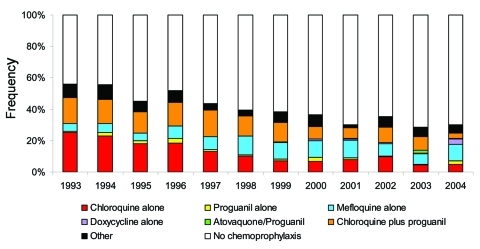
Description:To determine the effect of chemoprophylaxis on the case-fatality rate of malaria, we analyzed all cases of Plasmodium falciparum malaria in nonimmune persons reported from 1993 to 2004 in Germany. In univariate and multivariate logistic regression analysis, we determined the effect of age, sex, chemoprophylaxis, chemoprophylactic regimen, compliance for chemoprophylactic regimen, exposure prophylaxis, country of infection, and year of reporting on the outcome. Of 3,935 case-patients, 116 (3%) died of malaria. Univariate analysis showed significant associations with death for chemoprophylaxis with chloroquine plus proguanil compared to no chemoprophylaxis. The multivariate model showed that patients who had taken chemoprophylaxis were less likely to die compared to those who had not taken chemoprophylaxis, adjusted for patient age and reporting year. The study demonstrated that chemoprophylaxis significantly reduced fatality rates among nonimmune malaria patients and supports the importance of existing guidelines for malaria prevention.
-
Subjects:
-
Source:Emerg Infect Dis. 12(3):447-451.
-
Document Type:
-
Place as Subject:
-
Volume:12
-
Issue:3
-
Download URL:
-
File Type:
 [PDF - 136.99 KB]
 -
Collection(s):
-
Main Document Checksum:urn:sha256:3c789ca005d357f5e76e3c9e371f736088f36b47736460041921f9aa0d30fca0
Supporting Files


File Language:
English
 Was this page helpful?
 Found an issue?

CDC STACKS serves as an archival repository of CDC-published products including
scientific findings, journal articles, guidelines, recommendations, or other public health information authored or
co-authored by CDC or funded partners.
As a repository, CDC STACKS retains documents in their original published format to ensure public access to scientific information.
As a repository, CDC STACKS retains documents in their original published format to ensure public access to scientific information.
You May Also Like
COLLECTION
Emerging Infectious Diseases