



Increase in Multistate Foodborne Disease Outbreaks—United States, 1973–2010
Supporting Files

-
11 2015 ; 11-2015
-
Available in CDC Stacks on July 31, 2024, 12:00 AM
File Language:
English
Details
-
Alternative Title:Foodborne Pathog Dis
-
Personal Author:
-
Description:Introduction:
Changes in food production and distribution have increased opportunities for foods contaminated early in the supply chain to be distributed widely, increasing the possibility of multistate outbreaks. In recent decades, surveillance systems for foodborne disease have been improved, allowing officials to more effectively identify related cases and to trace and identify an outbreak’s source.
Materials and Methods:
We reviewed multistate foodborne disease outbreaks reported to the Centers for Disease Control and Prevention’s Foodborne Disease Outbreak Surveillance System during 1973–2010. We calculated the percentage of multistate foodborne disease outbreaks relative to all foodborne disease outbreaks and described characteristics of multistate outbreaks, including the etiologic agents and implicated foods.
Results:
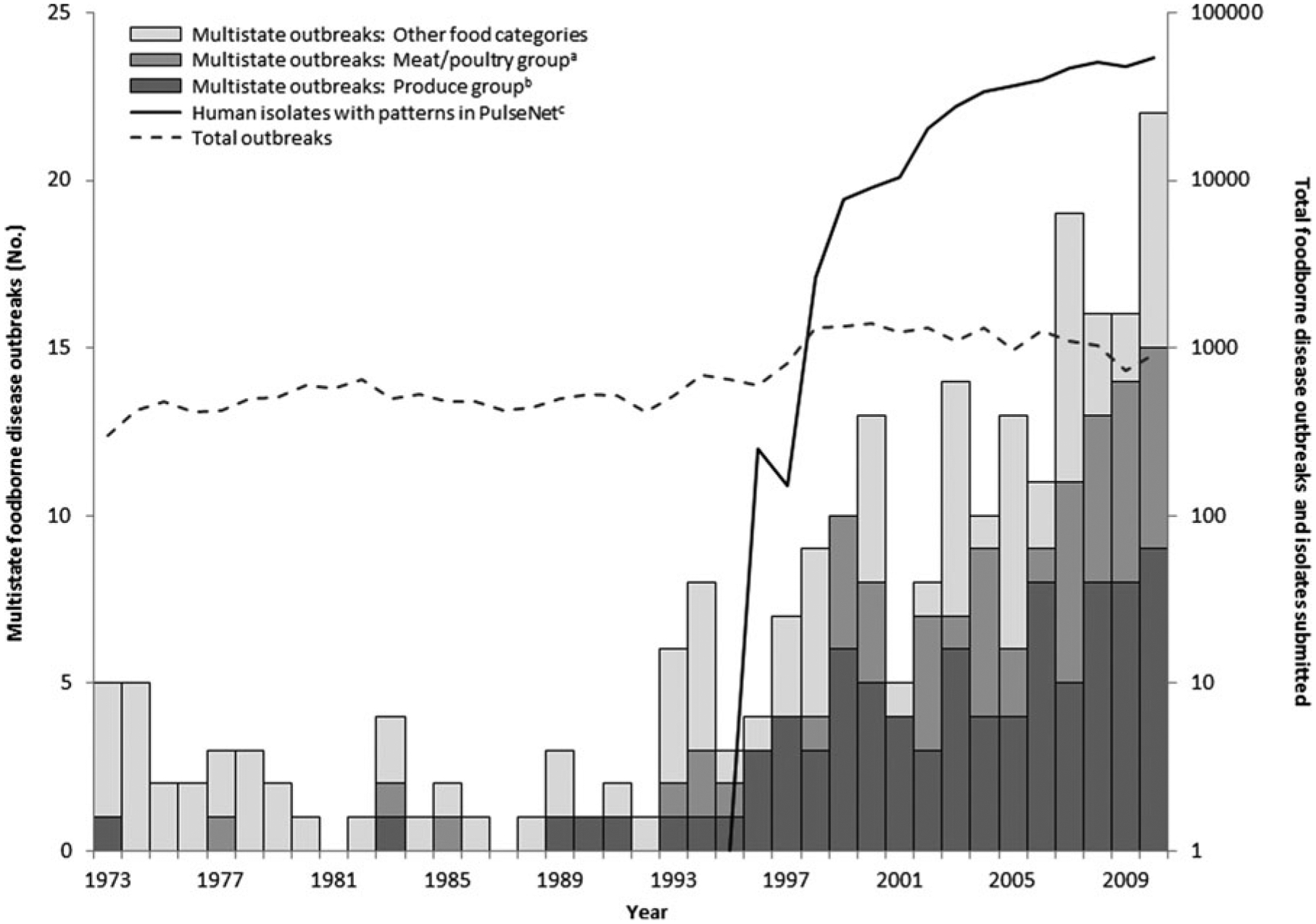
Multistate outbreaks accounted for 234 (0.8%) of 27,755 foodborne disease outbreaks, 24,003 (3%) of 700,600 outbreak-associated illnesses, 2839 (10%) of 29,756 outbreak-associated hospitalizations, and 99 (16%) of 628 outbreak-associated deaths. The median annual number of multistate outbreaks increased from 2.5 during 1973–1980 to 13.5 during 2001–2010; the number of multistate outbreak-associated illnesses, hospitalizations, and deaths also increased. Most multistate outbreaks were caused by Salmonella (47%) and Shiga toxin–producing Escherichia coli (26%). Foods most commonly implicated were beef (22%), fruits (13%), and leafy vegetables (13%).
Conclusions:
The number of identified and reported multistate foodborne disease outbreaks has increased. Improvements in detection, investigation, and reporting of foodborne disease outbreaks help explain the increasing number of reported multistate outbreaks and the increasing percentage of outbreaks that were multistate. Knowing the etiologic agents and foods responsible for multistate outbreaks can help to identify sources of food contamination so that the safety of the food supply can be improved. -
Subjects:
-
Source:Foodborne Pathog Dis. 12(11):867-872
-
Pubmed ID:26284611
-
Pubmed Central ID:PMC11290059
-
Document Type:
-
Funding:
-
Volume:12
-
Issue:11
-
Download URL:
-
File Type:
 [PDF - 480.85 KB]
 -
Collection(s):
-
Main Document Checksum:urn:sha-512:3c02914b2f59b41b150c461eb8dda9911f5c62eacb21de7f7125a6214361c7a9c91282f1767c07e3cc1d26ec83000d4ec27b0759471f290be1740b25fb71180a
Supporting Files


File Language:
English
 Was this page helpful?
 Found an issue?

CDC STACKS serves as an archival repository of CDC-published products including
scientific findings, journal articles, guidelines, recommendations, or other public health information authored or
co-authored by CDC or funded partners.
As a repository, CDC STACKS retains documents in their original published format to ensure public access to scientific information.
As a repository, CDC STACKS retains documents in their original published format to ensure public access to scientific information.
You May Also Like
COLLECTION
CDC Public Access