



Free-grazing Ducks and Highly Pathogenic Avian Influenza, Thailand
Supporting Files
Public Domain

-
Feb 2006
File Language:
English
Details
-
Alternative Title:Emerg Infect Dis
-
Personal Author:
-
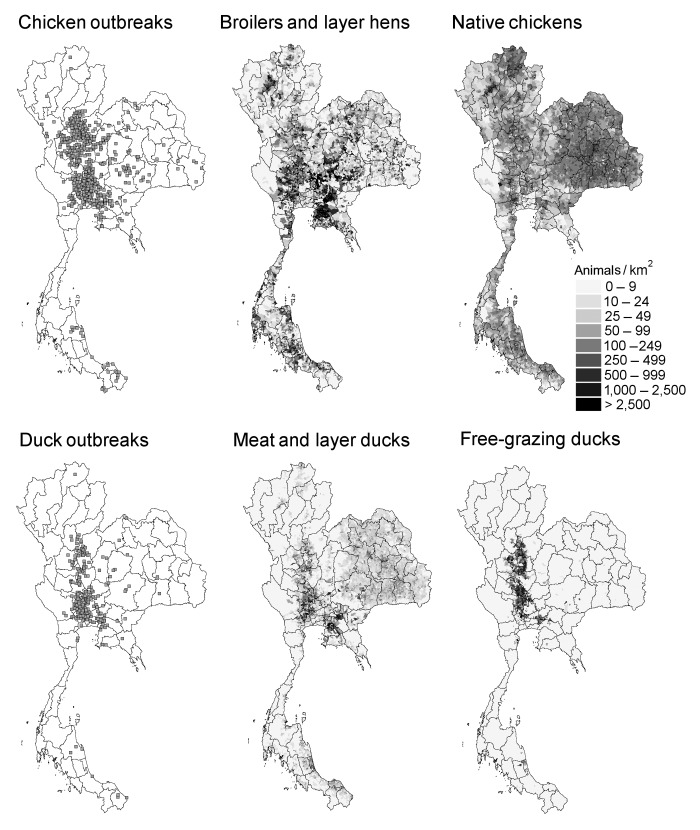
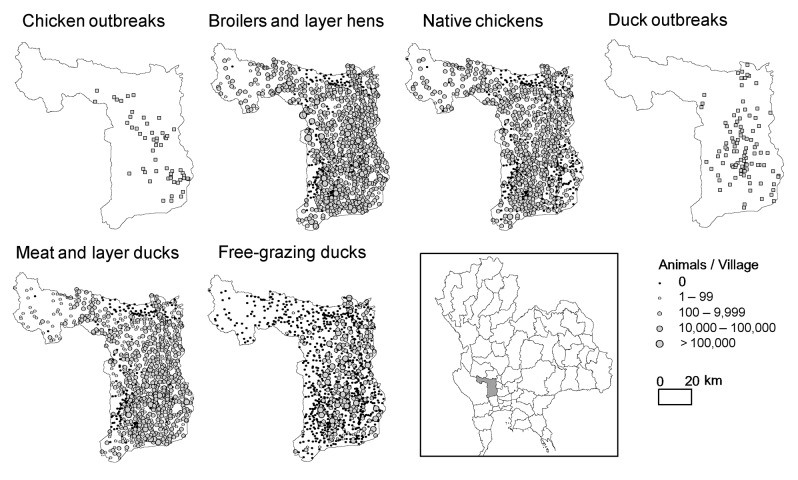
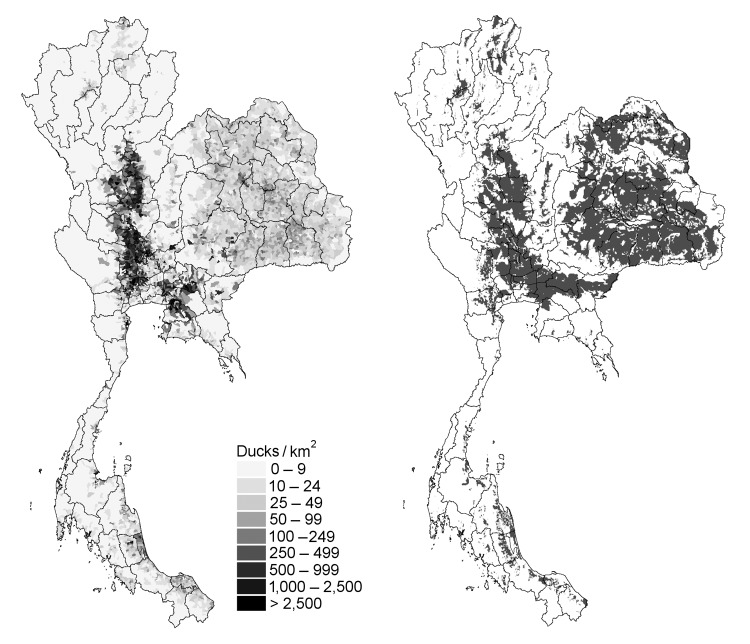
Description:Thailand has recently had 3 epidemic waves of highly pathogenic avian influenza (HPAI); virus was again detected in July 2005. Risk factors need to be identified to better understand disease ecology and assist HPAI surveillance and detection. This study analyzed the spatial distribution of HPAI outbreaks in relation to poultry, land use, and other anthropogenic variables from the start of the second epidemic wave (July 2004-May 2005). Results demonstrate a strong association between H5N1 virus in Thailand and abundance of free-grazing ducks and, to a lesser extent, native chickens, cocks, wetlands, and humans. Wetlands used for double-crop rice production, where free-grazing duck feed year round in rice paddies, appear to be a critical factor in HPAI persistence and spread. This finding could be important for other duck-producing regions in eastern and southeastern Asian countries affected by HPAI.
-
Subjects:
-
Source:Emerg Infect Dis. 12(2):227-234.
-
Document Type:
-
Place as Subject:
-
Volume:12
-
Issue:2
-
Download URL:
-
File Type:
 [PDF - 351.28 KB]
 -
Collection(s):
-
Main Document Checksum:urn:sha256:ada91dd5eda663b67e748991011e8dab9a8ede8fdd0a8d5ab1e4ead8efb5c9e9
Supporting Files


File Language:
English
 Was this page helpful?
 Found an issue?




CDC STACKS serves as an archival repository of CDC-published products including
scientific findings, journal articles, guidelines, recommendations, or other public health information authored or
co-authored by CDC or funded partners.
As a repository, CDC STACKS retains documents in their original published format to ensure public access to scientific information.
As a repository, CDC STACKS retains documents in their original published format to ensure public access to scientific information.
You May Also Like
COLLECTION
Emerging Infectious Diseases