



Extensively Drug-Resistant Pseudomonas aeruginosa Outbreak associated with Artificial Tears
Supporting Files

-
2024/07/19
-
File Language:
English
Details
-
Alternative Title:Clin Infect Dis
-
Personal Author:Grossman, Marissa K. ; Rankin, Danielle A. ; Maloney, Meghan ; Stanton, Richard A. ; Gable, Paige ; Stevens, Valerie A. ; Ewing, Thomas ; Saunders, Katharine ; Kogut, Sarah ; Nazarian, Elizabeth ; Bhaurla, Sandeep ; Mephors, Jehan ; Mongillo, Joshua ; Stonehocker, Susan ; Prignano, Jeanette ; Valencia, Nickolas ; Charles, Argentina ; McNamara, Kiara ; Fritsch, William A. ; Ruelle, Shannon ; Plucinski, Carrie Ann ; Sosa, Lynn ; Ostrowsky, Belinda ; Ham, D. Cal ; Walters, Maroya S.
-
Corporate Authors:
-
Description:Background:
Carbapenemase-producing, carbapenem-resistant Pseudomonas aeruginosa (CP-CRPA) are extensively drug resistant bacteria. We investigated the source of a multistate CP-CRPA outbreak.
Methods:
Cases were defined as a U.S. patient's first isolation of P. aeruginosa sequence type 1203 with the carbapenemase gene blaVIM-80 and cephalosporinase gene blaGES-9 from any specimen source collected and reported to CDC between January 1, 2022-May 15, 2023. We conducted a 1:1 matched case-control study at the post-acute care facility with the most cases, assessed exposures associated with case status for all case-patients, and tested products for bacterial contamination.
Results:
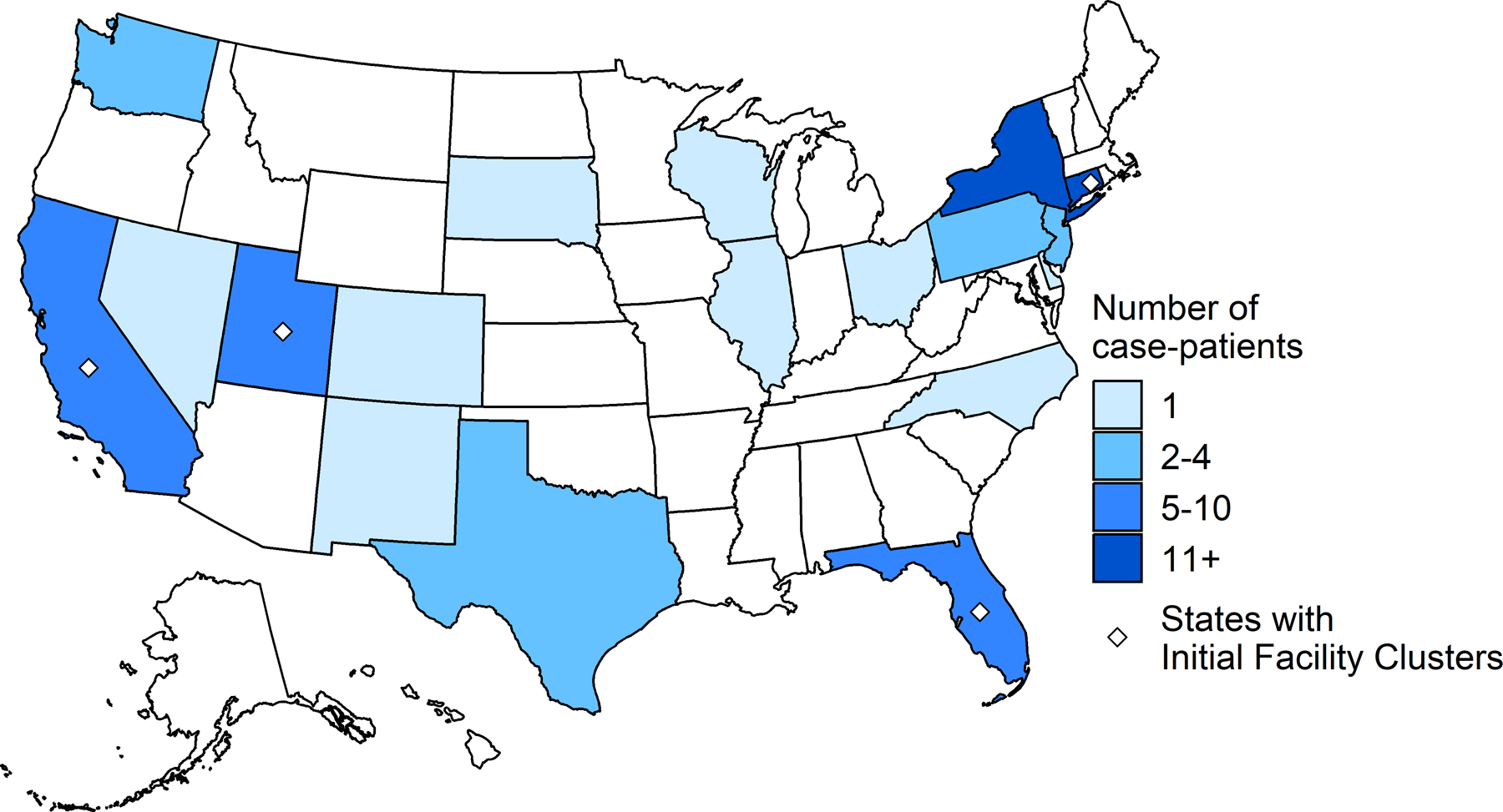
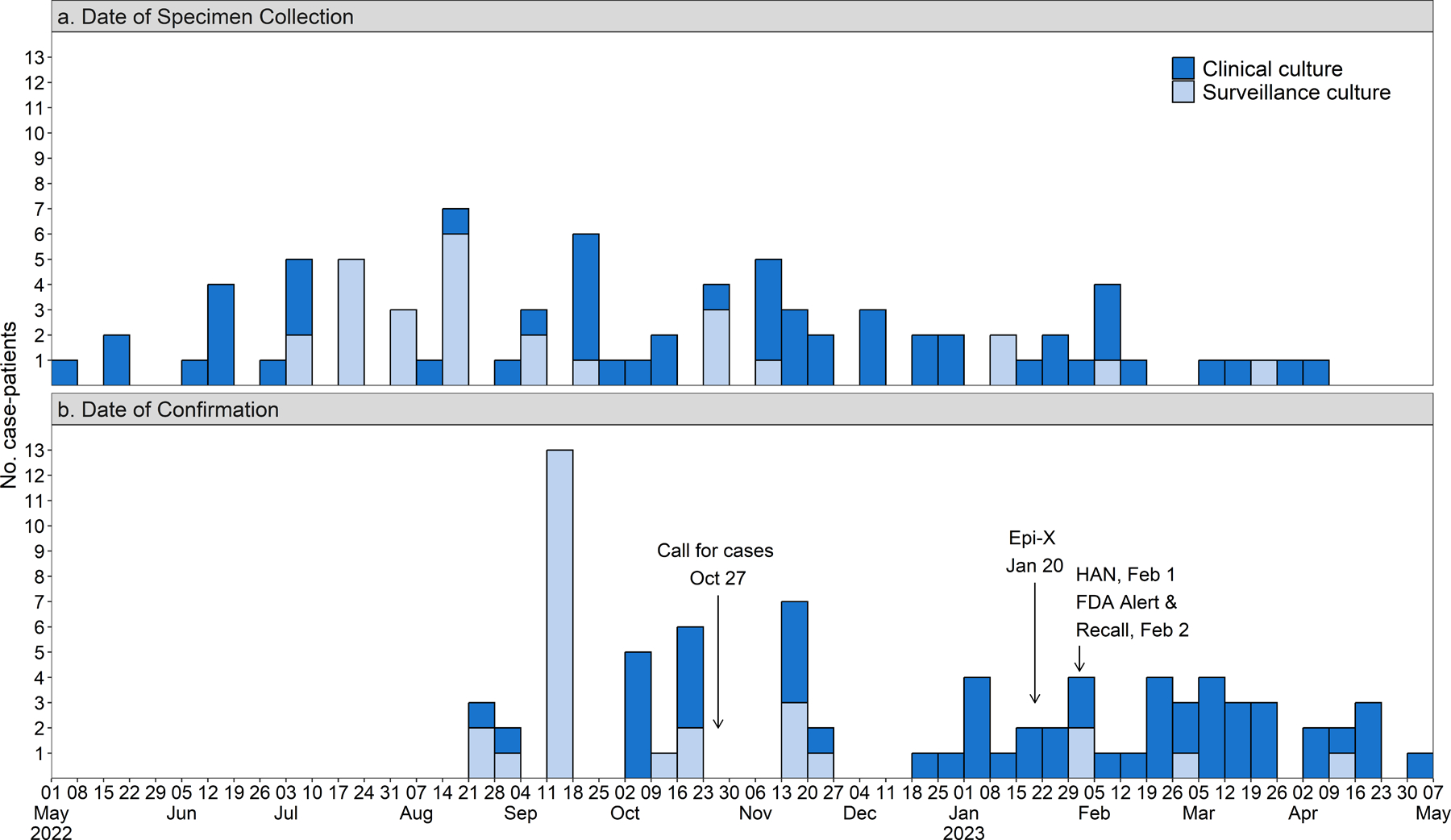
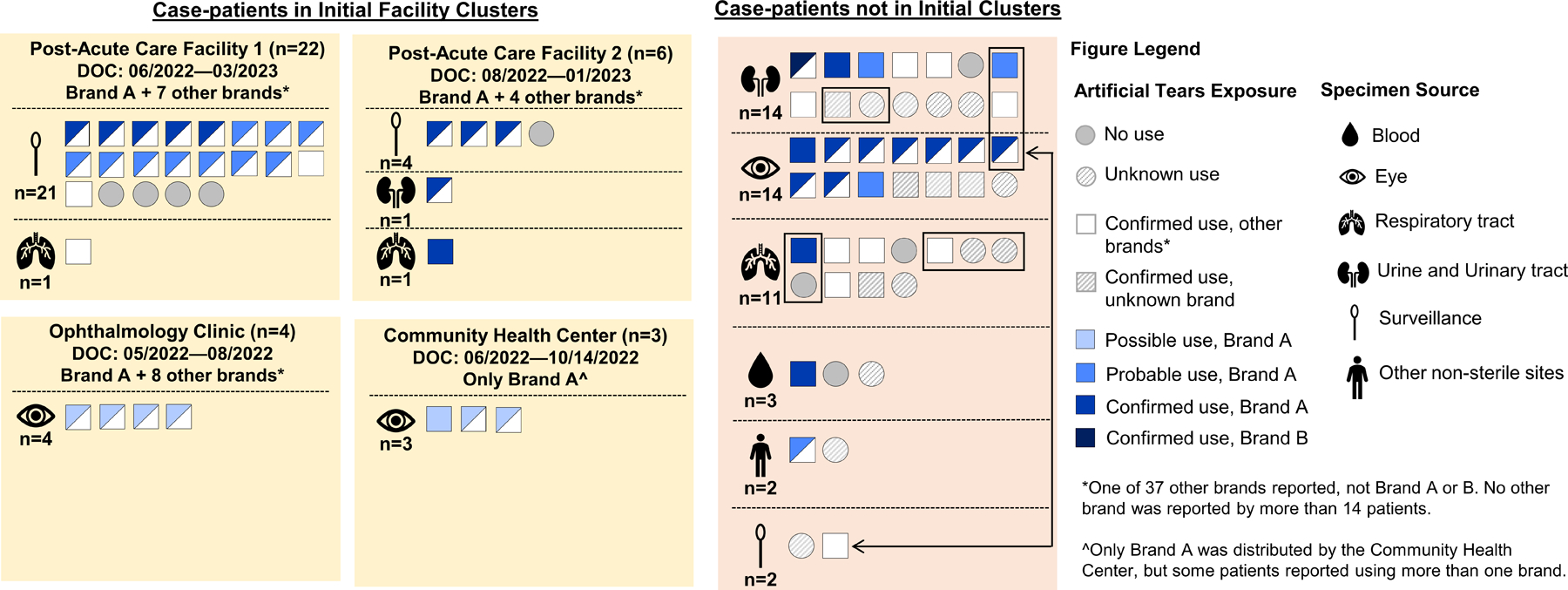
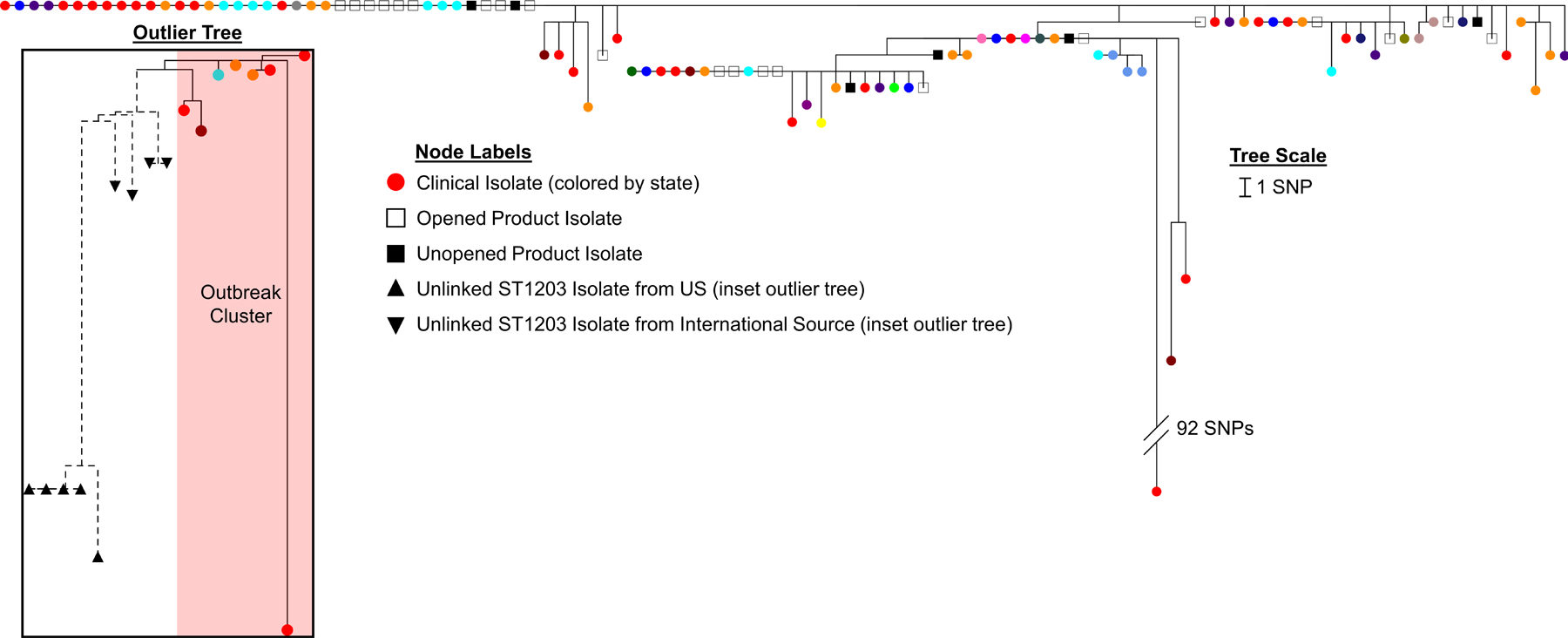
We identified 81 case-patients from 18 states, 27 of whom were identified through surveillance cultures. Four (7%) of 54 case-patients with clinical cultures died within 30 days of culture collection, and four (22%) of 18 with eye infections underwent enucleation. In the case-control study, case-patients had increased odds of receiving artificial tears compared to controls (crude matched OR: 5.0, 95% CI: 1.1, 22.8). Overall, artificial tears use was reported by 61 (87%) of 70 case-patients with information; 43 (77%) of 56 case-patients with brand information reported use of Brand A, an imported, preservative-free, over-the-counter (OTC) product. Bacteria isolated from opened and unopened bottles of Brand A were genetically related to patient isolates. FDA inspection of the manufacturing plant identified likely sources of contamination.
Conclusions:
A manufactured medical product serving as the vehicle for carbapenemase-producing organisms is unprecedented in the U.S. The clinical impacts from this outbreak underscore the need for improved requirements for U.S. OTC product importers.
-
Subjects:
-
Source:Clin Infect Dis. 79(1):6-14
-
Pubmed ID:38315890
-
Pubmed Central ID:PMC11259536
-
Document Type:
-
Funding:
-
Genre:
-
Volume:79
-
Issue:1
-
Collection(s):
-
Main Document Checksum:urn:sha-512:12560a307c03bbfb001fcb6254c3c5d5f670087d27ca890764c42a58d1126e1c024aa57f5e69f75d159cd514baec4d41e30e0a26660e11388609259e38b5b3e3
-
Download URL:
-
File Type:
 [PDF
- 996.57 KB
]
[PDF
- 996.57 KB
]
Supporting Files


File Language:
English
 Was this page helpful?
 Found an issue?
CDC STACKS serves as an archival repository of CDC-published products including
scientific findings,
journal articles, guidelines, recommendations, or other public health information authored or
co-authored by CDC or funded partners.
As a repository, CDC STACKS retains documents in their original published format to ensure public access to scientific information.
As a repository, CDC STACKS retains documents in their original published format to ensure public access to scientific information.
You May Also Like
COLLECTION
CDC Public Access