



Psychological health and ischemic heart disease in women: A review of current evidence and clinical considerations across the healthspan
Supporting Files

-
3 2024 ; 3-2024
-
Available in CDC Stacks on July 02, 2024, 12:00 AM

File Language:
English
Details
-
Alternative Title:Curr Atheroscler Rep
-
Personal Author:
-
Description:PURPOSE OF THE REVIEW:
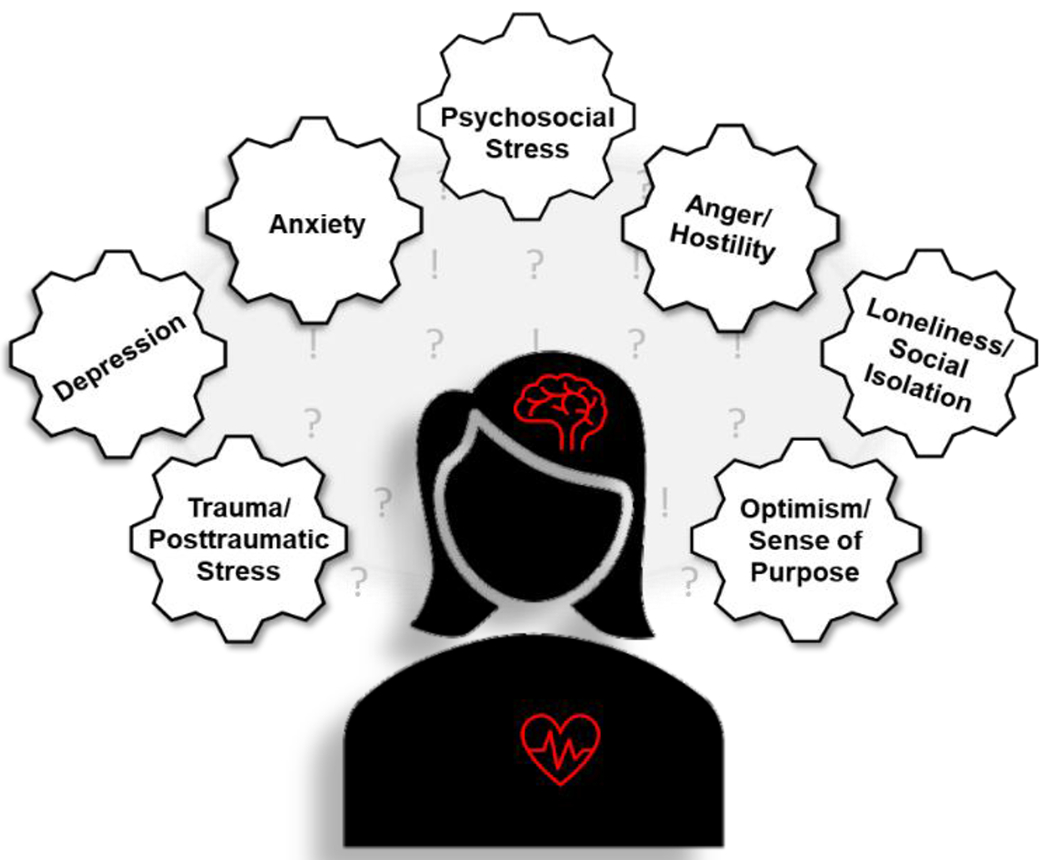
Psychological health encompasses a constellation of negative and positive factors – i.e., psychosocial stress, depression, anxiety, trauma, loneliness and social isolation, anger and hostility, optimism, and a sense of purpose. This narrative review presents current evidence for the intersection of psychological health, risk of ischemic heart disease (IHD), and IHD-related outcomes, with an emphasis on associations in women.
Recent Findings:
For women, relations between psychological health and IHD reflect important sex and gender differences in biological and psychosocial factors. Although efforts devoted to understanding psychological health and IHD risk have varied by psychological factor – scientific evidence is strongest for depression, while anxiety, trauma, and positive psychological factors warrant more investigation – less optimal psychological health was consistently associated with an earlier and greater risk of IHD morbidity and mortality in women. Still, many past prospective studies of psychological factors and IHD risk had a limited representation of women, did not include analyses by sex, or failed to account for other influential, sex-specific factors. Thus, there are multiple pathways for further, rigorous investigation into psychological health-IHD associations, mechanisms, and empirically-supported psychological interventions to mitigate IHD risk among women.
Summary:
Given the robust evidence linking psychological health with women’s risk for IHD, implementing routine psychological assessment is recommended. Significant life events, developmental milestones specific to women, and IHD diagnoses or events could cue additional psychological assessment, which will mutually strengthen the evidence for integrated psychological and IHD care and delivery of that care to this vulnerable group. -
Subjects:
-
Keywords:
-
Source:Curr Atheroscler Rep. 26(3):45-58
-
Pubmed ID:38240928
-
Pubmed Central ID:PMC11219074
-
Document Type:
-
Funding:
-
Volume:26
-
Issue:3
-
Download URL:
-
File Type:
 [PDF - 208.04 KB]
 -
Collection(s):
-
Main Document Checksum:urn:sha256:3295d15ef196c466b67baf19eea7290af8aa20d7d902f84860e63c1022295dee
Supporting Files


File Language:
English
 Was this page helpful?
 Found an issue?

CDC STACKS serves as an archival repository of CDC-published products including
scientific findings, journal articles, guidelines, recommendations, or other public health information authored or
co-authored by CDC or funded partners.
As a repository, CDC STACKS retains documents in their original published format to ensure public access to scientific information.
As a repository, CDC STACKS retains documents in their original published format to ensure public access to scientific information.
You May Also Like
COLLECTION
CDC Public Access