



Do HIV Care Outcomes Differ by Provider Type?
Supporting Files

-
6 01 2024
-
File Language:
English
Details
-
Alternative Title:J Acquir Immune Defic Syndr
-
Personal Author:
-
Description:Background:
We compared HIV care outcomes by HIV provider type to inform efforts to strengthen the HIV provider workforce.
Setting:
U.S.
Methods:
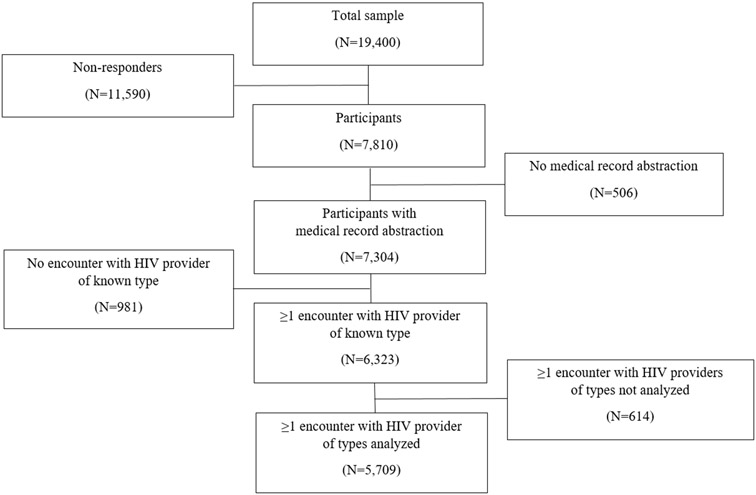
We analyzed data from CDC’s Medical Monitoring Project collected during 6/2019-5/2021 from 6,323 adults receiving HIV medical care. Provider types were infectious disease physicians only (ID physicians), non-ID physicians only (non-ID physicians), nurse practitioners only (NPs), physician assistants only (PAs), and ID physicians plus NPs and/or PAs (mixed providers). We measured patient characteristics, social determinants of health (SDOH), and clinical outcomes including retention in care; antiretroviral therapy prescription; antiretroviral therapy adherence; viral suppression; gonorrhea, chlamydia, and syphilis testing; satisfaction with HIV care; and HIV provider trust.
Results:
Compared with patients of ID physicians, higher percentages of patients of other provider types had characteristics and SDOH associated with poor health outcomes and received HIV care at Ryan White HIV/AIDS Program-funded facilities. After accounting for these differences, most outcomes were not meaningfully different, however higher percentages of patients of non-ID physicians, NPs, and mixed providers were retained in care (6.5, 5.6, and 12.7 percentage points, respectively) and had STI testing in the past 12 months, if sexually active (6.9, 7.4, and 13.5 percentage points, respectively).
Conclusion:
Most HIV outcomes were equivalent across provider types. However, patients of non-ID physicians, NPs, and mixed providers were more likely to be retained in care and have recommended STI testing. Increasing delivery of comprehensive primary care by ID physicians and including primary care providers in ID practices could improve HIV primary care outcomes.
-
Subjects:
-
Source:J Acquir Immune Defic Syndr. 96(2):180-189
-
Pubmed ID:38465906
-
Pubmed Central ID:PMC11215811
-
Document Type:
-
Funding:
-
Volume:96
-
Issue:2
-
Collection(s):
-
Main Document Checksum:urn:sha256:1cbdd1797e277c823436ecb4835eecd0619be0bac67ca3136d23a2d7acc75fbb
-
Download URL:
-
File Type:
 [PDF
- 525.07 KB
]
[PDF
- 525.07 KB
]
Supporting Files


File Language:
English
 Was this page helpful?
 Found an issue?
CDC STACKS serves as an archival repository of CDC-published products including
scientific findings,
journal articles, guidelines, recommendations, or other public health information authored or
co-authored by CDC or funded partners.
As a repository, CDC STACKS retains documents in their original published format to ensure public access to scientific information.
As a repository, CDC STACKS retains documents in their original published format to ensure public access to scientific information.
You May Also Like
COLLECTION
CDC Public Access