



Heat inactivation of aqueous viable norovirus and MS2 bacteriophage
Supporting Files

-
2 01 2024
-
Available in CDC Stacks on 2024-06-14T00:00:00Z

File Language:
English
Details
-
Journal Article:J Appl Microbiol
-
Personal Author:
-
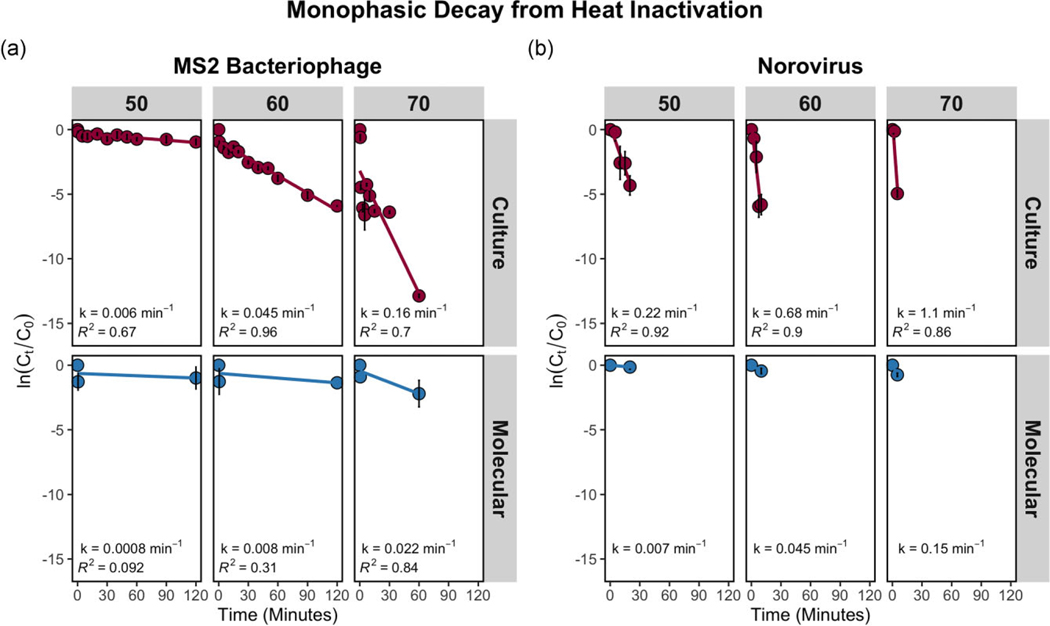
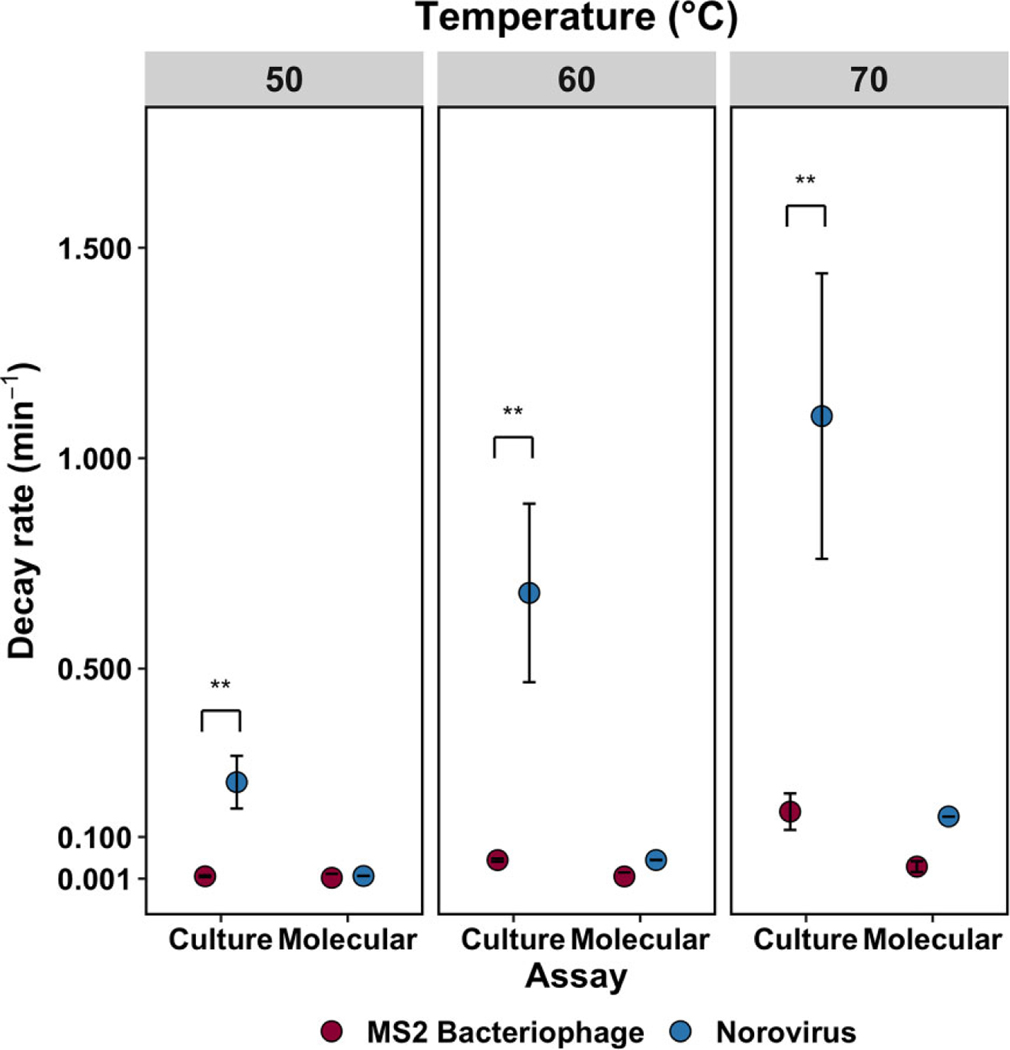
Description:Aims: ; This study aimed to compare the heat inactivation kinetics of viable human norovirus with the surrogate, MS2 bacteriophage as well as assess the decay of the RNA signal. ; Methods and results: ; Human intestinal enteroids were used to analyze the heat inactivation kinetics of viable human norovirus compared to the surrogate MS2 bacteriophage, which was cultured using a plaque assay. Norovirus decay rates were 0.22 min−1, 0.68 min−1, and 1.11 min−1 for 50°C, 60°C, and 70°C, respectively, and MS2 bacteriophage decay rates were 0.0065 min−1, 0.045 min−1, and 0.16 min−1 for 50°C, 60°C, and 70°C, respectively. Norovirus had significantly higher decay rates than MS2 bacteriophage at all tested temperatures (P = .002–.007). No decrease of RNA titers as measured by reverse transcription-PCR for both human norovirus and MS2 bacteriophage over time was observed, indicating molecular methods do not accurately depict viable human norovirus after heat inactivation and treatment efficiency is underestimated. ; Conclusions: ; Overall, our data demonstrate that MS2 bacteriophage is a conservative surrogate to measure heat inactivation and potentially overestimates the infectious risk of norovirus. Furthermore, this study corroborates that measuring viral RNA titers, as evaluated by PCR methods, does not correlate with the persistence of viable norovirus under heat inactivation.
-
Subjects:
-
Keywords:
-
DOI:
-
Pubmed ID:38341278
-
Pubmed Central ID:PMC11178036
-
Document Type:
-
Funding:
-
Genre:
-
Volume:135
-
Issue:2
-
Citation:J Appl Microbiol. 135(2)
-
Download URL:
-
File Type:
 [PDF - 535.26 KB]
 -
Collection(s):
-
Main Document Checksum:urn:sha-512:85a378174223d5759c18597abefd8287419229c7f011bdd58833e3210b71fc1649e89bad23cab63ce65f819a7ac5841337ff7caf8302f60503903efe43521797
Supporting Files


File Language:
English
 Was this page helpful?
 Found an issue?

CDC STACKS serves as an archival repository of CDC-published products including
scientific findings, journal articles, guidelines, recommendations, or other public health information authored or
co-authored by CDC or funded partners.
As a repository, CDC STACKS retains documents in their original published format to ensure public access to scientific information.
As a repository, CDC STACKS retains documents in their original published format to ensure public access to scientific information.
You May Also Like
COLLECTION
CDC Public Access