


Identification of patients with epilepsy using automated electronic health records phenotyping
Supporting Files

-
6 2023
-

File Language:
English
Details
-
Alternative Title:Epilepsia
-
Personal Author:
-
Description:Objective:
Unstructured data present in electronic health records (EHR) are a rich source of medical information; however, their abstraction is labor intensive. Automated EHR phenotyping (AEP) can reduce the need for manual chart review. We present an AEP model that is designed to automatically identify patients diagnosed with epilepsy.
Methods:
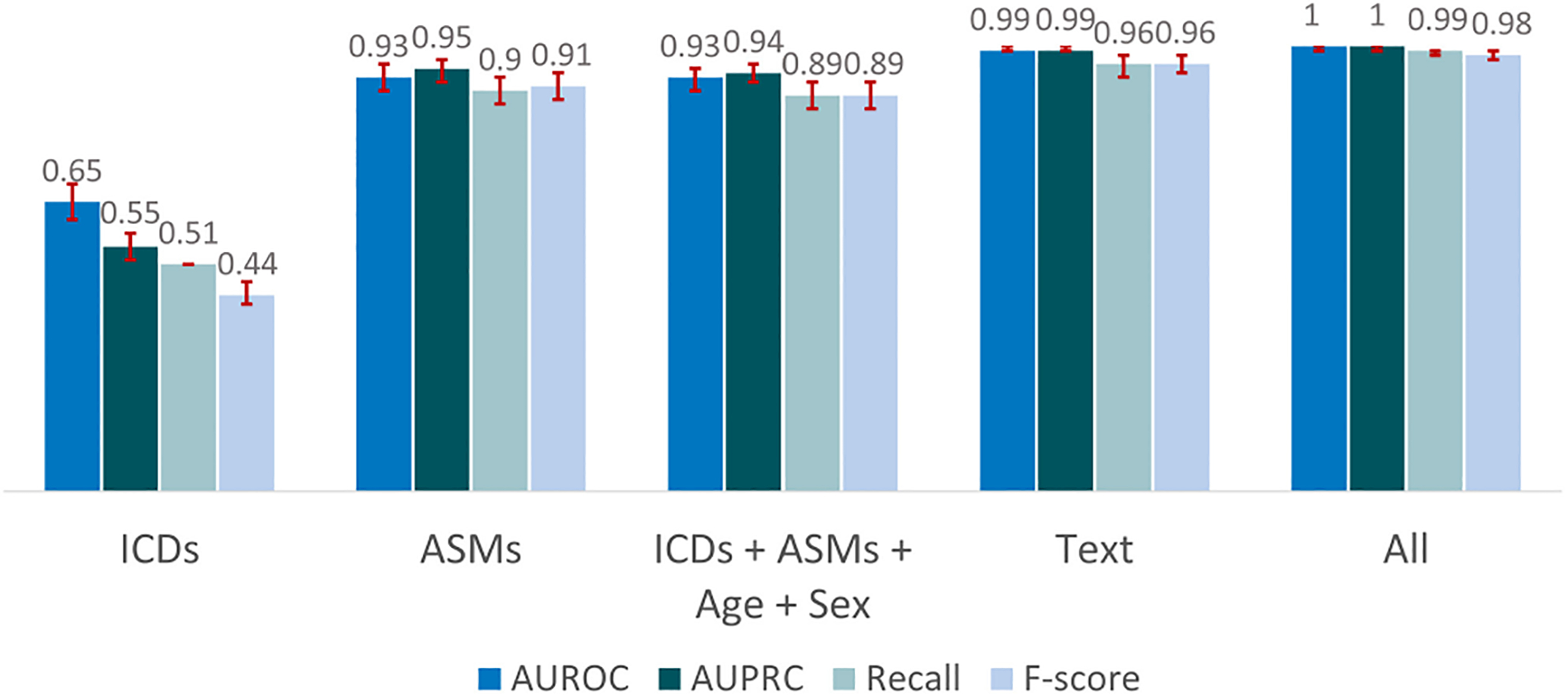
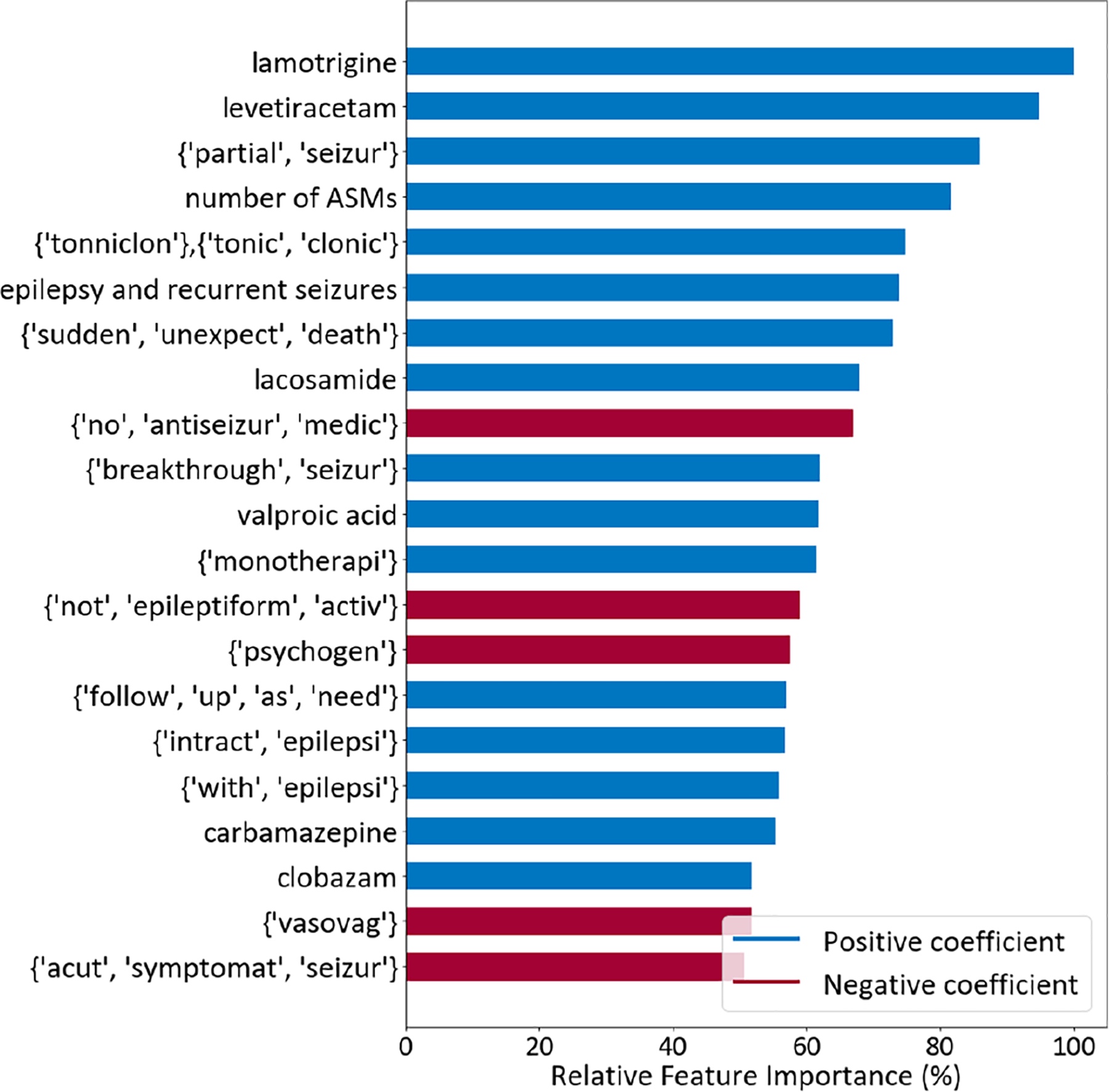
The ground truth for model training and evaluation was captured from a combination of structured questionnaires filled out by physicians for a subset of patients and manual chart review using customized software. Modeling features included indicators of the presence of keywords and phrases in unstructured clinical notes, prescriptions for antiseizure medications (ASMs), International Classification of Diseases (ICD) codes for seizures and epilepsy, number of ASMs and epilepsy-related ICD codes, age, and sex. Data were randomly divided into training (70%) and hold-out testing (30%) sets, with distinct patients in each set. We trained regularized logistic regression and an extreme gradient boosting models. Model performance was measured using area under the receiver operating curve (AUROC) and area under the precision–recall curve (AUPRC), with 95% confidence intervals (CI) estimated via bootstrapping.
Results:
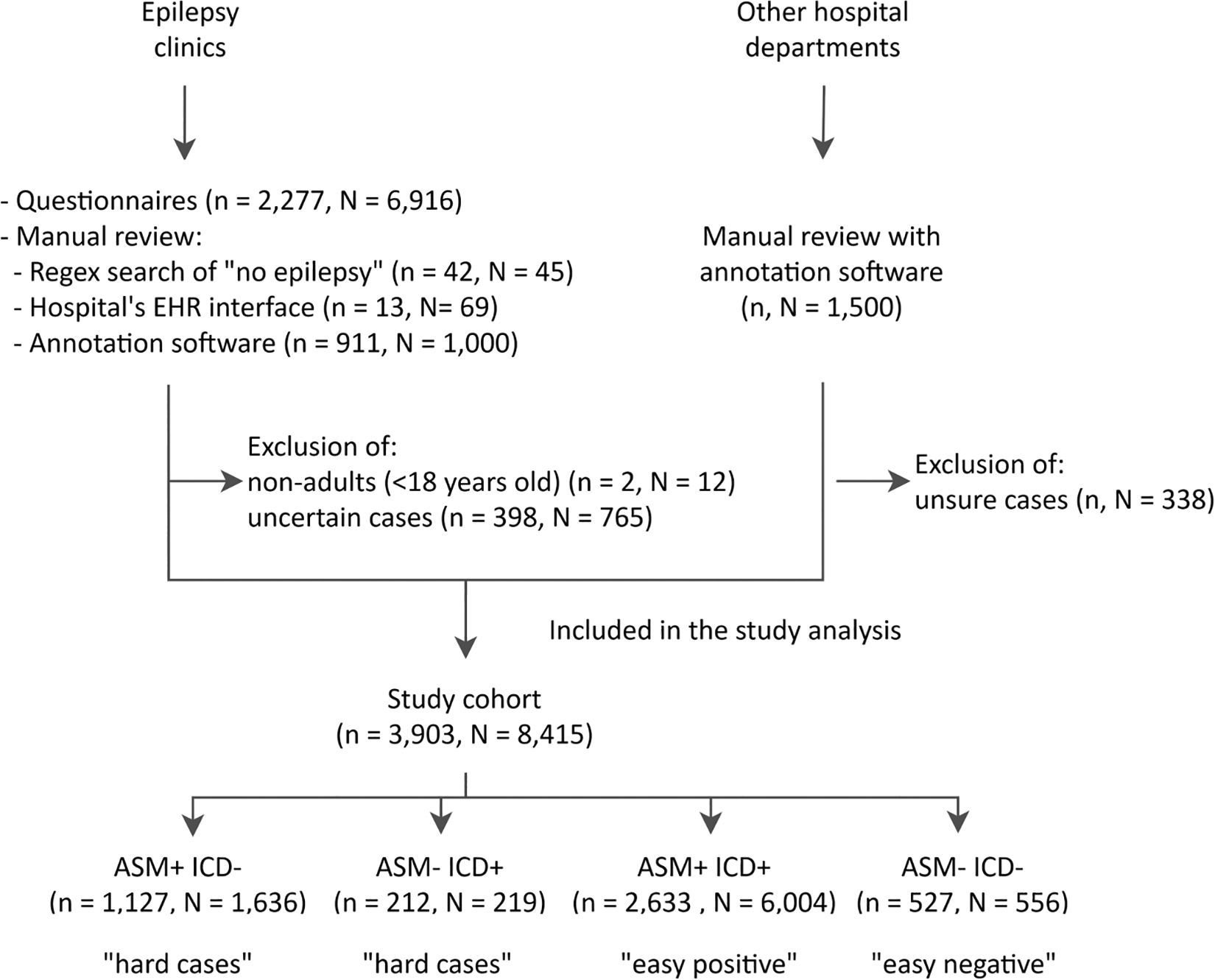
Our study cohort included 3903 adults drawn from outpatient departments of nine hospitals between February 2015 and June 2022 (mean age = 47 ± 18 years, 57% women, 82% White, 84% non-Hispanic, 70% with epilepsy). The final models included 285 features, including 246 keywords and phrases captured from 8415 encounters. Both models achieved AUROC and AUPRC of 1 (95% CI = .99–1.00) in the hold-out testing set.
Significance:
A machine learning-based AEP approach accurately identifies patients with epilepsy from notes, ICD codes, and ASMs. This model can enable large-scale epilepsy research using EHR databases.
-
Subjects:
-
Keywords:
-
Source:Epilepsia. 64(6):1472-1481
-
Pubmed ID:36934317
-
Pubmed Central ID:PMC10239346
-
Document Type:
-
Funding:K08 AG053380/AG/NIA NIH HHSUnited States/ ; R01 NS102190/NS/NINDS NIH HHSUnited States/ ; UL1 TR002541/TR/NCATS NIH HHSUnited States/ ; R01 AG073410/AG/NIA NIH HHSUnited States/ ; R01 HL161253/HL/NHLBI NIH HHSUnited States/ ; RF1 AG064312/AG/NIA NIH HHSUnited States/ ; R01 AG062282/AG/NIA NIH HHSUnited States/ ; R01 NS102574/NS/NINDS NIH HHSUnited States/ ; P01 AG032952/AG/NIA NIH HHSUnited States/ ; K23 NS114201/NS/NINDS NIH HHSUnited States/ ; RF1 NS120947/NS/NINDS NIH HHSUnited States/ ; U48 DP006377/DP/NCCDPHP CDC HHSUnited States/ ; R01 NS126282/NS/NINDS NIH HHSUnited States/ ; R01 NS107291/NS/NINDS NIH HHSUnited States/
-
Volume:64
-
Issue:6
-
Collection(s):
-
Main Document Checksum:urn:sha-512:4c3ee5a43af031f5a06546c2933e35cf472d83dcb40195cd31f60a78f3473d7e02e70f5bdca9e9aff2c32d7a545d89e1c8be1898276e9b531c665d49a29c6bfb
-
Download URL:
-
File Type:
 [PDF
- 933.46 KB
]
[PDF
- 933.46 KB
]

Supporting Files


File Language:
English
ON THIS PAGE

CDC STACKS serves as an archival repository of CDC-published products including
scientific findings,
journal articles, guidelines, recommendations, or other public health information authored or
co-authored by CDC or funded partners.
As a repository, CDC STACKS retains documents in their original published format to ensure public access to scientific information.
As a repository, CDC STACKS retains documents in their original published format to ensure public access to scientific information.
You May Also Like
COLLECTION
CDC Public Access