



Dengue Risk among Visitors to Hawaii during an Outbreak
Supporting Files

-
May 2005
File Language:
English
Details
-
Alternative Title:Emerg Infect Dis
-
Personal Author:
-
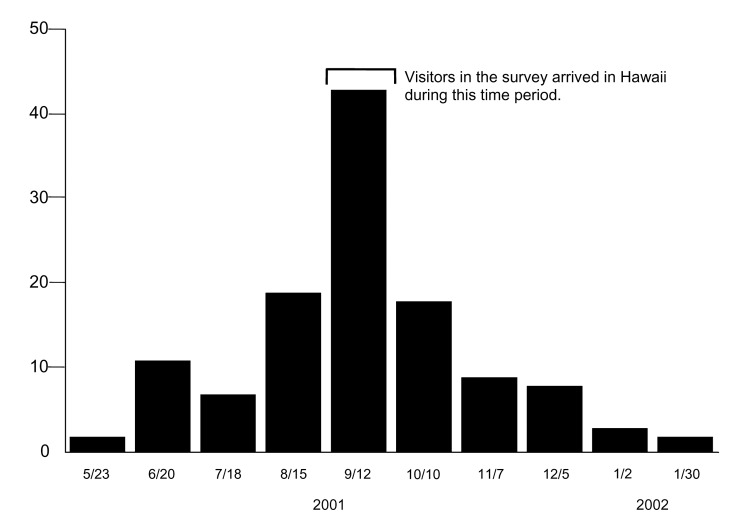
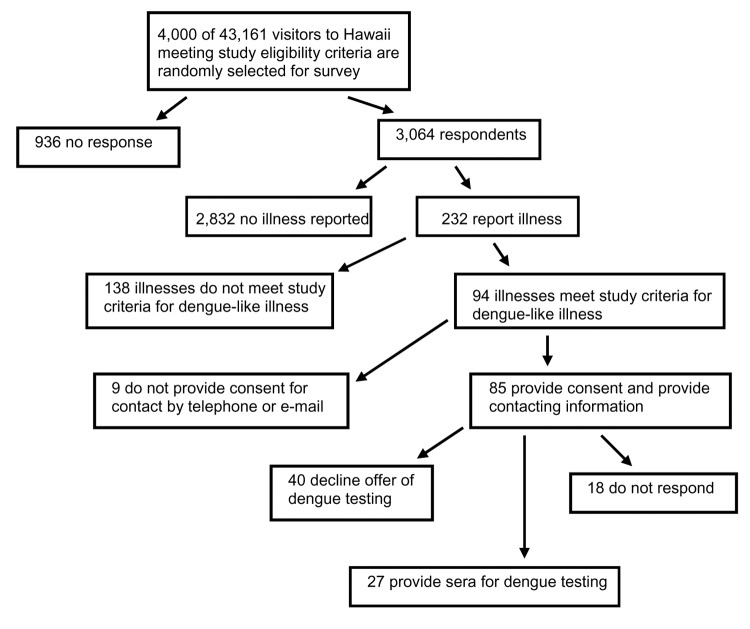
Description:Despite the high rates of dengue in many tropical destinations frequented by tourists, limited information is available on the risk for infection among short-term visitors. We retrospectively surveyed 4,000 persons who arrived in Hawaii during the peak of the 2001-2002 dengue outbreak and collected follow-up serologic test results for those reporting denguelike illness. Of 3,064 visitors who responded, 94 (3%) experienced a denguelike illness either during their trip or within 14 days of departure; 34 of these persons were seen by a physician, and 2 were hospitalized. Twenty-seven visitors with denguelike illness provided a serum specimen; all specimens were negative for anti-dengue immunoglobulin G antibodies. The point estimate of dengue incidence was zero infections per 358 person-days of exposure with an upper 95% confidence limit of 3.0 cases per person-year. Thus, the risk for dengue infection for visitors to Hawaii during the outbreak was low.
-
Subjects:
-
Source:Emerg Infect Dis. 11(5):750-756.
-
Document Type:
-
Funding:
-
Place as Subject:
-
Location:
-
Volume:11
-
Issue:5
-
Download URL:
-
File Type:
 [PDF - 288.67 KB]
 -
Collection(s):
-
Main Document Checksum:urn:sha256:73968a5f54b5fd0763028bd213c11e4b8ab5a52766bd0772de8775394c18c56a
Supporting Files


File Language:
English
 Was this page helpful?
 Found an issue?




CDC STACKS serves as an archival repository of CDC-published products including
scientific findings, journal articles, guidelines, recommendations, or other public health information authored or
co-authored by CDC or funded partners.
As a repository, CDC STACKS retains documents in their original published format to ensure public access to scientific information.
As a repository, CDC STACKS retains documents in their original published format to ensure public access to scientific information.
You May Also Like
COLLECTION
Emerging Infectious Diseases