



Cryptococcus gattii in AIDS Patients, Southern California
Supporting Files
Public Domain

-
Nov 2005
File Language:
English
Details
-
Alternative Title:Emerg Infect Dis
-
Personal Author:
-
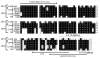
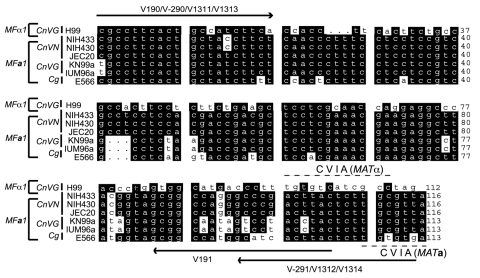
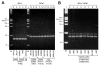
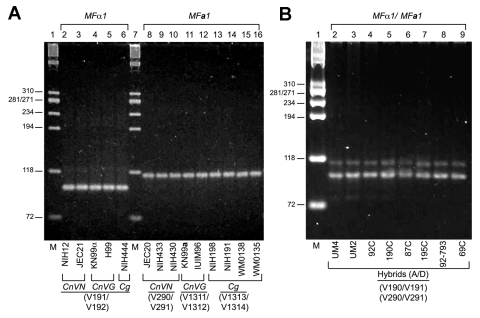
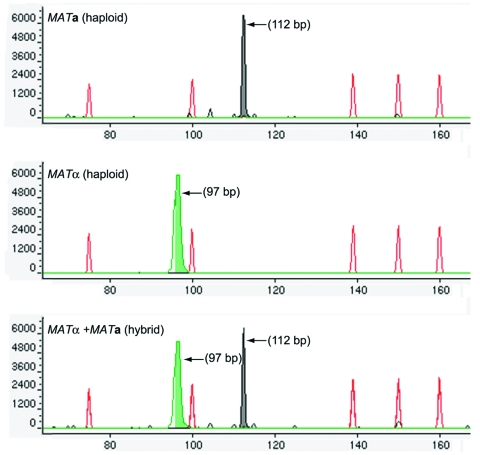
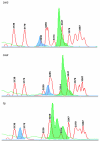
Description:Cryptococcus isolates from AIDS patients in southern California were characterized by molecular analyses. Pheromone MFalpha1 and MFa1 gene fragments were polymerase chain reaction-amplified with fluorescently labeled primers and analyzed by capillary electrophoresis (CE) on DNA analyzer. CE-fragment-length analyses (CE-FLAs) and CE-single-strand conformation polymorphisms (CE-SSCPs) were used to determine Cryptococcus gattii (Cg), C. neoformans (Cn) varieties neoformans (CnVN) and grubii (CnVG), mating types, and hybrids. Corroborative tests carried out in parallel included growth on specialized media and serotyping with a commercial kit. All 276 clinical strains tested as haploid MATalpha by CE-FLA. CE-SSCP analyses of MFalpha1 showed 219 (79.3%) CnVG, 23 (8.3%) CnVN, and 34 (12.3%) Cg isolates. CE-FLA and CE-SSCP are promising tools for high-throughput screening of Cryptococcus isolates. The high prevalence of Cg was noteworthy, in view of its sporadic reports from AIDS patients in North America and its recent emergence as a primary pathogen on Vancouver Island, Canada.
-
Subjects:
- Research
- Cryptococcus gattii
- Cryptococcus neoformans varieties grubii and neoformans
- pheromones
- CE-FLA
- CE-SSCP
- AIDS
- molecular methods
- research
- AIDS-Related Opportunistic Infections
- California
- Cryptococcosis
- Cryptococcus
- Culture Media
- DNA Primers
- Electrophoresis, Capillary
- Fungal Proteins
- HIV Infections
- Humans
- Mycological Typing Techniques
- Pheromones
- Polymerase Chain Reaction
- Polymorphism, Single-Stranded Conformational
- Reagent Kits, Diagnostic
- Serotyping
-
Source:Emerg Infect Dis. 11(11):1686-1692.
-
Document Type:
-
Place as Subject:
-
Location:
-
Volume:11
-
Issue:11
-
Download URL:
-
File Type:
 [PDF - 255.34 KB]
 -
Collection(s):
-
Main Document Checksum:urn:sha256:483f2ad9e538289e07288a4f0cbf79e18e5ea92dffffc4e458a4c673e6d00312
Supporting Files


File Language:
English
 Was this page helpful?
 Found an issue?



CDC STACKS serves as an archival repository of CDC-published products including
scientific findings, journal articles, guidelines, recommendations, or other public health information authored or
co-authored by CDC or funded partners.
As a repository, CDC STACKS retains documents in their original published format to ensure public access to scientific information.
As a repository, CDC STACKS retains documents in their original published format to ensure public access to scientific information.
You May Also Like
COLLECTION
Emerging Infectious Diseases