



HEPA/Vaccine Plan for Indoor Anthrax Remediation
Supporting Files
Public Domain

-
Jan 2005
File Language:
English
Details
-
Alternative Title:Emerg Infect Dis
-
Personal Author:
-
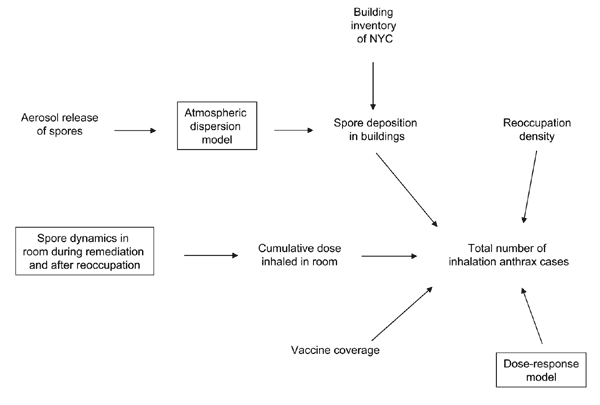
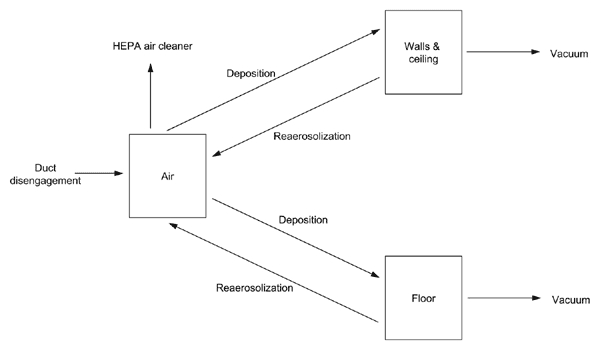
Description:We developed a mathematical model to compare 2 indoor remediation strategies in the aftermath of an outdoor release of 1.5 kg of anthrax spores in lower Manhattan. The 2 strategies are the fumigation approach used after the 2001 postal anthrax attack and a HEPA/vaccine plan, which relies on HEPA vacuuming, HEPA air cleaners, and vaccination of reoccupants. The HEPA/vaccine approach leads to few anthrax cases among reoccupants if applied to all but the most heavily contaminated buildings, and recovery is much faster than under the decades-long fumigation plan. Only modest environmental sampling is needed. A surge capacity of 10,000 to 20,000 Hazmat workers is required to perform remediation within 6 to 12 months and to avoid permanent mass relocation. Because of the possibility of a campaign of terrorist attacks, serious consideration should be given to allowing or encouraging voluntary self-service cleaning of lightly contaminated rooms by age-appropriate, vaccinated, partially protected (through masks or hoods) reoccupants or owners.
-
Subjects:
-
Source:Emerg Infect Dis. 11(1):69-76.
-
Document Type:
-
Place as Subject:
-
Volume:11
-
Issue:1
-
Download URL:
-
File Type:
 [PDF - 195.09 KB]
 -
Collection(s):
-
Main Document Checksum:urn:sha256:e720e771827a95d77e3e5ef0f83cb5c94651d40875bbb2e01c1feaf375a66e80
Supporting Files


File Language:
English
 Was this page helpful?
 Found an issue?




CDC STACKS serves as an archival repository of CDC-published products including
scientific findings, journal articles, guidelines, recommendations, or other public health information authored or
co-authored by CDC or funded partners.
As a repository, CDC STACKS retains documents in their original published format to ensure public access to scientific information.
As a repository, CDC STACKS retains documents in their original published format to ensure public access to scientific information.
You May Also Like
COLLECTION
Emerging Infectious Diseases