



Vaccination may be economically and epidemiologically advantageous over frequent screening for gonorrhea prevention
Supporting Files

-
6 01 2024 ; 6-01-
-
Available in CDC Stacks on June 01, 2025, 12:00 AM
File Language:
English
Details
-
Alternative Title:Sex Transm Dis
-
Personal Author:
-
Description:Background:
Gonorrhea’s rapid development of antimicrobial resistance underscores the importance of new prevention modalities. Recent evidence suggests that a serogroup B meningococcal vaccine may be partially effective against gonococcal infection. However, the viability of vaccination and the role it should play in gonorrhea prevention is an open question.
Methods:
We modeled the transmission of gonorrhea over a 10-year period in a heterosexual population to find optimal patterns of year-over-year investment of a fixed budget in vaccination and screening programs. Each year, resources could be allocated to vaccinating people or enrolling them in a quarterly screening program. Stratifying by mode (vaccination vs screening), sex (male vs female), and enrollment venue (background screening vs symptomatic visit) we consider eight different ways of controlling gonorrhea. We then found the year-over-year pattern of investment among those eight controls that most reduced the incidence of gonorrhea under different assumptions. A compartmental transmission model was parameterized from existing literature in the U.S. context.
Results:
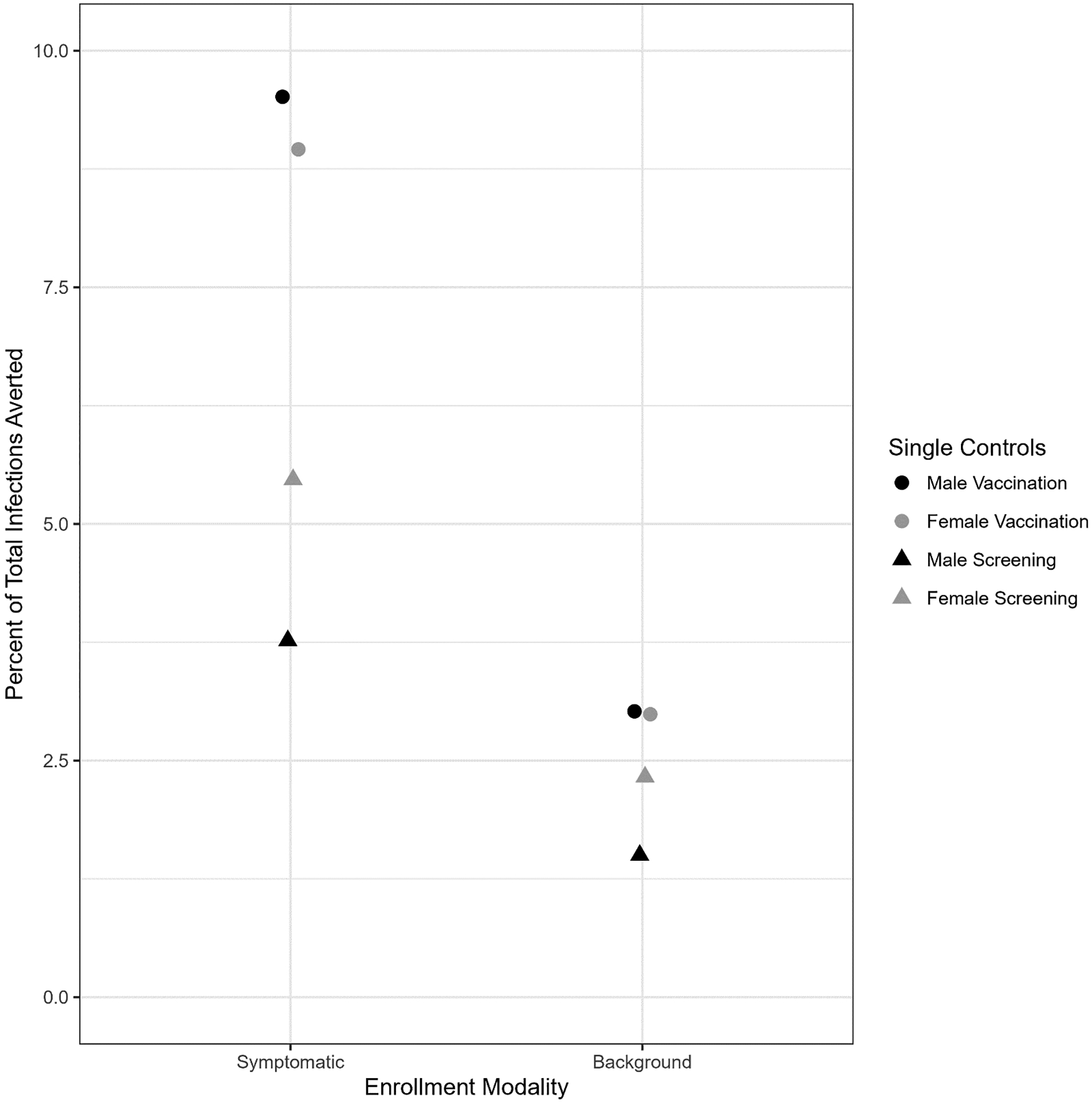
Vaccinating men with recent symptomatic infection, which selected for higher sexual activity, was optimal for population-level gonorrhea control. Given a prevention budget of $3 per capita, 9.5% of infections could be averted ($299 per infection averted), decreasing gonorrhea sequelae and associated antimicrobial use by similar percentages. These results were consistent across sensitivity analyses that increased the budget, prioritized incidence or prevalence reductions in women, or lowered screening costs. Under a scenario where only screening was implemented, just 5.5% of infections were averted.
Conclusions
A currently available vaccine, though only modestly effective, may be superior to frequent testing for population-level gonorrhea control. -
Subjects:
-
Keywords:
-
Source:Sex Transm Dis. 51(6):381-387
-
Pubmed ID:38403294
-
Pubmed Central ID:PMC11088522
-
Document Type:
-
Funding:
-
Volume:51
-
Issue:6
-
Download URL:
-
File Type:
 [PDF - 709.38 KB]
 -
Collection(s):
-
Main Document Checksum:urn:sha-512:c9f72a814d48164244514606cc746dcd854add370ad3593cd270c3445afcda527de87a18e302fa0afd14566b6c55984cf95df8a5da97cf1f5224fd7a57a3c228
Supporting Files


File Language:
English
 Was this page helpful?
 Found an issue?



CDC STACKS serves as an archival repository of CDC-published products including
scientific findings, journal articles, guidelines, recommendations, or other public health information authored or
co-authored by CDC or funded partners.
As a repository, CDC STACKS retains documents in their original published format to ensure public access to scientific information.
As a repository, CDC STACKS retains documents in their original published format to ensure public access to scientific information.
You May Also Like
COLLECTION
CDC Public Access