


Impact of Universal Screening and Automated Clinical Decision Support for the Treatment of Opioid Use Disorder in Emergency Departments: A Difference-in-Differences Analysis
Supporting Files

-
8 2023
-
File Language:
English
Details
-
Alternative Title:Ann Emerg Med
-
Personal Author:
-
Description:Study objective:
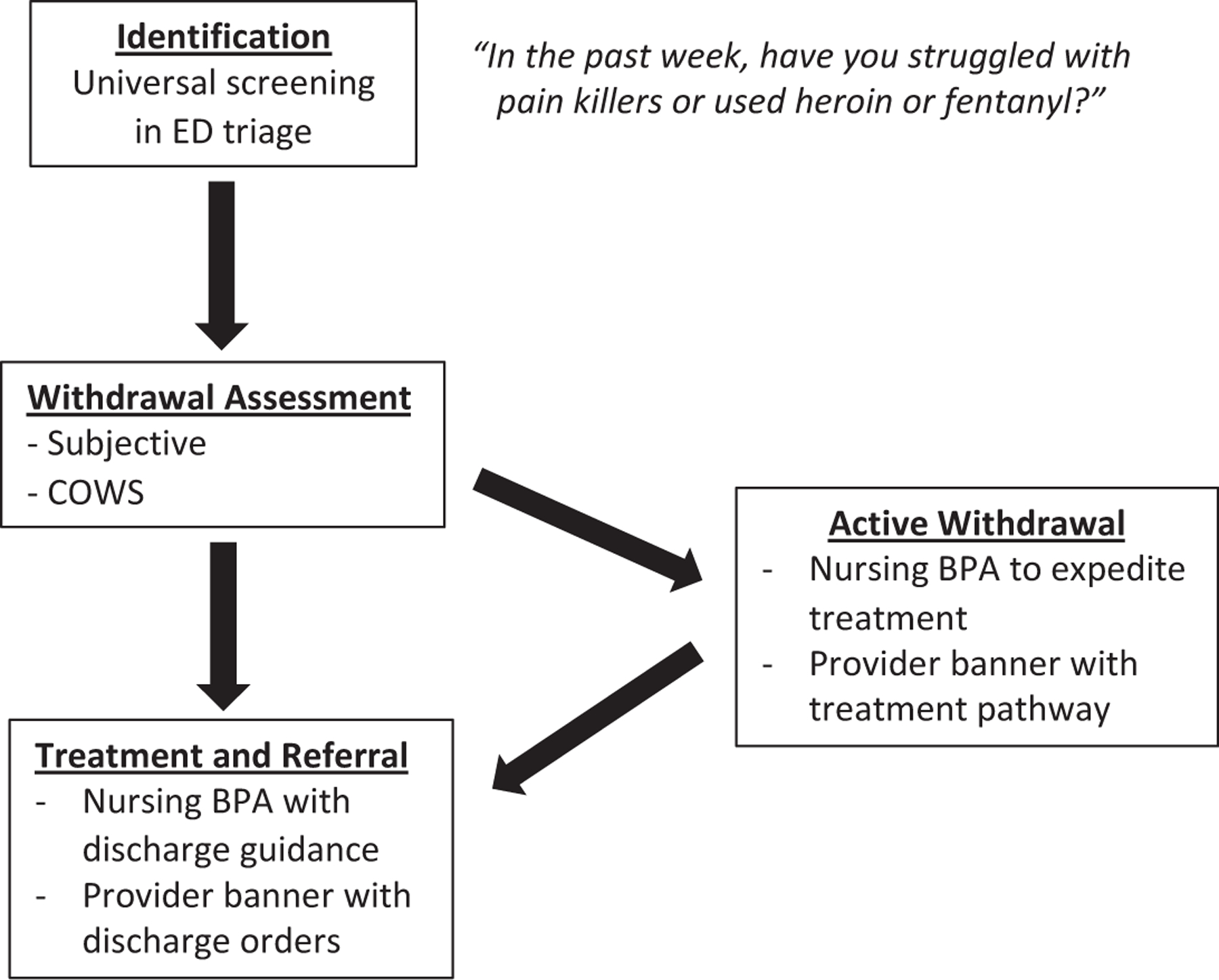
Emergency department (ED)–initiated buprenorphine improves outcomes in patients with opioid use disorder; however, adoption varies widely. To reduce variability, we implemented a nurse-driven triage screening question in the electronic health record to identify patients with opioid use disorder, followed by targeted electronic health record prompts to measure withdrawal and guide next steps in management, including initiation of treatment. Our objective was to assess the impact of screening implementation in 3 urban, academic EDs.
Methods:
We conducted a quasiexperimental study of opioid use disorder–related ED visits using electronic health record data from January 2020 to June 2022. The triage protocol was implemented in 3 EDs between March and July 2021, and 2 other EDs in the health system served as controls. We evaluated changes in treatment measures over time and used a difference-in-differences analysis to compare outcomes in the 3 intervention EDs with those in the 2 controls.
Results:
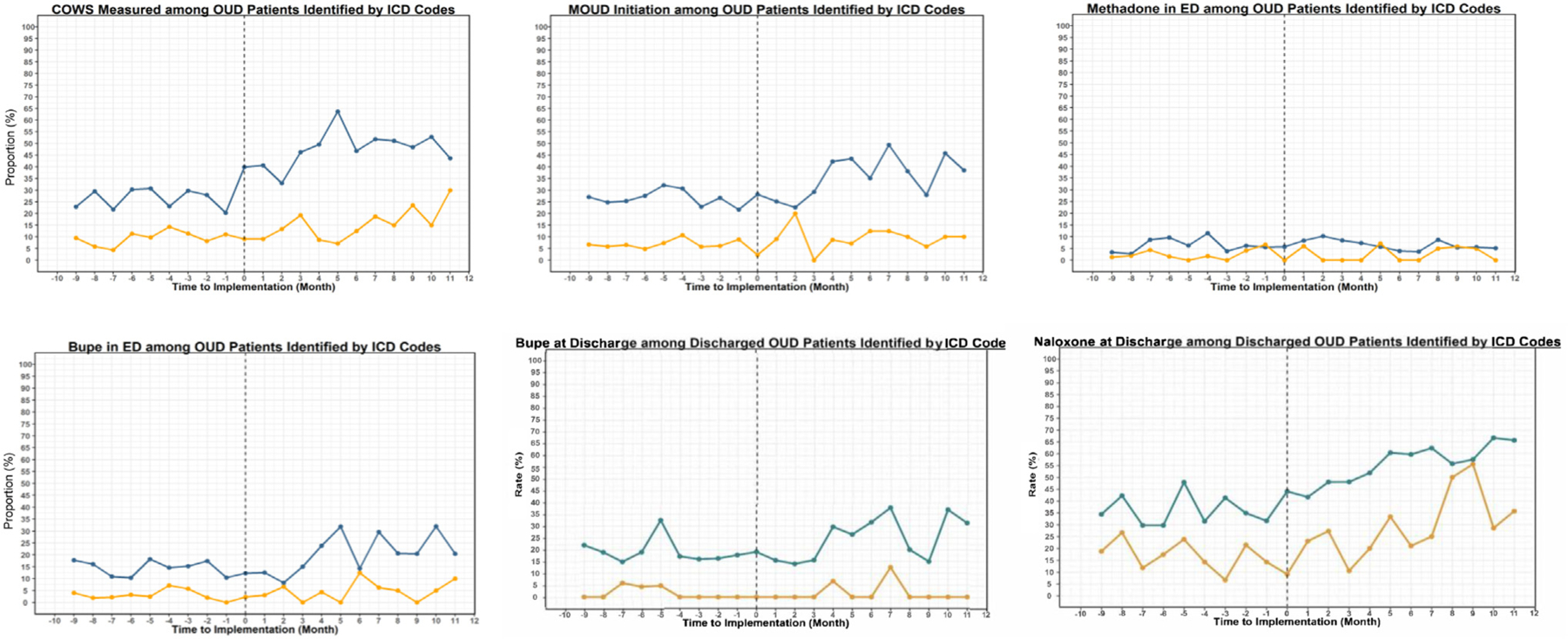
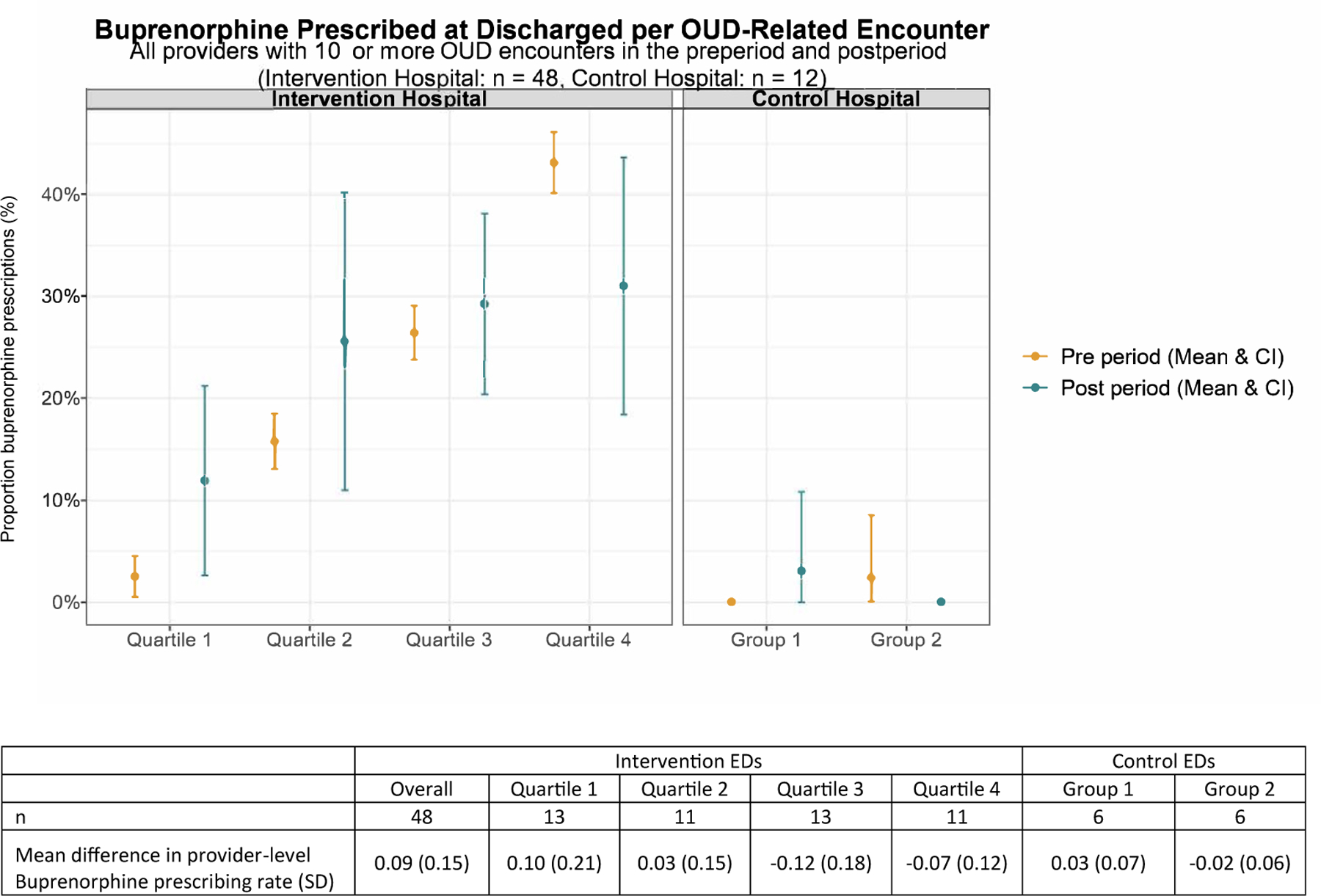
There were 2,462 visits in the intervention hospitals (1,258 in the preperiod and 1,204 in the postperiod) and 731 in the control hospitals (459 in the preperiod and 272 in the postperiod). Patient characteristics within the intervention and control EDs were similar across the time periods. Compared with the control hospitals, the triage protocol was associated with a 17% greater increase in withdrawal assessment, using the Clinical Opioid Withdrawal Scale (COWS) (95% CI 7 to 27). Buprenorphine prescriptions at discharge also increased by 5% (95% CI 0% to 10%), and naloxone prescriptions increased by 12% points (95% CI 1% to 22%) in the intervention EDs relative to controls.
Conclusion:
An ED triage screening and treatment protocol led to increased assessment and treatment of opioid use disorder. Protocols designed to make screening and treatment the default practice have promise in increasing the implementation of evidence-based treatment ED opioid use disorder care.
-
Subjects:
-
Source:Ann Emerg Med. 82(2):131-144
-
Pubmed ID:37318434
-
Pubmed Central ID:PMC11019868
-
Document Type:
-
Funding:
-
Volume:82
-
Issue:2
-
Collection(s):
-
Main Document Checksum:urn:sha256:bb669c061ad4059bb4e5333b89b9a779d567856aa38850bd0edeec8a16e433d6
-
Download URL:
-
File Type:
 [PDF
- 1016.67 KB
]
[PDF
- 1016.67 KB
]
Supporting Files


File Language:
English
ON THIS PAGE


CDC STACKS serves as an archival repository of CDC-published products including
scientific findings,
journal articles, guidelines, recommendations, or other public health information authored or
co-authored by CDC or funded partners.
As a repository, CDC STACKS retains documents in their original published format to ensure public access to scientific information.
As a repository, CDC STACKS retains documents in their original published format to ensure public access to scientific information.
You May Also Like
COLLECTION
CDC Public Access