



HIV-1 genetic diversity to estimate time of infection and infer adherence to preexposure prophylaxis
Supporting Files

-
12 01 2019 ; 12-01-
-
Available in CDC Stacks on April 08, 2024, 12:00 AM
File Language:
English
Details
-
Alternative Title:AIDS
-
Personal Author:Council, Olivia D. ; Ruone, Susan ; Mock, Philip A. ; Khalil, George ; Martin, Amy ; Curlin, Marcel E. ; McNicholl, Janet M. ; Heneine, Walid ; Leelawiwat, Wanna ; Choopanya, Kachit ; Vanichseni, Suphak ; Cherdtrakulkiat, Thitima ; Anekvorapong, Rapeepan ; Martin, Michael ; García-Lerma, José Gerardo
-
Description:Objective:
To estimate time of HIV infection in participants from the Bangkok Tenofovir Study (BTS) with daily oral tenofovir disoproxil fumarate (TDF) for preexposure prophylaxis (PrEP) and relate infection with adherence patterns.
Design:
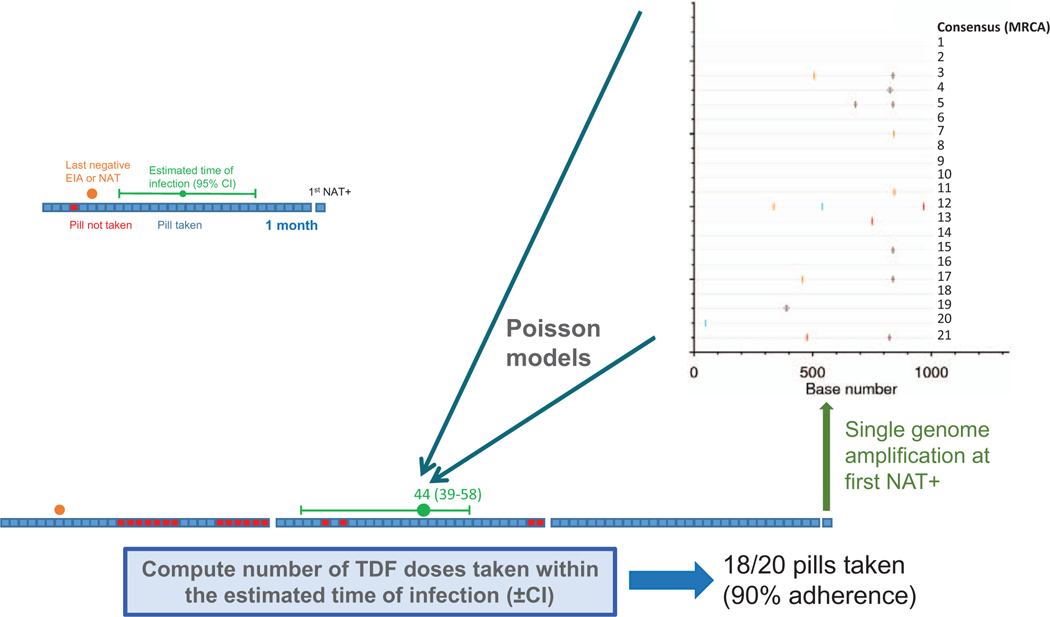
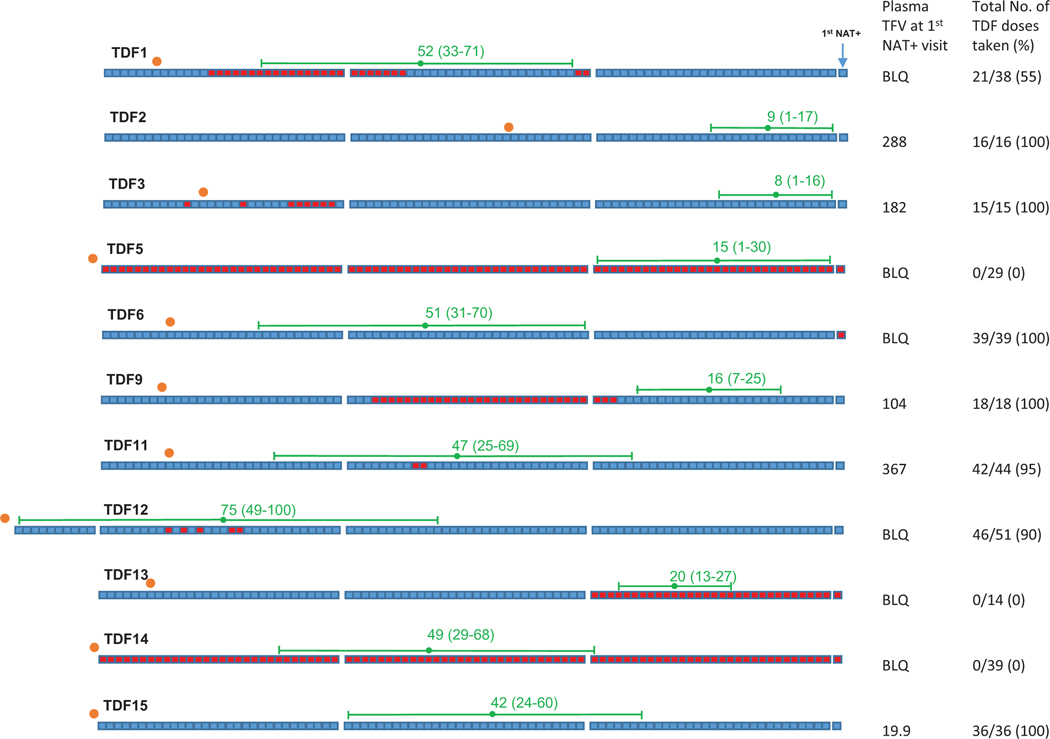
We used the diversity structure of the virus population at the first HIV RNA-positive sample to estimate the date of infection, and mapped these estimates to medication diaries obtained under daily directly observed therapy (DOT).
Methods:
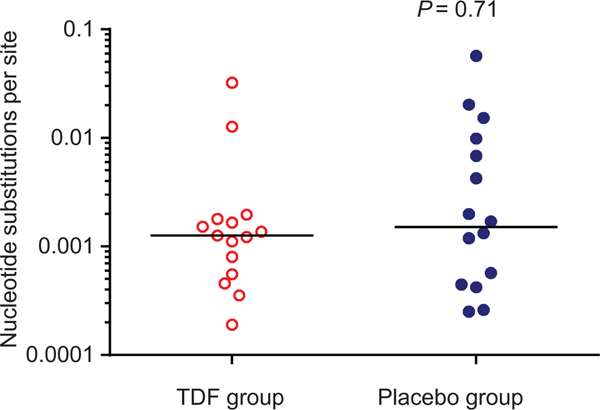
HIV genetic diversity was investigated in all 17 PrEP breakthrough infections and in 16 placebo recipients. We generated 10–25 HIV env sequences from each participant by single genome amplification, and calculated time since infection (and 95% confidence interval) using Poisson models of early virus evolution. Study medication diaries obtained under daily DOT were then used to compute the number of missed TDF doses at the approximate date of infection.
Results:
Fifteen of the 17 PrEP breakthrough infections were successfully amplified. Of these, 13 were initiated by a single genetic variant and generated reliable estimates of time since infection (median = 47 IQR = 35 days). Eleven of these 13 were under daily DOT at the estimated time of infection. Analysis of medication diaries in these 11 participants showed 100% adherence in five, 90–95% adherence in two, 55% adherence in one, and nonadherence in three.
Conclusion:
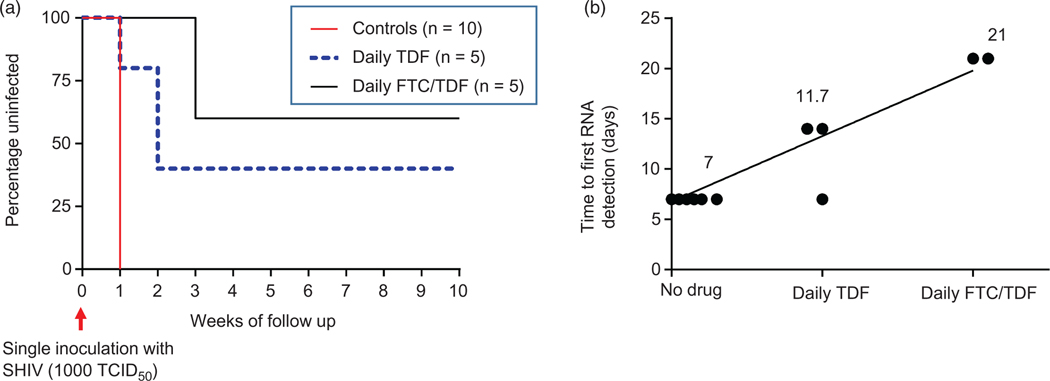
We estimated time of infection in participants from BTS and found several infections when high levels of adherence to TDF were reported. Our results suggest that the biological efficacy of daily TDF against parenteral HIV exposure is not 100%. -
Subjects:
-
Keywords:
-
Source:AIDS. 33(15):2299-2307
-
Pubmed ID:31764095
-
Pubmed Central ID:PMC11000142
-
Document Type:
-
Funding:
-
Volume:33
-
Issue:15
-
Download URL:
-
File Type:
 [PDF - 785.74 KB]
 -
Collection(s):
-
Main Document Checksum:urn:sha256:0465098ecdeca31781f78cc44484bca2961a7ae46027b0d8b21ef8a089bfc776
Supporting Files


File Language:
English
 Was this page helpful?
 Found an issue?

CDC STACKS serves as an archival repository of CDC-published products including
scientific findings, journal articles, guidelines, recommendations, or other public health information authored or
co-authored by CDC or funded partners.
As a repository, CDC STACKS retains documents in their original published format to ensure public access to scientific information.
As a repository, CDC STACKS retains documents in their original published format to ensure public access to scientific information.
You May Also Like
COLLECTION
CDC Public Access