


Outbreak of Mycobacterium chelonae Infection Associated with Tattoo Ink
Supporting Files

-
9 13 2012
-
File Language:
English
Details
-
Alternative Title:N Engl J Med
-
Personal Author:Kennedy, Byron S. ; Bedard, Brenden ; Younge, Mary ; Tuttle, Deborah ; Ammerman, Eric ; Ricci, John ; Doniger, Andrew S. ; Escuyer, Vincent E. ; Mitchell, Kara ; Noble-Wang, Judith A. ; O’Connell, Heather A. ; Lanier, William A. ; Katz, Linda M. ; Betts, Robert F. ; Mercurio, Mary Gail ; Scott, Glynis A. ; Lewis, Matthew A. ; Goldgeier, Mark H.
-
Description:BACKGROUND
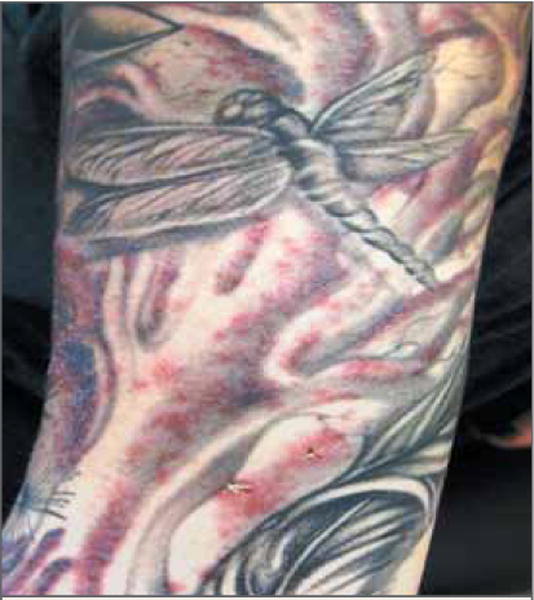
In January 2012, on the basis of an initial report from a dermatologist, we began to investigate an outbreak of tattoo-associated Mycobacterium chelonae skin and soft-tissue infections in Rochester, New York. The main goals were to identify the extent, cause, and form of transmission of the outbreak and to prevent further cases of infection.
METHODS
We analyzed data from structured interviews with the patients, histopathological testing of skin-biopsy specimens, acid-fast bacilli smears, and microbial cultures and antimicrobial susceptibility testing. We also performed DNA sequencing, pulsed-field gel electrophoresis (PFGE), cultures of the ink and ingredients used in the preparation and packaging of the ink, assessment of source water and faucets at tattoo parlors, and investigation of the ink manufacturer.
RESULTS
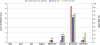
Between October and December 2011, a persistent, raised, erythematous rash in the tattoo area developed in 19 persons (13 men and 6 women) within 3 weeks after they received a tattoo from a single artist who used premixed gray ink; the highest occurrence of tattooing and rash onset was in November (accounting for 15 and 12 patients, respectively). The average age of the patients was 35 years (range, 18 to 48). Skin-biopsy specimens, obtained from 17 patients, showed abnormalities in all 17, with M. chelonae isolated from 14 and confirmed by means of DNA sequencing. PFGE analysis showed indistinguishable patterns in 11 clinical isolates and one of three unopened bottles of premixed ink. Eighteen of the 19 patients were treated with appropriate antibiotics, and their condition improved.
CONCLUSIONS
The premixed ink was the common source of infection in this outbreak. These findings led to a recall by the manufacturer.
-
Subjects:
-
Source:N Engl J Med. 367(11):1020-1024
-
Pubmed ID:22913660
-
Pubmed Central ID:PMC10973765
-
Document Type:
-
Funding:
-
Volume:367
-
Issue:11
-
Collection(s):
-
Main Document Checksum:urn:sha-512:cf15951ac72a530cedb20e1c2832ae06269f2d82f04fab69ed69da29c548041f9c1c0957ad72bf095b6a8dc637fcd0efb60b75a32ce3b858b8c26ac3d52b4d73
-
Download URL:
-
File Type:
 [PDF
- 132.27 KB
]
[PDF
- 132.27 KB
]
Supporting Files


File Language:
English
ON THIS PAGE



CDC STACKS serves as an archival repository of CDC-published products including
scientific findings,
journal articles, guidelines, recommendations, or other public health information authored or
co-authored by CDC or funded partners.
As a repository, CDC STACKS retains documents in their original published format to ensure public access to scientific information.
As a repository, CDC STACKS retains documents in their original published format to ensure public access to scientific information.
You May Also Like
COLLECTION
CDC Public Access