



Prevalence of intellectual disability among eight-year-old children from selected communities in the United States, 2014
Supporting Files

-
2021/04/01
-
Available in CDC Stacks on March 25, 2024, 12:00 AM
File Language:
English
Details
-
Alternative Title:Disabil Health J
-
Personal Author:
-
Description:Background:
Children with intellectual disability (ID), characterized by impairments in intellectual functioning and adaptive behavior, benefit from early identification and access to services. Previous U.S. estimates used administrative data or parent report with limited information for demographic subgroups.
Objective:
Using empiric measures we examined ID characteristics among 8-year-old children and estimated prevalence by sex, race/ethnicity, geographic area and socioeconomic status (SES) area indicators.
Methods:
We analyzed data for 8-year-old children in 9 geographic areas participating in the 2014 Autism and Developmental Disabilities Monitoring Network. Children with ID were identified through record review of IQ test data. Census and American Community Survey data were used to estimate the denominator.
Results:
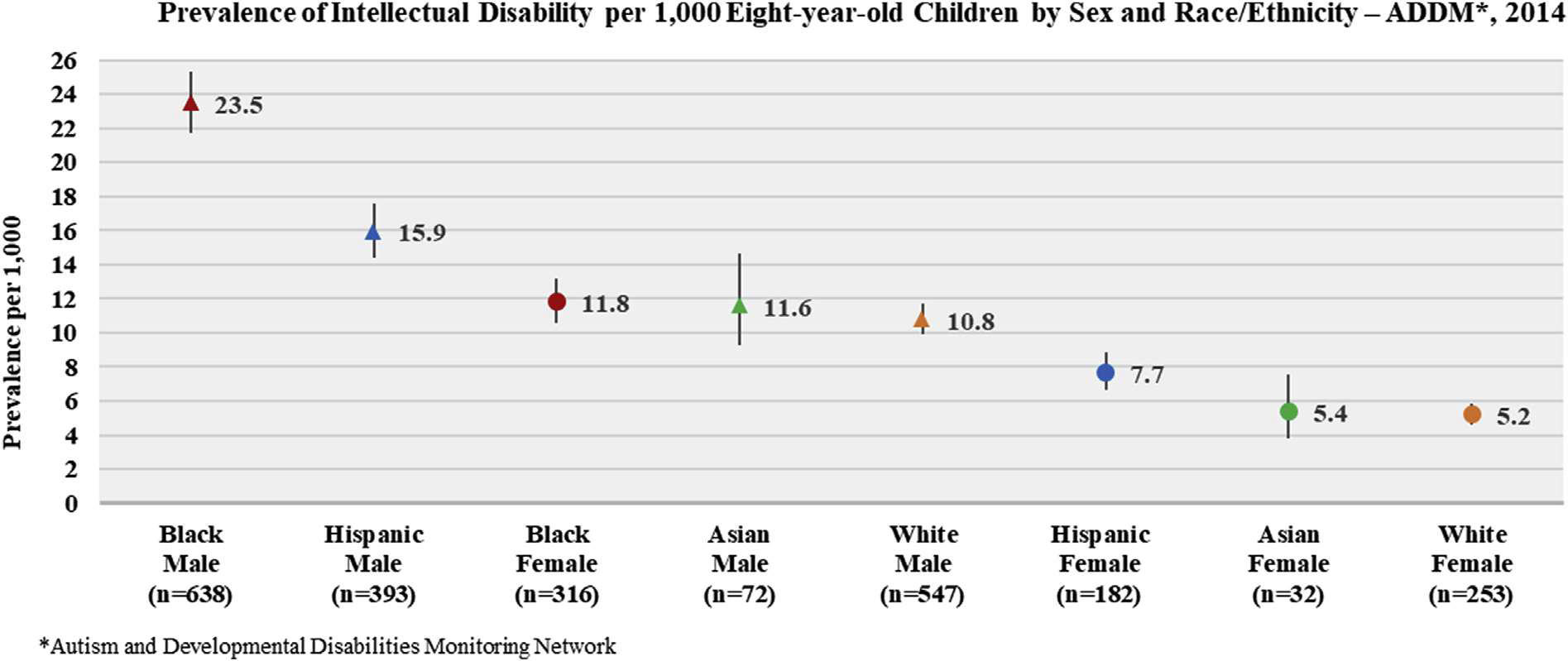
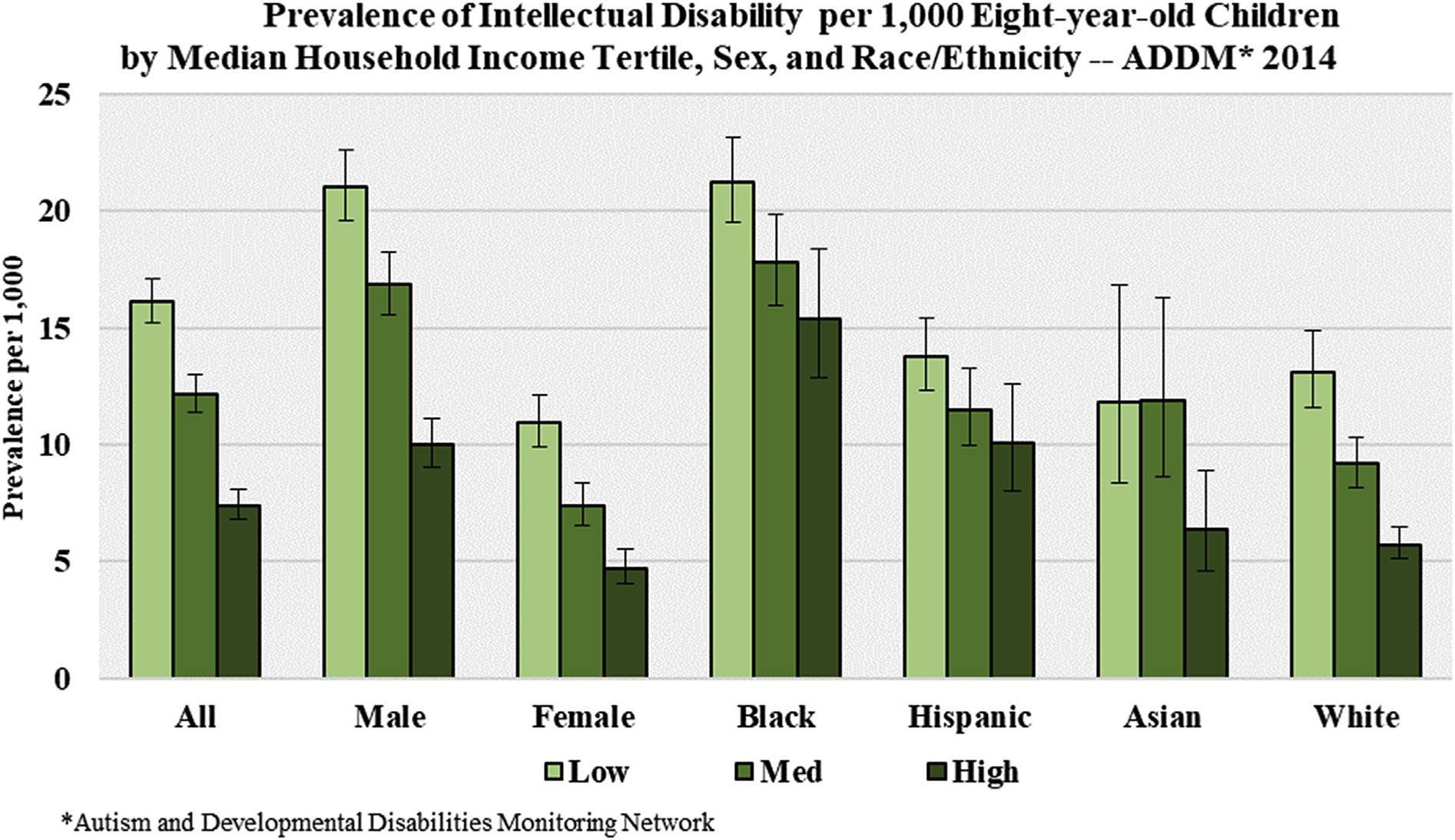
Overall, 11.8 per 1,000 (1.2%) had ID (IQ ≤ 70), of whom 39% (n = 998) also had autism spectrum disorder. Among children with ID, 1,823 had adaptive behavior test scores for which 64% were characterized as impaired. ID prevalence per 1,000 was 15.8 (95% confidence interval 95% CI, 15.0-16.5) among males and 7.7 (95% CI, 7.2-8.2) among females. ID prevalence was 17.7 (95% CI, 16.6-18.9) among children who were non-Hispanic black; 12.0 (95% CI, 11.1-13.0), among Hispanic: 8.6 (95% CI, 7.1-10.4), among non-Hispanic Asian; and 8.0 (95% CI, 7.5-8.6), among non-Hispanic white. Prevalence varied across geographic areas and was inversely associated with SES.
Conclusions:
ID prevalence varied substantively among racial, ethnic, geographic, and SES groups. Results can inform strategies to enhance identification and improve access to services particularly for children who are minorities or living in areas with lower SES. -
Subjects:
-
Keywords:
-
Source:Disabil Health J. 14(2):101023
-
Pubmed ID:33272883
-
Pubmed Central ID:PMC10962268
-
Document Type:
-
Funding:
-
Genre:
-
Volume:14
-
Issue:2
-
Download URL:
-
File Type:
 [PDF - 545.13 KB]
 -
Collection(s):
-
Main Document Checksum:urn:sha-512:c02d6e72b607473f75bc6395fe91187a45abf3c8a4e149f73b0d6850660bee13c95ba36abeddb7d55c6de006616ef980d629356bf7c921cd1743ab115579e427
Supporting Files


File Language:
English
 Was this page helpful?
 Found an issue?

CDC STACKS serves as an archival repository of CDC-published products including
scientific findings, journal articles, guidelines, recommendations, or other public health information authored or
co-authored by CDC or funded partners.
As a repository, CDC STACKS retains documents in their original published format to ensure public access to scientific information.
As a repository, CDC STACKS retains documents in their original published format to ensure public access to scientific information.
You May Also Like
COLLECTION
CDC Public Access