


Prevalence and Factors Associated With Safe Infant Sleep Practices
Supporting Files

-
11 2019
-
File Language:
English
Details
-
Alternative Title:Pediatrics
-
Personal Author:
-
Description:OBJECTIVES:
To examine prevalence of safe infant sleep practices and variation by sociodemographic, behavioral, and health care characteristics, including provider advice.
METHODS:
Using 2016 Pregnancy Risk Assessment Monitoring System data from 29 states, we examined maternal report of 4 safe sleep practices indicating how their infant usually slept: (1) back sleep position, (2) separate approved sleep surface, (3) room-sharing without bed-sharing, and (4) no soft objects or loose bedding as well as receipt of health care provider advice corresponding to each sleep practice.
RESULTS:
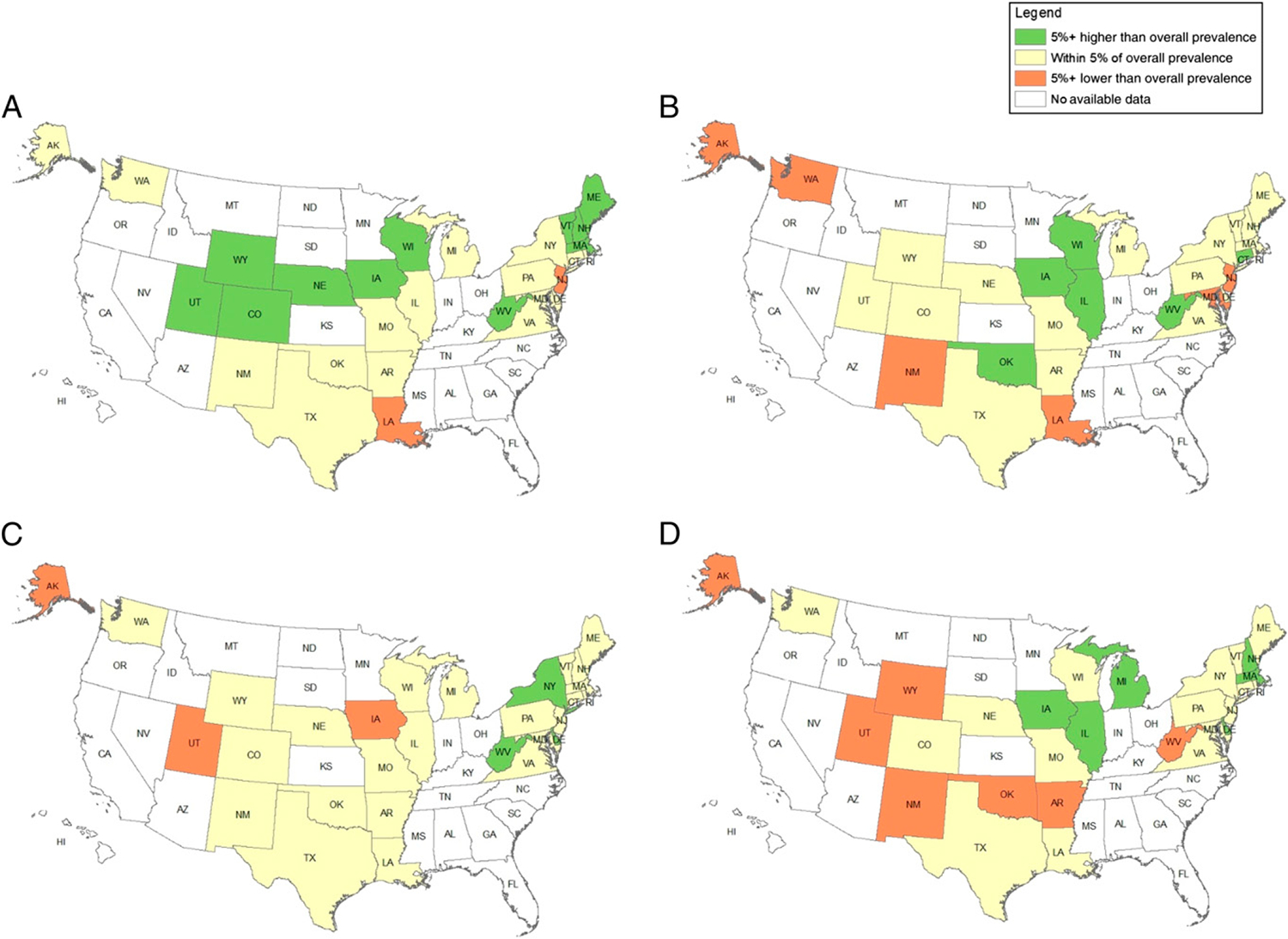
Most mothers reported usually placing their infants to sleep on their backs (78.0%), followed by room-sharing without bed-sharing (57.1%). Fewer reported avoiding soft bedding (42.4%) and using a separate approved sleep surface (31.8%). Reported receipt of provider advice ranged from 48.8% (room-sharing without bed-sharing) to 92.6% (back sleep position). Differences by sociodemographic, behavioral, and health care characteristics were larger for safe sleep practices (~10–20 percentage points) than receipt of advice (~5–10 percentage points). Receipt of provider advice was associated with increased use of safe sleep practices, ranging from 12% for room-sharing without bed-sharing (adjusted prevalence ratio: 1.12; 95% confidence interval: 1.09–1.16) to 28% for back sleep position (adjusted prevalence ratio: 1.28; 95% confidence interval: 1.21–1.35). State-level differences in safe sleep practices spanned 20 to 25 percentage points and did not change substantially after adjustment for available characteristics.
CONCLUSIONS:
Safe infant sleep practices, especially those other than back sleep position, are suboptimal, with demographic and state-level differences indicating improvement opportunities. Receipt of provider advice is an important modifiable factor to improve infant sleep practices.
-
Subjects:
-
Source:Pediatrics. 144(5)
-
Pubmed ID:31636142
-
Pubmed Central ID:PMC10935590
-
Document Type:
-
Funding:
-
Volume:144
-
Issue:5
-
Collection(s):
-
Main Document Checksum:urn:sha256:f12cae0a303c9ed7f419dd3b9f8cac3480574faf93a0c8884d34166903c7f835
-
Download URL:
-
File Type:
 [PDF
- 644.79 KB
]
[PDF
- 644.79 KB
]
Supporting Files


File Language:
English
ON THIS PAGE

CDC STACKS serves as an archival repository of CDC-published products including
scientific findings,
journal articles, guidelines, recommendations, or other public health information authored or
co-authored by CDC or funded partners.
As a repository, CDC STACKS retains documents in their original published format to ensure public access to scientific information.
As a repository, CDC STACKS retains documents in their original published format to ensure public access to scientific information.
You May Also Like
COLLECTION
CDC Public Access