



Visualizing the NIOSH Pocket Guide: Open-Source Web Application for Accessing and Exploring the NIOSH Pocket Guide to Chemical Hazards
Supporting Files

-
2024/01/01
-
Available in CDC Stacks on 2024-03-08T00:00:00Z
File Language:
English
Details
-
Journal Article:The Toxicologist. Society of Toxicology 61st Annual Meeting & ToxExpo, March 27-31, 2022, San Diego, California
-
Personal Author:
-
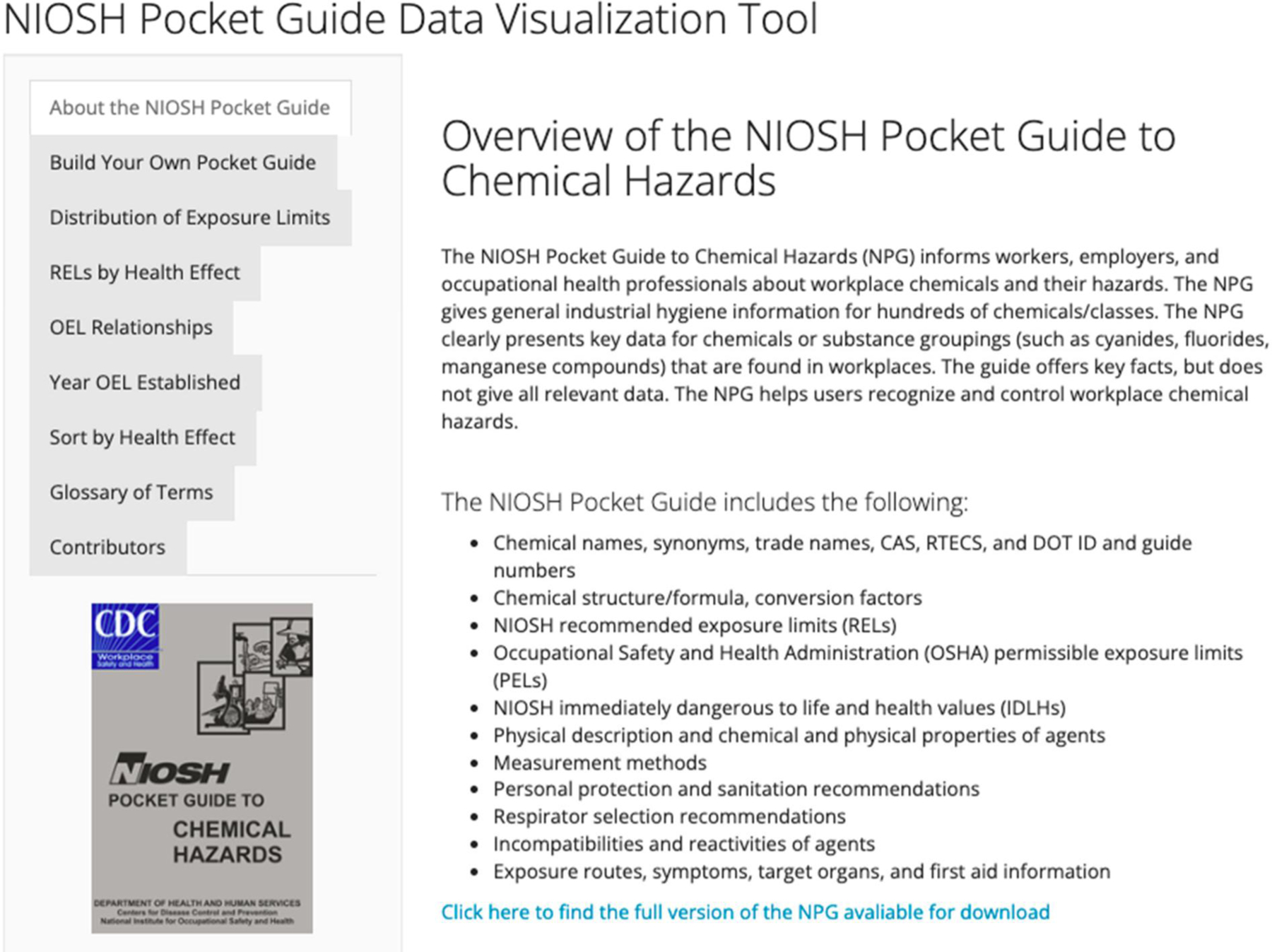
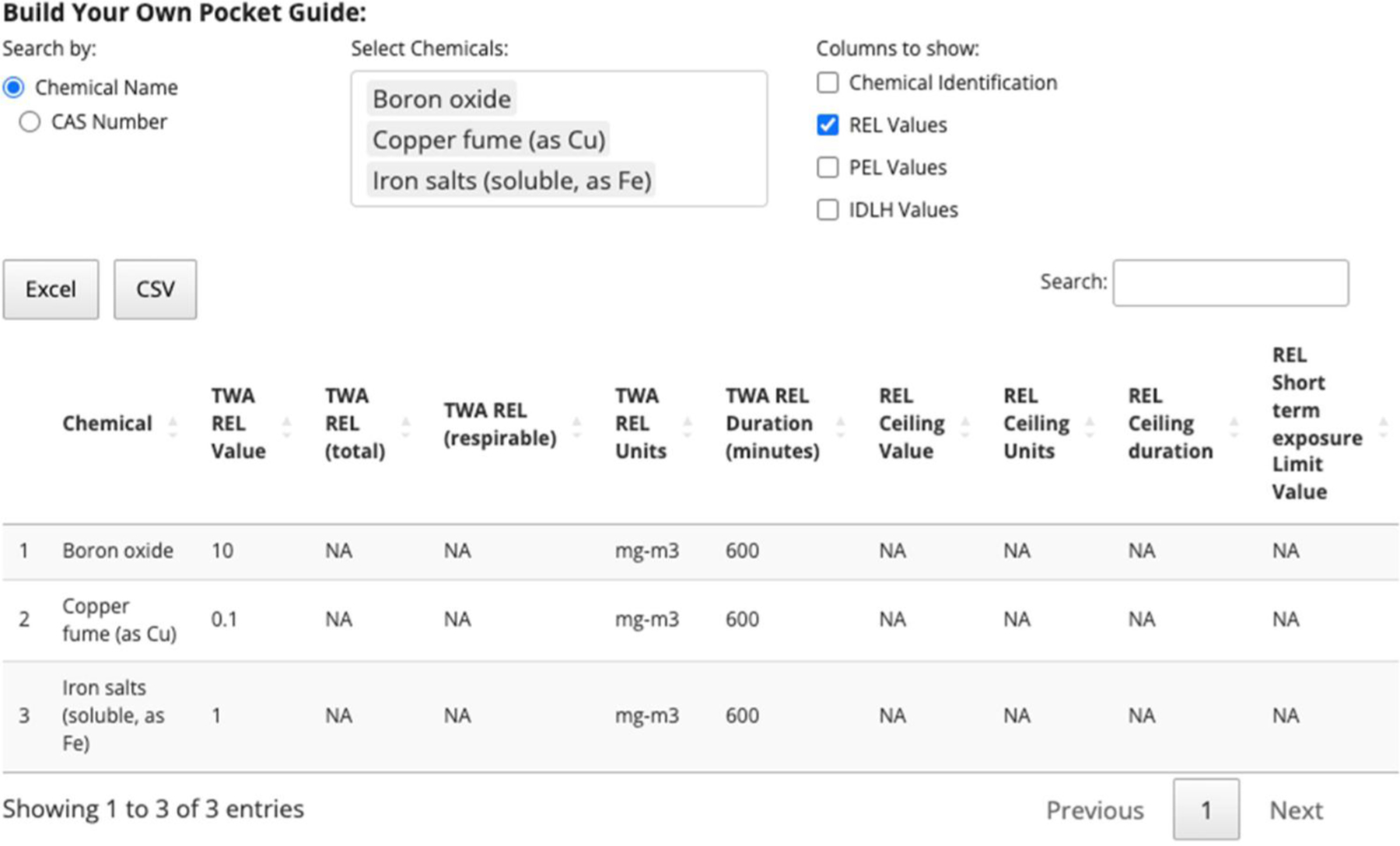
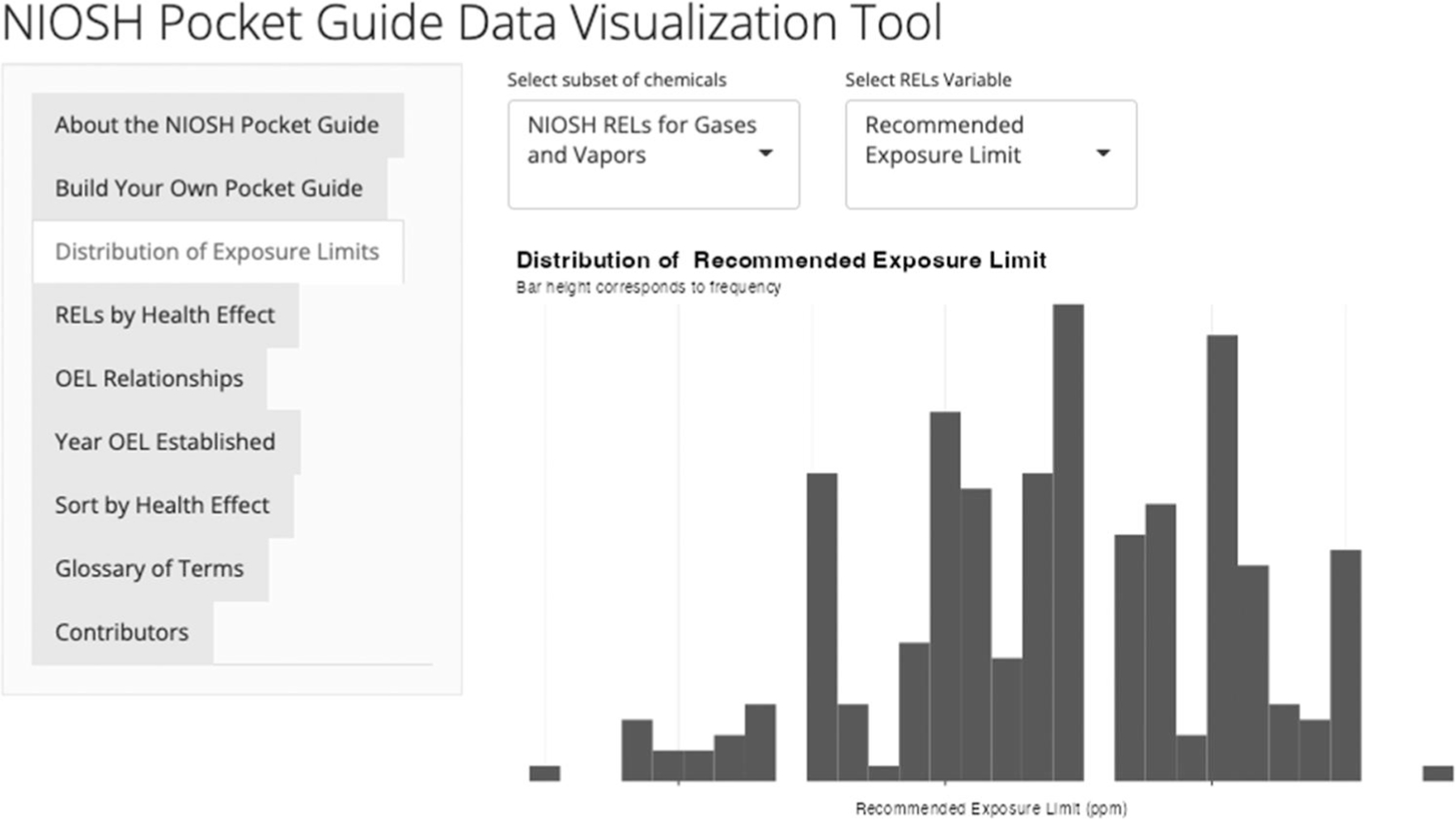
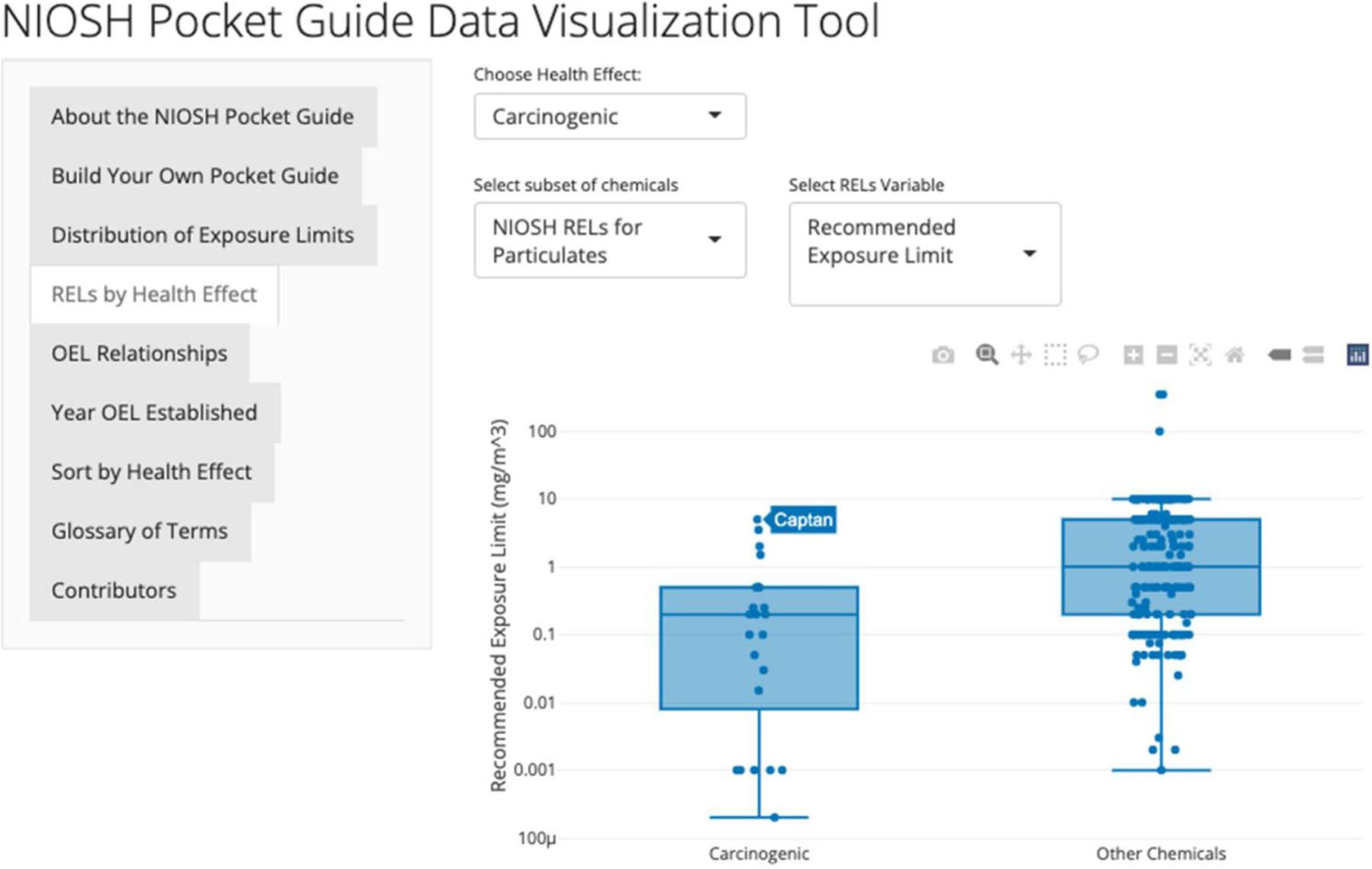
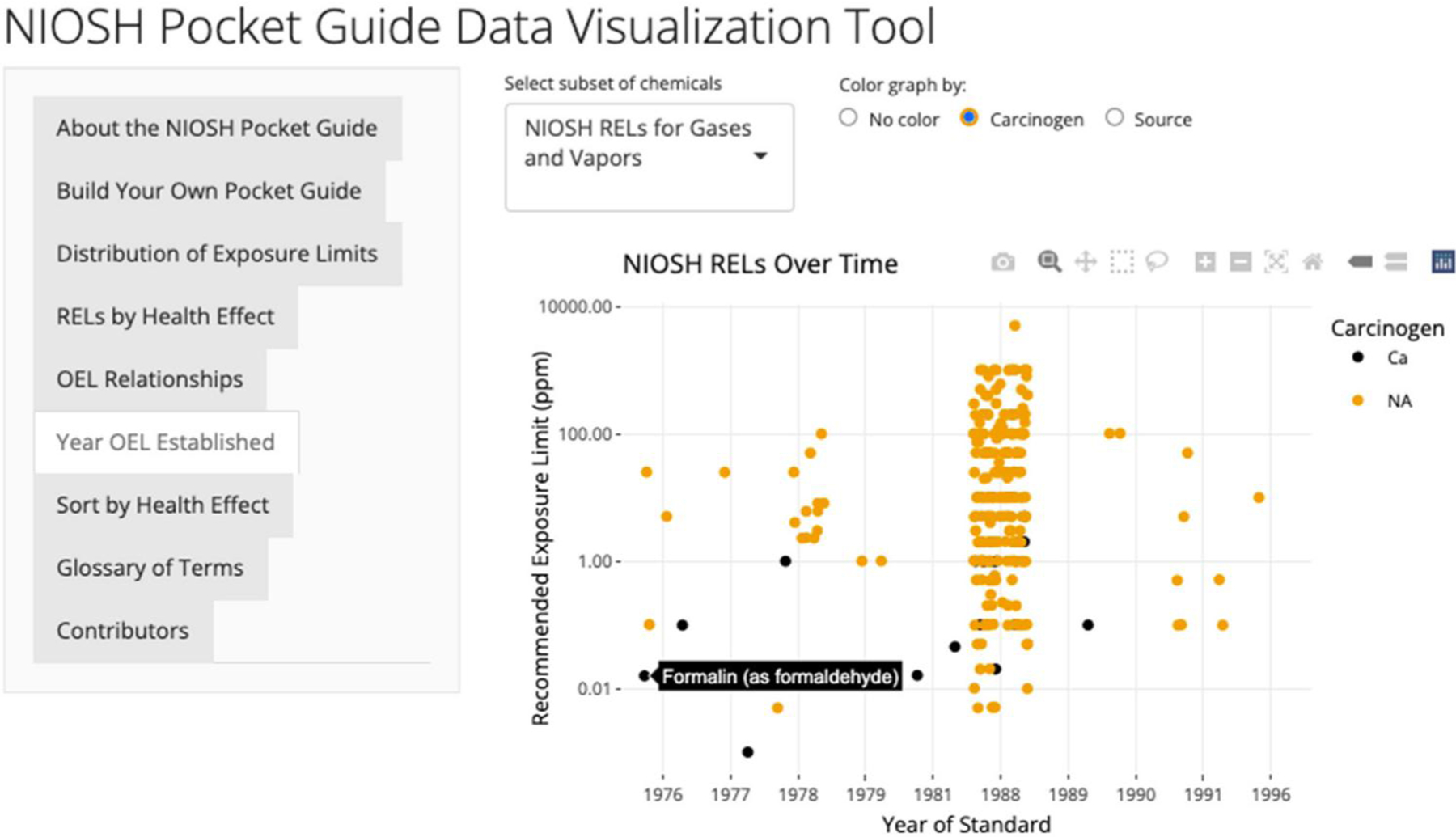
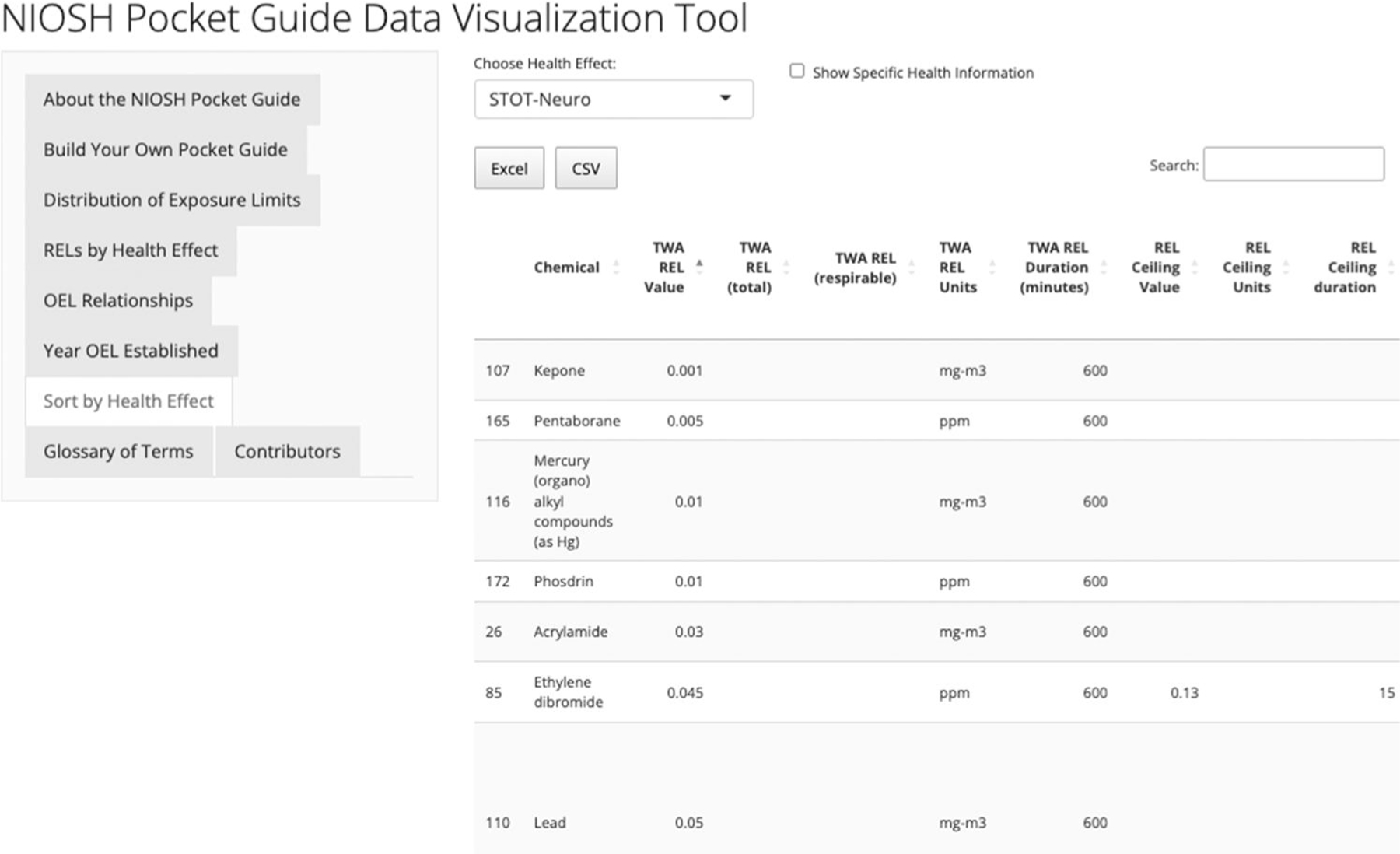
Description:The NIOSH Pocket Guide to Chemical Hazards (NPG) contains occupational hazard information on more than 677 substances and groups of substances. Occupational exposure limits (OEL) have been used as a composite measure of hazard to workers and are useful for comparing the toxicity of different chemicals. The online NPG allows users to review each chemical separately but does not support the investigation of questions about the relationship between occupational exposure limits (OEL) or the distribution of OELs for different types of chemicals. This project sought to develop an application in which questions of comparative toxicity could be answered by exploring the NIOSH recommended exposure limits (RELs), OSHA permissible exposure limits (PELs) and immediately dangerous to life or health (IDLHs) values in the NPG. Specifically, this project aims to develop an online, enhanced research version of the NPG that uses the data on NIOSH recommendations and OSHA standards in the NPG to explore relationships between them and assess distributions of OELs. Investigators started with the NPG data and added publicly available data describing the basis of the REL and the year the recommendation was established. These data were extracted from the NIOSH Compendium of Policy Documents and Statements (1992), the 1988 PEL Project Documentation, and individual NIOSH Criteria Documents. The data in the spreadsheet was cleaned and the "NIOSH REL," "OSHA PEL," and "IDLH" fields were expanded to facilitate statistical analysis and data visualization. The accuracy of the data entry was evaluated using a double entry technique and all discrepancies were resolved. The web application was built in R-Shiny and was designed to provide tabs for different tasks that might be of interest to researchers. Distributions of OELs, scatter plots to show trends and relationships among OELs and the ability to sort chemicals based on primary health effect are currently available in the draft application. In addition, the app allows users to select chemicals and build mini-Pocket Guides that focus directly on their chemicals of interest. The investigators are currently refining the draft application and inviting additional user feedback (https://dataviz.miamioh.edu/NIOSH-NPG/). Description provided by NIOSH
-
Subjects:
-
Keywords:
-
Source:Toxicologist 2022 Mar; 186(S1):274
-
ISSN:1096-6080
-
Pubmed ID:37874933
-
Pubmed Central ID:PMC10922582
-
Document Type:
-
Funding:
-
Genre:
-
Place as Subject:
-
CIO:
-
Division:
-
Topic:
-
Location:
-
Pages in Document:20 pdf pages
-
Volume:21
-
Issue:1
-
NIOSHTIC Number:nn:20064934
-
Federal Fiscal Year:2022
-
Peer Reviewed:False
-
Download URL:
-
File Type:
 [PDF - 1.06 MB]
 -
Collection(s):
-
Main Document Checksum:urn:sha-512:a85287a0de3d76f9a97500194d862990dbb5e91c51d5cc6c110d5e8424052546176b59abb45e5de2282de8738a2ea4b47c54afea66818ad0acf9bd6377b9603e
Supporting Files


File Language:
English
 Was this page helpful?
 Found an issue?



CDC STACKS serves as an archival repository of CDC-published products including
scientific findings, journal articles, guidelines, recommendations, or other public health information authored or
co-authored by CDC or funded partners.
As a repository, CDC STACKS retains documents in their original published format to ensure public access to scientific information.
As a repository, CDC STACKS retains documents in their original published format to ensure public access to scientific information.
You May Also Like