


Estimation of global recoverable human and animal fecal biomass
Supporting Files

-
2018
-
File Language:
English
Details
-
Alternative Title:Nat Sustain
-
Personal Author:
-
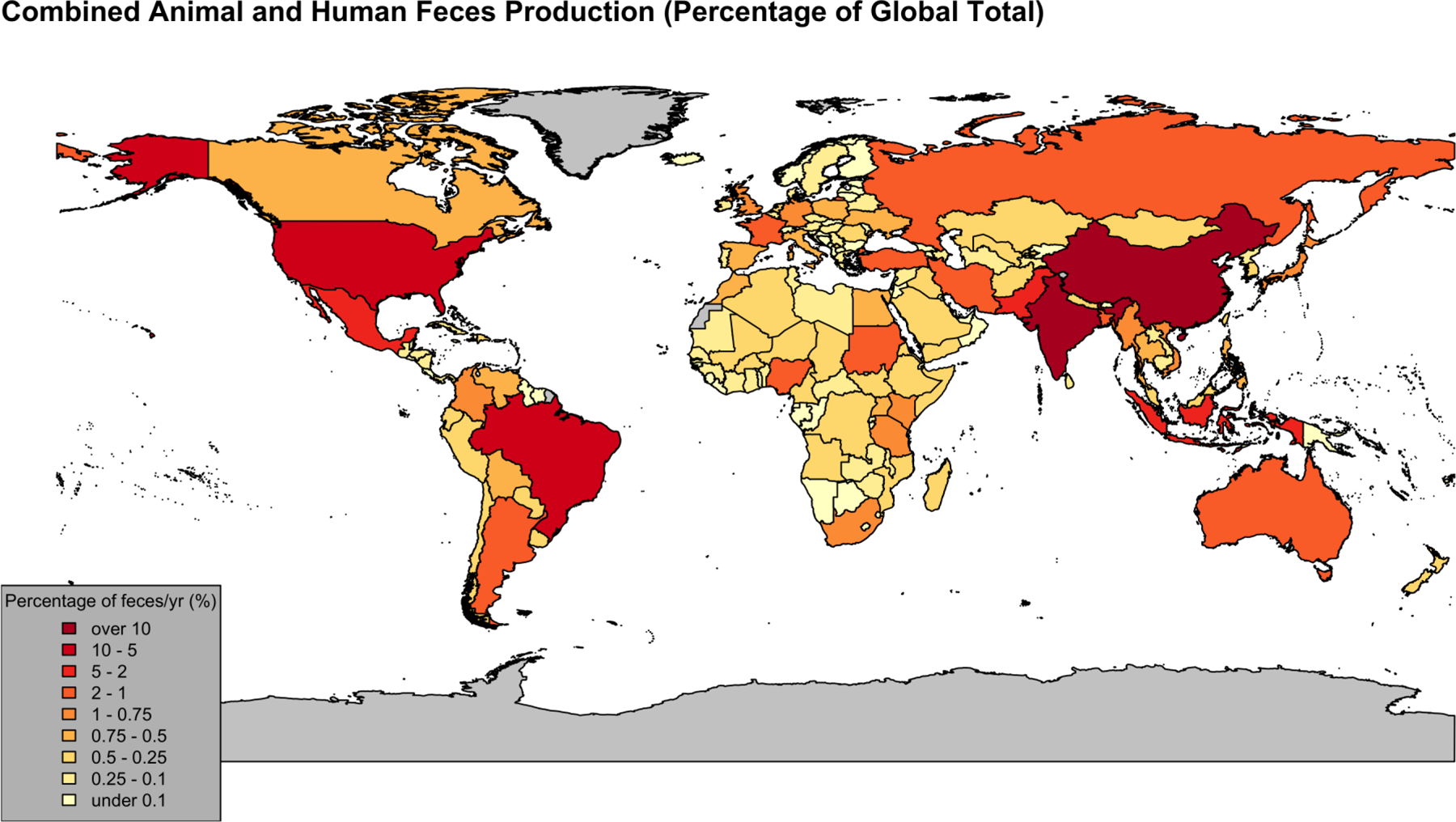
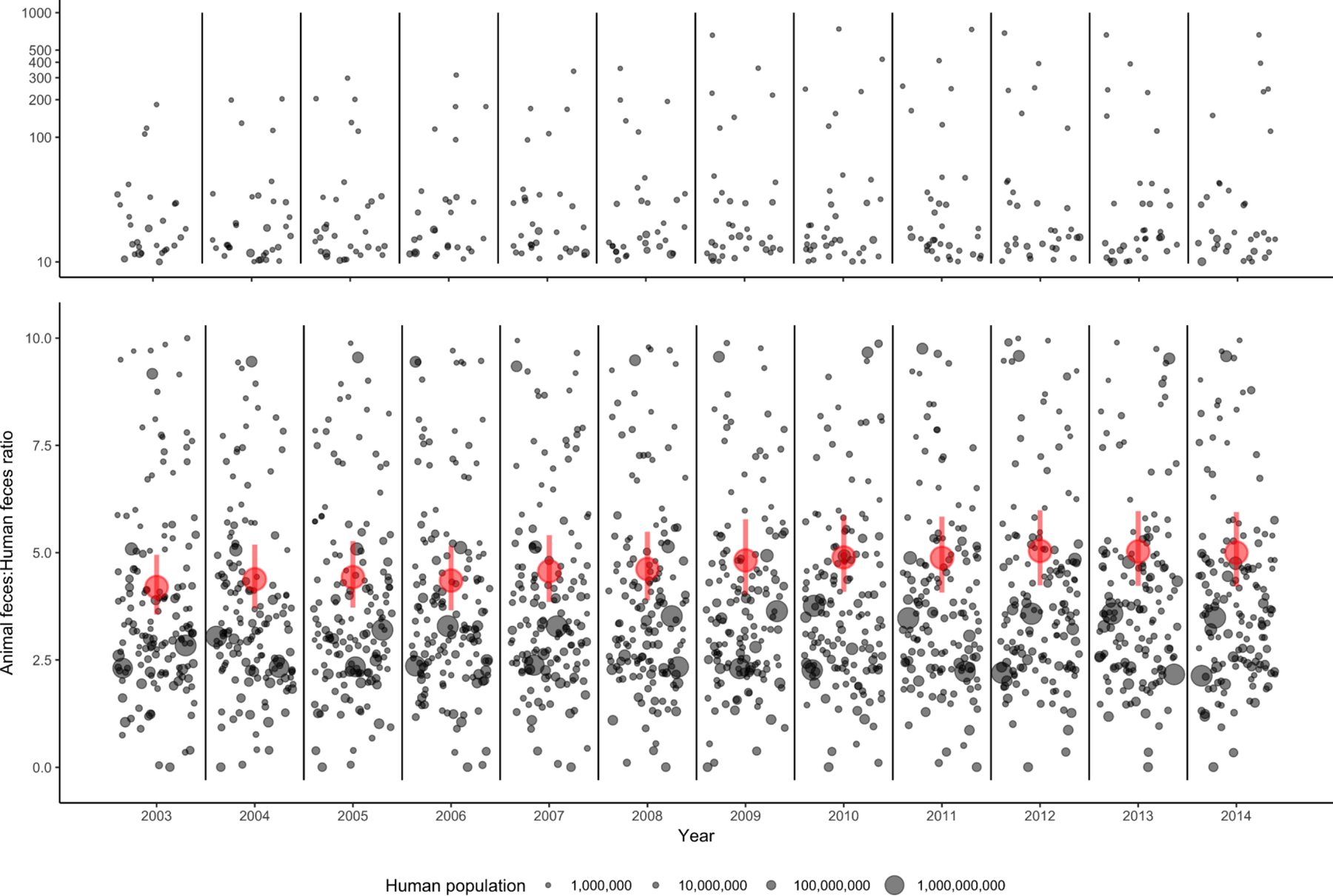
Description:Human and animal feces present persistent threats to global public health and also opportunities for recovery of resources. We present the first global-scale accounting of recoverable feces (livestock animal and human) -from 2003-2030-using country-specific human and animal population estimates and estimated species-specific feces production by human or animal body mass. We also examine global coverage of domestic livestock animals and sanitation facilities to describe the distribution of onsite vs. offsite hazards from animal and human feces. In 2014, the total mass of feces was 3.9 trillion kg/year, increasing by >52 billion kg/year since 2003 and anticipated to reach at least 4.6 trillion kg in 2030. Annual global production of feces from animals-primarily cattle, chickens, and sheep-was about four times that from humans, and ratios of animal:human feces continue to increase (geometric mean of 4.2:1 (2003) vs. 5.0:1 (2014) vs. a projected 6.0:1 (2030)). Low-income populations bear the greatest burden of onsite feces, mostly from animals in or near the domestic environment. This analysis highlights the challenges of resource recovery from concentrated and dispersed sources of feces, and the global public health policy need for safe management of animal feces.
-
Source:Nat Sustain. 1(11):679-685
-
Pubmed ID:38464867
-
Pubmed Central ID:PMC10922008
-
Document Type:
-
Funding:
-
Volume:1
-
Issue:11
-
Collection(s):
-
Main Document Checksum:urn:sha-512:5cd16252214f647ffbf958cc4abc160a76e995204d3aef8a06f055cab5dd56aa79dceb4abffea58a02b111e26115187450a42531c2dbee9c0987f3b327f80883
-
Download URL:
-
File Type:
 [PDF
- 1.09 MB
]
[PDF
- 1.09 MB
]
Supporting Files


File Language:
English
ON THIS PAGE




CDC STACKS serves as an archival repository of CDC-published products including
scientific findings,
journal articles, guidelines, recommendations, or other public health information authored or
co-authored by CDC or funded partners.
As a repository, CDC STACKS retains documents in their original published format to ensure public access to scientific information.
As a repository, CDC STACKS retains documents in their original published format to ensure public access to scientific information.