



Estimation of human feces-associated extended spectrum beta-lactamase-producing E. coli discharge into sanitation systems: a first global- and regional-scale calculation
Supporting Files

-
6 2020 ; 6-2020
-
Available in CDC Stacks on 2024-03-01T00:00:00Z
File Language:
English
Details
-
Alternative Title:Lancet Planet Health
-
Personal Author:
-
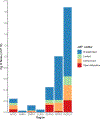
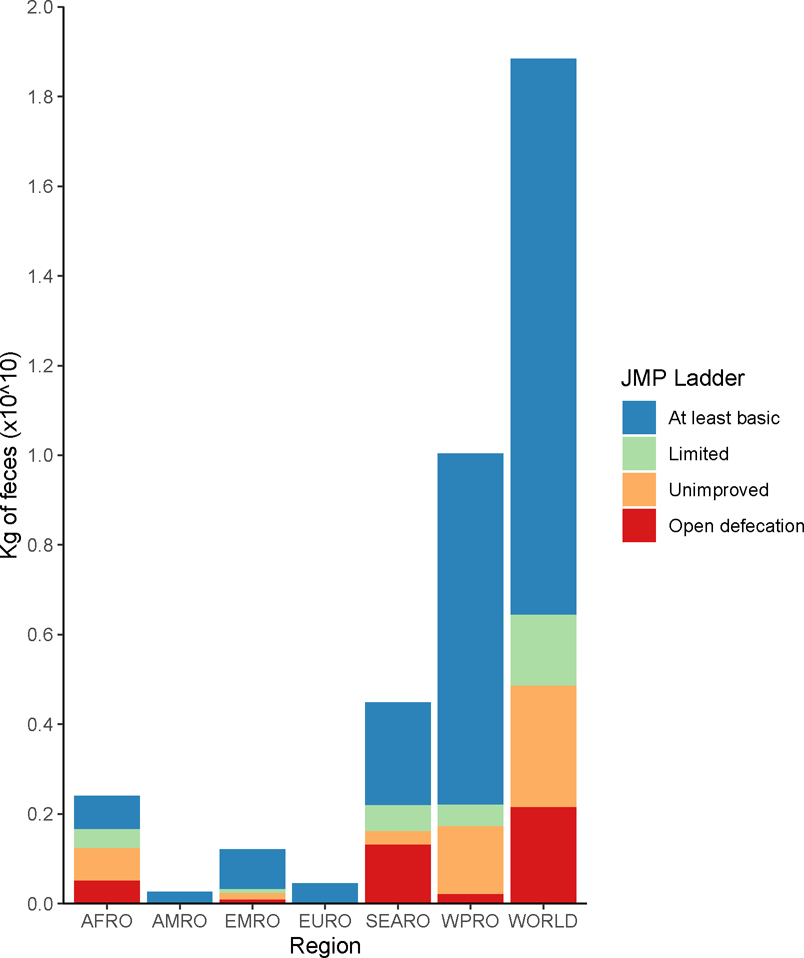
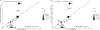
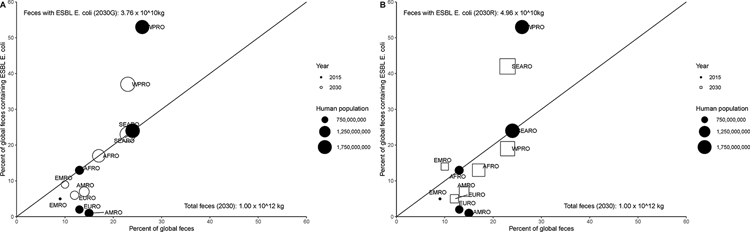
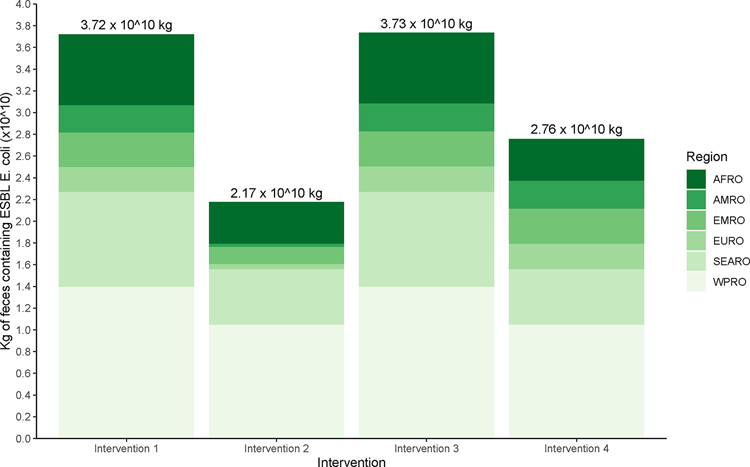
Description:Background: ; Improving management of and treatment within sanitation waste streams may slow the development and transmission of antimicrobial resistant (AMR) organisms, but the magnitude of impact has not been quantified. Extended-spectrum beta-lactamase-producing (ESBL) E. coli are an important cause of AMR infections and are frequently detected in fecal waste streams, making them model indicators of the distribution of fecal-oral AMR organisms. ; Methods: ; We used publicly-available sanitation coverage data and literature on human fecal production and ESBL E. coli carriage by healthy individuals to estimate the feces discharged containing ESBL E. coli by region through levels of the Sustainable Development Goal sanitation ladder. ; Findings: ; About 66% of the prospective global fecal biomass containing ESBL E. coli was managed in at least basic sanitation systems, 12% in limited sanitation, and 25% in unimproved sanitation (14%) or openly defecated (11%). Open defecation of ESBL E. coli was common in Southeast Asia (29%) and Africa (22%). Fecal biomass containing ESBL E. coli totaled 1.9–190 billion kg by carriage scenario, with 1.2–120 billion kg managed by at least basic sanitation and 220 million-22 billion kg openly defecated, and the remainder in limited or unimproved sanitation systems. Southeast Asia, Western Pacific, and Africa produced 63% of the total global fecal biomass, but 90% of feces containing ESBL E. coli. ; Interpretation: ; Although safely-managed and basic sanitation do not guarantee effective removal or inactivation of AMR organisms; our results indicate the need for mitigating AMR transport via unsafely-managed sanitation, including open defecation, which may result in direct environmental discharge and subsequent risk of transmission back to humans. ; Funding: ; No funding associated with this study.
-
Subjects:
-
Source:Lancet Planet Health. 4(6):e246-e255
-
Pubmed ID:32559441
-
Pubmed Central ID:PMC10906806
-
Document Type:
-
Funding:
-
Volume:4
-
Issue:6
-
Download URL:
-
File Type:
 [PDF - 549.89 KB]
 -
Collection(s):
-
Main Document Checksum:urn:sha-512:722ff7dfc27a759c1e676789abd47bb4db5f88dca05d3d6bd58bd0dfde8211f12b16e4c9e57e7b9c17863ed293664d9a86cc50168ecc639f401932644b402c6d
Supporting Files


File Language:
English
 Was this page helpful?
 Found an issue?

CDC STACKS serves as an archival repository of CDC-published products including
scientific findings, journal articles, guidelines, recommendations, or other public health information authored or
co-authored by CDC or funded partners.
As a repository, CDC STACKS retains documents in their original published format to ensure public access to scientific information.
As a repository, CDC STACKS retains documents in their original published format to ensure public access to scientific information.
You May Also Like
COLLECTION
CDC Public Access