



Simulation of full HIV cluster networks in a nationally representative model indicates intervention opportunities
Supporting Files

-
4 01 2024
-
File Language:
English
Details
-
Alternative Title:J Acquir Immune Defic Syndr
-
Personal Author:
-
Description:Background:
Clusters of rapid HIV transmission in the United States are increasingly recognized through analysis of HIV molecular sequence data reported to the National HIV Surveillance System. Understanding the full extent of cluster networks is important to assess intervention opportunities. However, full cluster networks include undiagnosed and other infections that cannot be systematically observed in real life.
Methods:
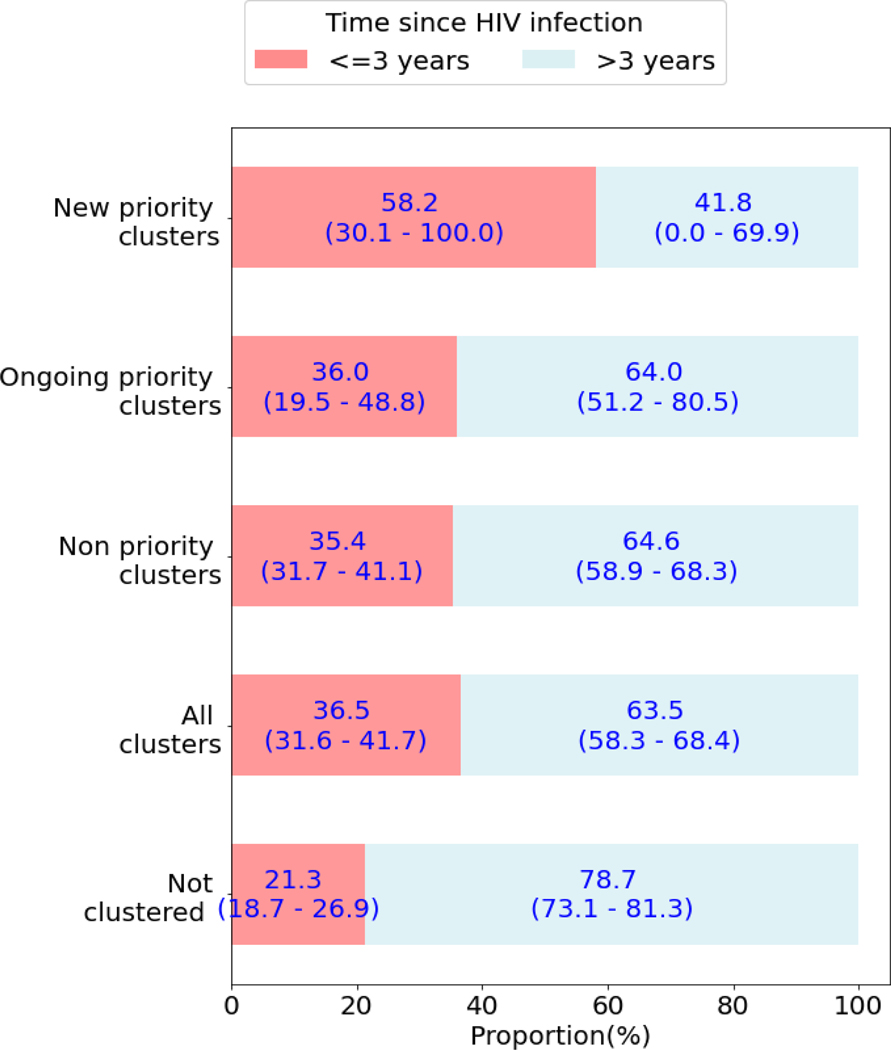
We replicated HIV molecular cluster networks during 2015–2017 in the United States using a stochastic dynamic network simulation model of sexual transmission of HIV. Clusters were defined at the 0.5% genetic distance threshold. Ongoing priority clusters had growth of ≥3 diagnoses/year in multiple years; new priority clusters first had ≥3 diagnoses/year in 2017. We assessed the full extent, composition and transmission rates of new and ongoing priority clusters.
Results:
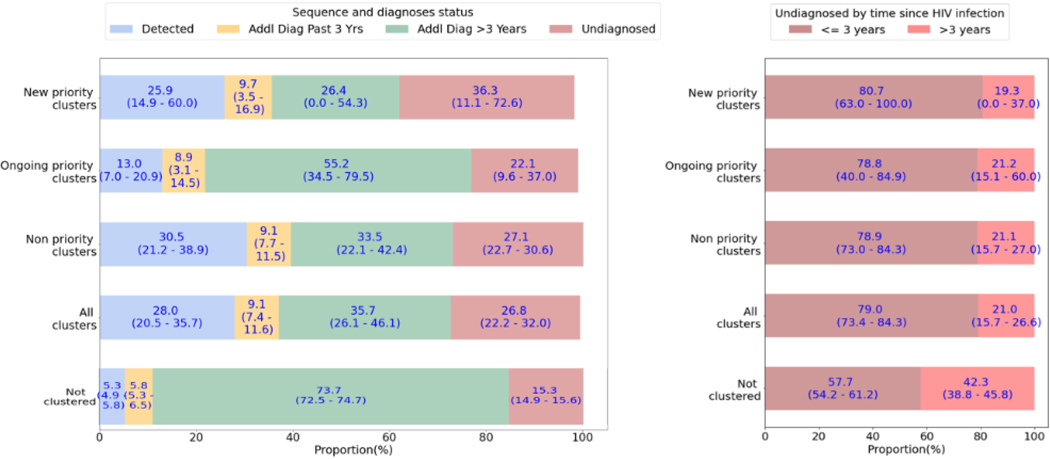
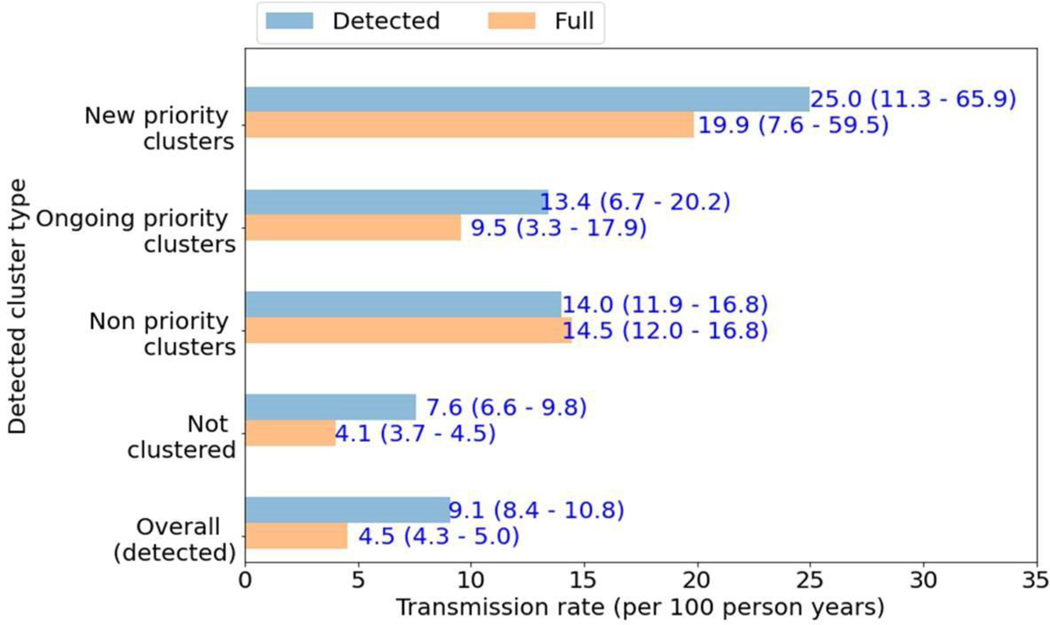
Full clusters were 3–9 times larger than detected clusters, with median detected cluster sizes in new and ongoing priority clusters of 4 (range 3–9) and 11 (range 3–33), respectively, corresponding to full cluster sizes with a median of 14 (3–74) and 94 (7–318), respectively. A median of 36.3% (range 11.1–72.6%) of infections in the full new priority clusters were undiagnosed. HIV transmission rates in these clusters were >4 times the overall rate observed in the entire simulation.
Conclusions:
Priority clusters reflect networks with rapid HIV transmission. The substantially larger full extent of these clusters, high proportion of undiagnosed infections and high transmission rates indicate opportunities for public health intervention and impact.
-
Keywords:
-
Source:J Acquir Immune Defic Syndr. 95(4):355-361
-
Pubmed ID:38412046
-
Pubmed Central ID:PMC10901443
-
Document Type:
-
Funding:
-
Volume:95
-
Issue:4
-
Collection(s):
-
Main Document Checksum:urn:sha-512:6dda7b0ae703eaab9f66d59e1e650446a44557d2645b40518ab74bdf640ba63a6facaf31f010830ed4f533a9e4623a2f521cc75d261006d231ad1f5be210fc2b
-
Download URL:
-
File Type:
 [PDF
- 716.27 KB
]
[PDF
- 716.27 KB
]
Supporting Files


File Language:
English
 Was this page helpful?
 Found an issue?
CDC STACKS serves as an archival repository of CDC-published products including
scientific findings,
journal articles, guidelines, recommendations, or other public health information authored or
co-authored by CDC or funded partners.
As a repository, CDC STACKS retains documents in their original published format to ensure public access to scientific information.
As a repository, CDC STACKS retains documents in their original published format to ensure public access to scientific information.
You May Also Like
COLLECTION
CDC Public Access