



Epidemiology and preventability of hospital-onset bacteremia and fungemia in 2 hospitals in India
Supporting Files

-
2024/02/01
-
Available in CDC Stacks on 2025-02-01T00:00:00Z
File Language:
English
Details
-
Alternative Title:Infect Control Hosp Epidemiol
-
Personal Author:Gandra, Sumanth
 ;
Singh, Sanjeev K.
;
Chakravarthy, Murali
;
Moni, Merlin
;
Dhekane, Pruthu
;
Mohamed, Zubair
;
Shameen, Fathima
;
Vasudevan, Anil K.
;
Senthil, Priyadarshini
;
Saravanan, Tejaswini
;
George, Anu
;
Sinclair, Dorothy
;
Stwalley, Dustin
;
van Rheenen, Jacaranda
;
Westercamp, Matthew
;
Smith, Rachel M.
;
Leekha, Surbhi
;
Warren, David K.
;
Singh, Sanjeev K.
;
Chakravarthy, Murali
;
Moni, Merlin
;
Dhekane, Pruthu
;
Mohamed, Zubair
;
Shameen, Fathima
;
Vasudevan, Anil K.
;
Senthil, Priyadarshini
;
Saravanan, Tejaswini
;
George, Anu
;
Sinclair, Dorothy
;
Stwalley, Dustin
;
van Rheenen, Jacaranda
;
Westercamp, Matthew
;
Smith, Rachel M.
;
Leekha, Surbhi
;
Warren, David K.
-
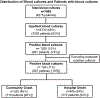
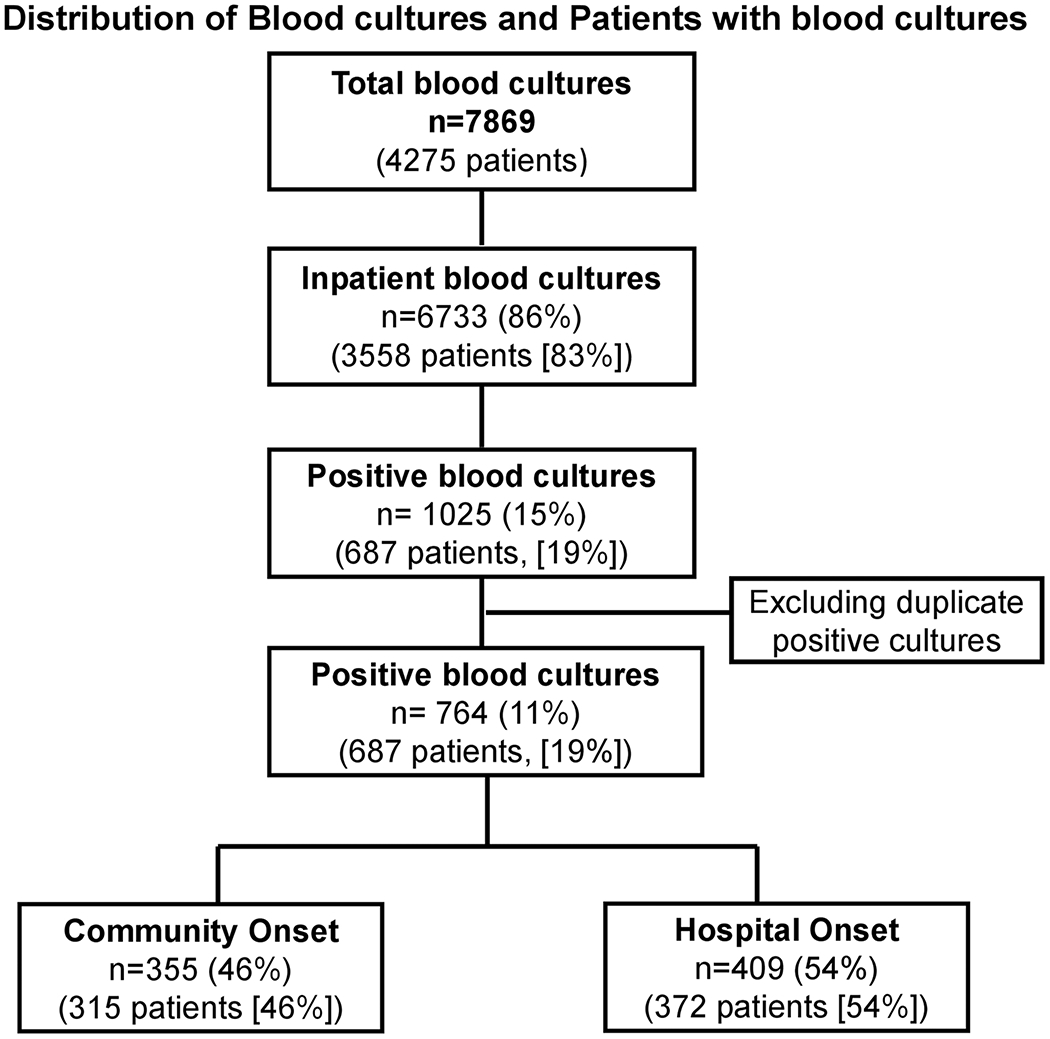
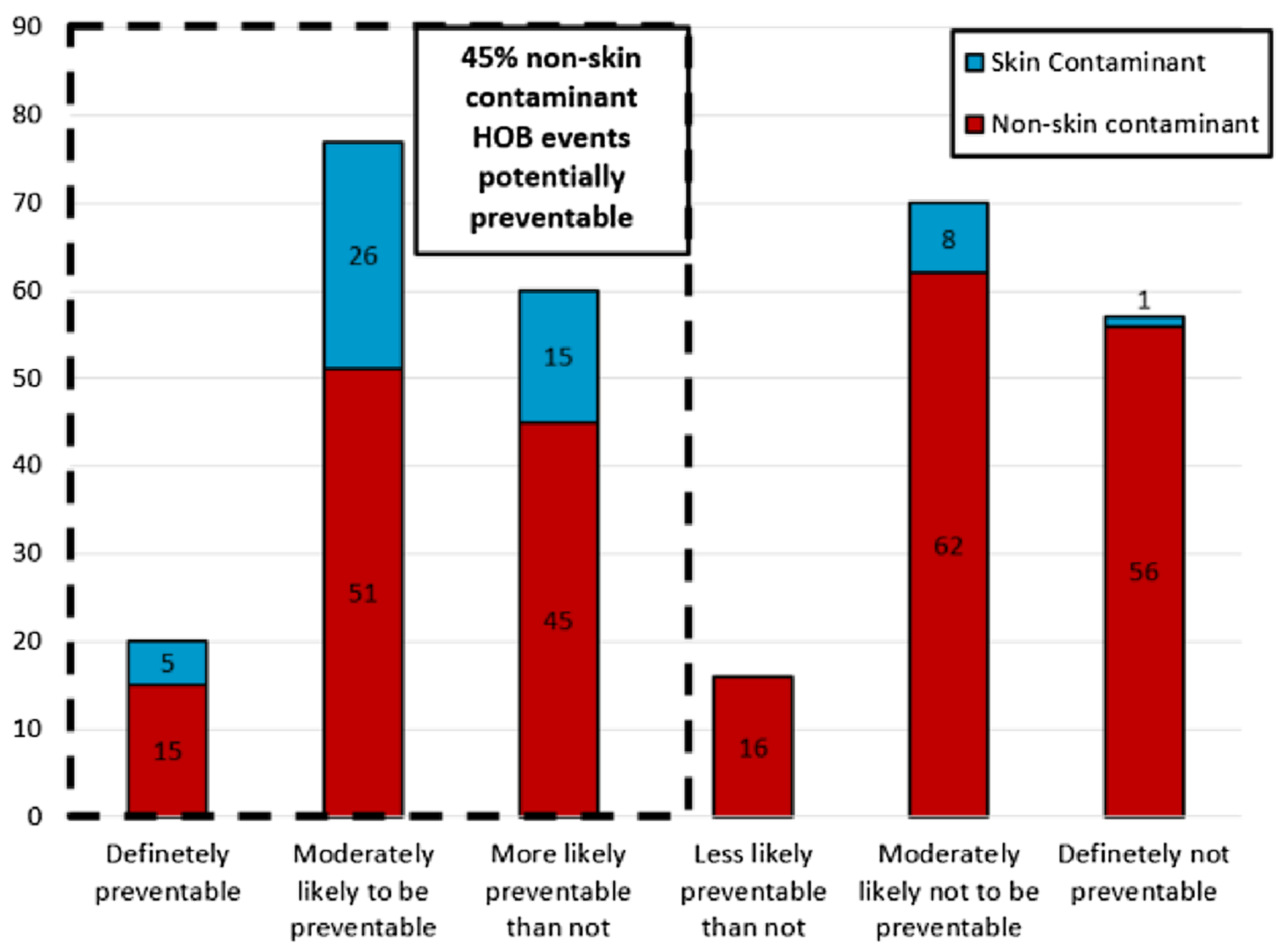
Description:Objective: ; Studies evaluating the incidence, source, and preventability of hospital-onset bacteremia and fungemia (HOB), defined as any positive blood culture obtained after 3 calendar days of hospital admission, are lacking in low- and middle-income countries (LMICs). ; Design, setting, and participants: ; All consecutive blood cultures performed for 6 months during 2020-2021 in 2 hospitals in India were reviewed to assess HOB and National Healthcare Safety Network (NHSN) reportable central-line-associated bloodstream infection (CLABSI) events. Medical records of a convenience sample of 300 consecutive HOB events were retrospectively reviewed to determine source and preventability. Univariate and multivariable logistic regression analyses were performed to identify factors associated with HOB preventability. ; Results: ; Among 6,733 blood cultures obtained from 3,558 hospitalized patients, there were 409 and 59 unique HOB and NHSN-reportable CLABSI events, respectively. CLABSIs accounted for 59 (14%) of 409 HOB events. There was a moderate but non-significant correlation (r = 0.51; P = .070) between HOB and CLABSI rates. Among 300 reviewed HOB cases, CLABSIs were identified as source in only 38 (13%). Although 157 (52%) of all 300 HOB cases were potentially preventable, CLABSIs accounted for only 22 (14%) of these 157 preventable HOB events. In multivariable analysis, neutropenia, and sepsis as an indication for blood culture were associated with decreased odds of HOB preventability, whereas hospital stay ≥7 days and presence of a urinary catheter were associated with increased likelihood of preventability. ; Conclusions: ; HOB may have utility as a healthcare-associated infection metric in LMIC settings because it captures preventable bloodstream infections beyond NHSN-reportable CLABSIs.
-
Subjects:
-
Source:Infect Control Hosp Epidemiol. 45(2):157-166
-
Pubmed ID:37593953
-
Pubmed Central ID:PMC10877540
-
Document Type:
-
Funding:
-
Genre:
-
Volume:45
-
Issue:2
-
Download URL:
-
File Type:
 [PDF - 722.26 KB]
 -
Collection(s):
-
Main Document Checksum:urn:sha-512:02cb3a62586f564cea11897a8dc11b82a28dcf20c3fe802c6da2ba7c09076077aa364c26c8c833abcf648e1b673c95a6ea6cf47b96778d7df2543a4cf6d17cd5
Supporting Files


File Language:
English
 Was this page helpful?
 Found an issue?

CDC STACKS serves as an archival repository of CDC-published products including
scientific findings, journal articles, guidelines, recommendations, or other public health information authored or
co-authored by CDC or funded partners.
As a repository, CDC STACKS retains documents in their original published format to ensure public access to scientific information.
As a repository, CDC STACKS retains documents in their original published format to ensure public access to scientific information.
You May Also Like
COLLECTION
CDC Public Access