



Cephalosporin-resistant Pneumococci and Sickle Cell Disease
Supporting Files
Public Domain

-
Aug 2005
Details
-
Alternative Title:Emerg Infect Dis
-
Personal Author:
-
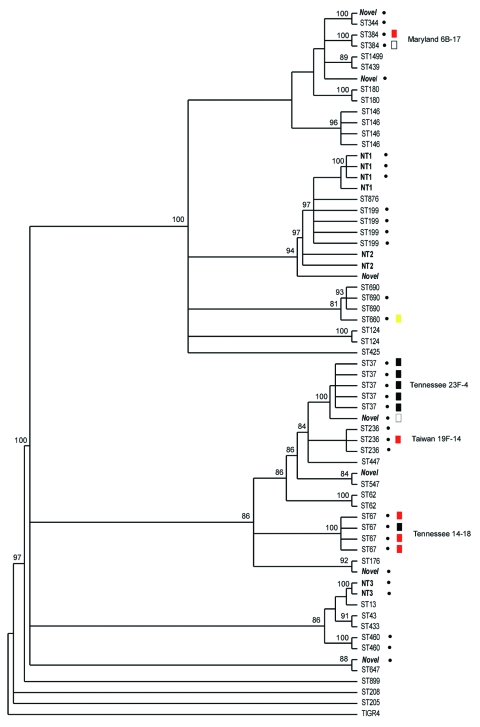
Description:Sickle cell anemia patients have 600 times the risk for invasive pneumococcal disease than their healthy peers. High-level cephalosporin resistance was described in the 1990s in healthy children from Tennessee, but its prevalence in sickle cell disease patients is unknown. Pneumococcal isolates from sickle cell disease patients from Tennessee were subjected to multilocus sequence typing to characterize antimicrobial drug-resistant strains. Twenty-one percent of strains were resistant to cefotaxime and penicillin. Of the 14 cephalosporin-resistant strains, 9 were sequence types previously described as highly cephalosporin resistant, while resistance was found for the first time in 3 clones: Maryland6B, ST660, and a novel clone, ST1753. High-level cephalosporin resistance exists in more settings than initially recognized, and its high prevalence in sickle cell disease patients may decrease the efficacy of third-generation cephalosporins in invasive pneumococcal disease.
-
Subjects:
- Research
- Keywords: infectious diseases
- Antibiotic resistance
- multi-drug resistance
- anemia
- sickle cell
- Anemia, Sickle Cell
- Cephalosporin Resistance
- DNA, Bacterial
- Humans
- Microbial Sensitivity Tests
- Phylogeny
- Pneumococcal Infections
- Polymerase Chain Reaction
- Retrospective Studies
- Sequence Alignment
- Sequence Analysis, DNA
- Streptococcus pneumoniae
- Tennessee
-
Source:Emerg Infect Dis. 11(8):1192-1196.
-
Document Type:
-
Volume:11
-
Issue:8
-
Download URL:
-
File Type:
 [PDF - 143.87 KB]
 -
Collection(s):
-
Main Document Checksum:urn:sha256:546edc5e08181b56fd7ca13f28d0532f3c0a4aa8084723674870facc4a9e63a8
Supporting Files


 Was this page helpful?
 Found an issue?

CDC STACKS serves as an archival repository of CDC-published products including
scientific findings, journal articles, guidelines, recommendations, or other public health information authored or
co-authored by CDC or funded partners.
As a repository, CDC STACKS retains documents in their original published format to ensure public access to scientific information.
As a repository, CDC STACKS retains documents in their original published format to ensure public access to scientific information.
You May Also Like
COLLECTION
Emerging Infectious Diseases