



Spoligotyping and Mycobacterium tuberculosis
Supporting Files
Public Domain

-
Aug 2005
Details
-
Alternative Title:Emerg Infect Dis
-
Personal Author:Gori, Andrea ; Bandera, Alessandra ; Marchetti, Giulia ; Esposti, Anna Degli ; Catozzi, Lidia ; Nardi, Gian Piero ; Gazzola, Lidia ; Ferrario, Giulio ; van Embden, Jan D.A. ; van Soolingen, Dick ; Moroni, Mauro ; Franzetti, Fabio
-
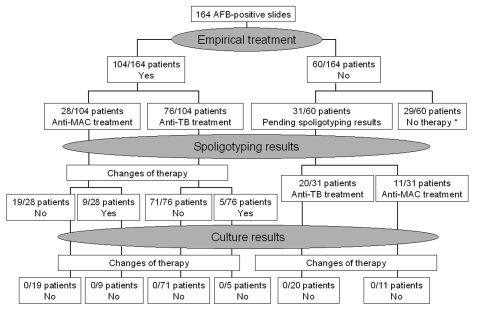
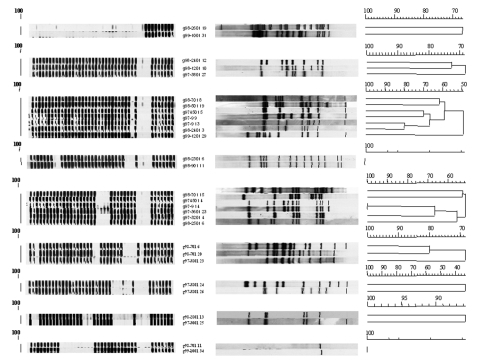
Description:We evaluated the clinical usefulness of spoligotyping, a polymerase chain reaction-based method for simultaneous detection and typing of Mycobacterium tuberculosis strains, with acid-fast bacilli-positive slides from clinical specimens or mycobacterial cultures. Overall sensitivity and specificity were 97% and 95% for the detection of M. tuberculosis and 98% and 96% when used with clinical specimens. Laboratory turnaround time of spoligotyping was less than that for culture identification by a median of 20 days. In comparison with IS6110-based restriction fragment length polymorphism typing, spoligotyping overestimated the number of isolates with identical DNA fingerprints by approximately 50%, but showed a 100% negative predictive value. Spoligotyping resulted in the modification of ongoing antimycobacterial treatment in 40 cases and appropriate therapy in the absence of cultures in 11 cases. The rapidity of this method in detection and typing could make it useful in the management of tuberculosis in a clinical setting.
-
Subjects:
- Research
- Keywords: Bacterial Typing
- molecular epidemiology
- multidrug resistance
- tuberculosis
- Adolescent
- Adult
- Aged
- Aged, 80 and over
- Child
- Child, Preschool
- DNA Transposable Elements
- DNA, Bacterial
- Female
- Humans
- Image Processing, Computer-Assisted
- Male
- Middle Aged
- Mycobacterium tuberculosis
- Polymerase Chain Reaction
- Polymorphism, Restriction Fragment Length
- Predictive Value of Tests
- Sensitivity and Specificity
- Time Factors
- Tuberculosis
-
Source:Emerg Infect Dis. 11(8):1242-1248.
-
Document Type:
-
Volume:11
-
Issue:8
-
Download URL:
-
File Type:
 [PDF - 224.20 KB]
 -
Collection(s):
-
Main Document Checksum:urn:sha256:25eee059905bd755a5810a037534a606078f689245abdbafe62c79c4b9802ccb
Supporting Files


 Was this page helpful?
 Found an issue?


CDC STACKS serves as an archival repository of CDC-published products including
scientific findings, journal articles, guidelines, recommendations, or other public health information authored or
co-authored by CDC or funded partners.
As a repository, CDC STACKS retains documents in their original published format to ensure public access to scientific information.
As a repository, CDC STACKS retains documents in their original published format to ensure public access to scientific information.
You May Also Like
COLLECTION
Emerging Infectious Diseases