



Validation of a 3D-Printed Percutaneous Injection Laryngoplasty Simulator: A Randomized Controlled Trial
Supporting Files

-
1 2024 ; 1-2024
-
Available in CDC Stacks on 2025-01-01T00:00:00Z
File Language:
English
Details
-
Alternative Title:Laryngoscope
-
Personal Author:Kostas, Julianna C. ; Sangho Lee, Andrew ; Arunkumar, Amit ; Han, Catherine ; Lee, Mark ; Goel, Alexander N. ; Alrassi, James ; Crosby, Tyler ; Clark, Christine M. ; Amin, Milan ; Abu-Ghanem, Sara ; Kirke, Diana ; Rameau, Anaïs
-
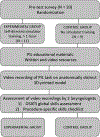
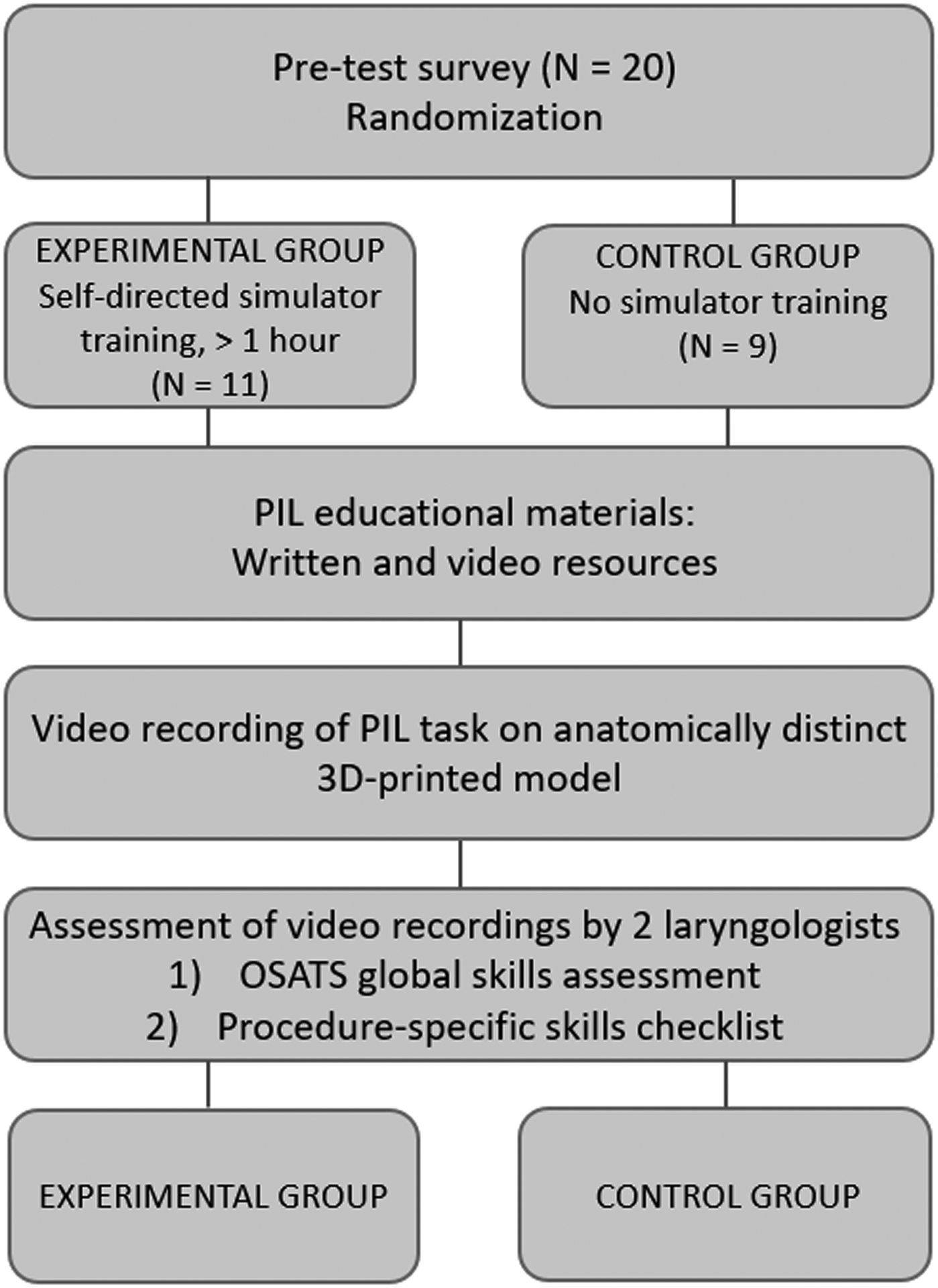
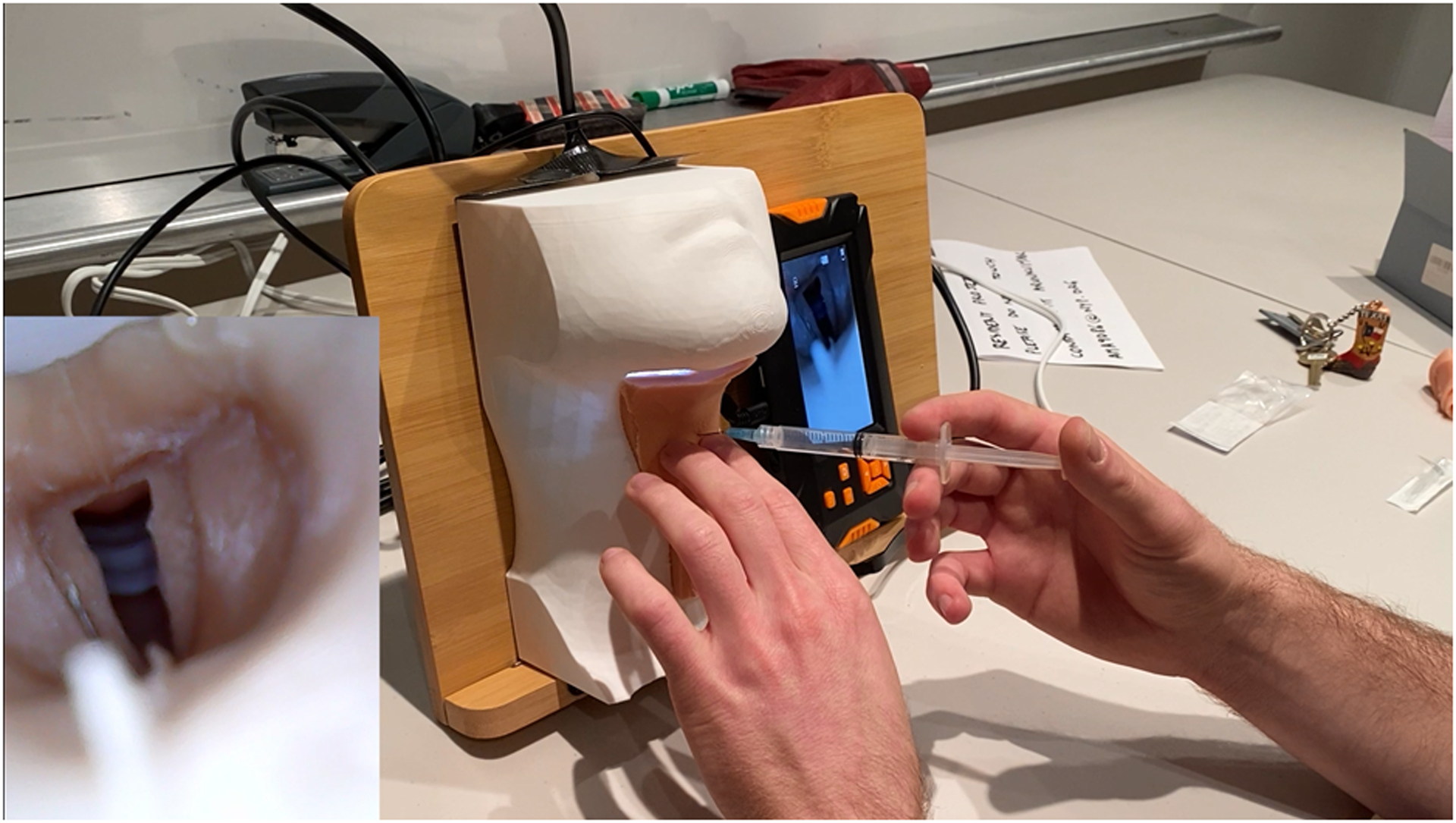
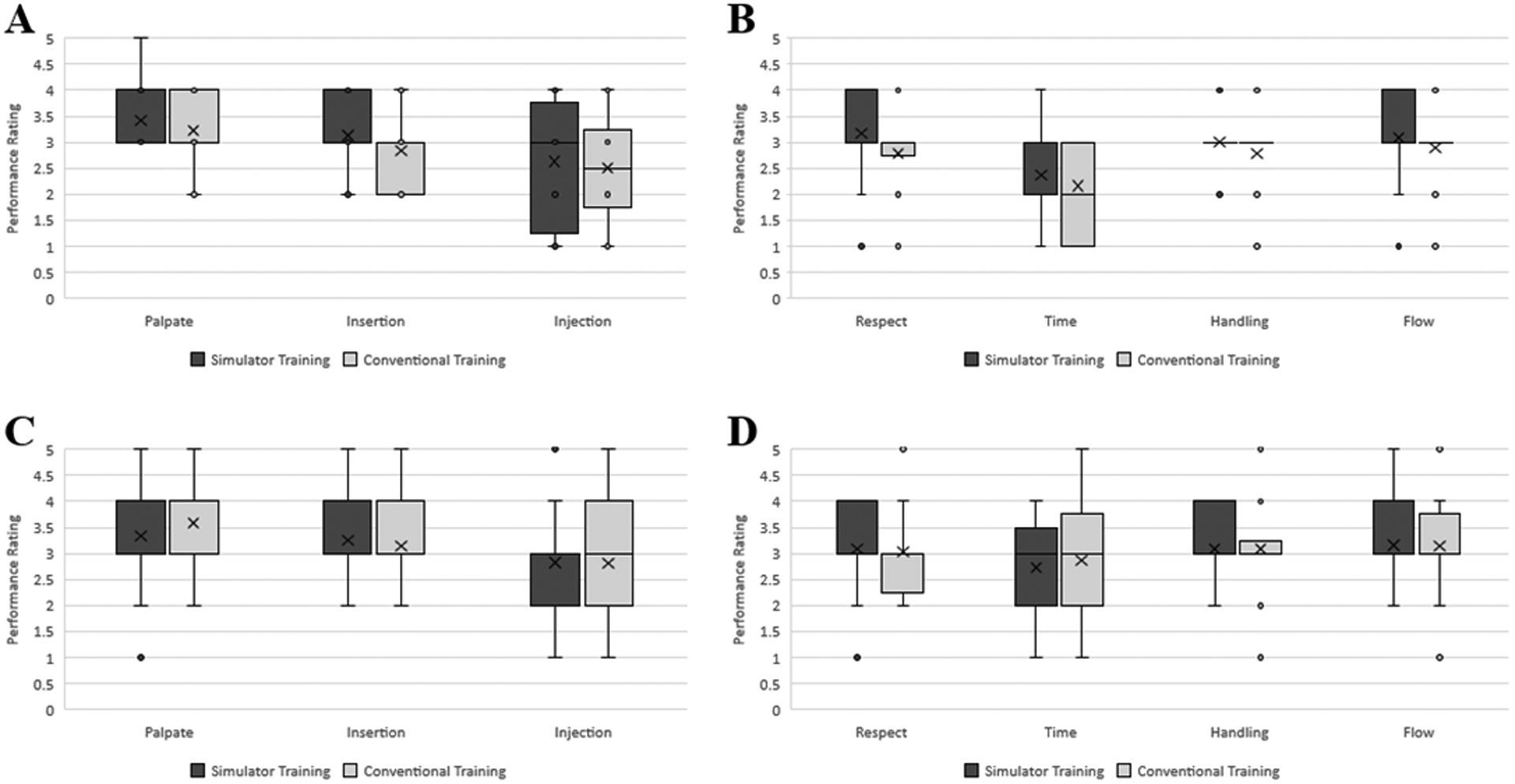
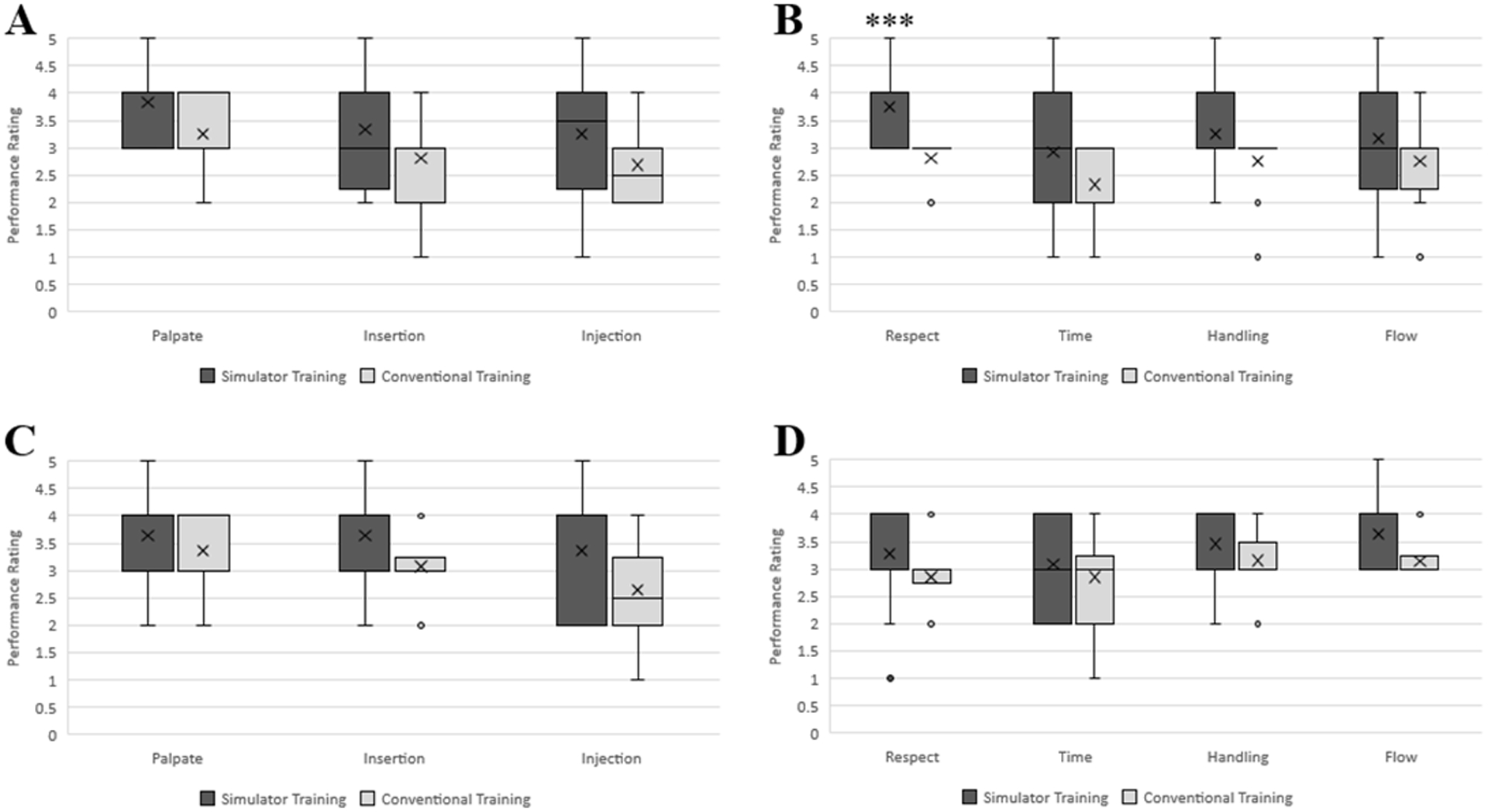
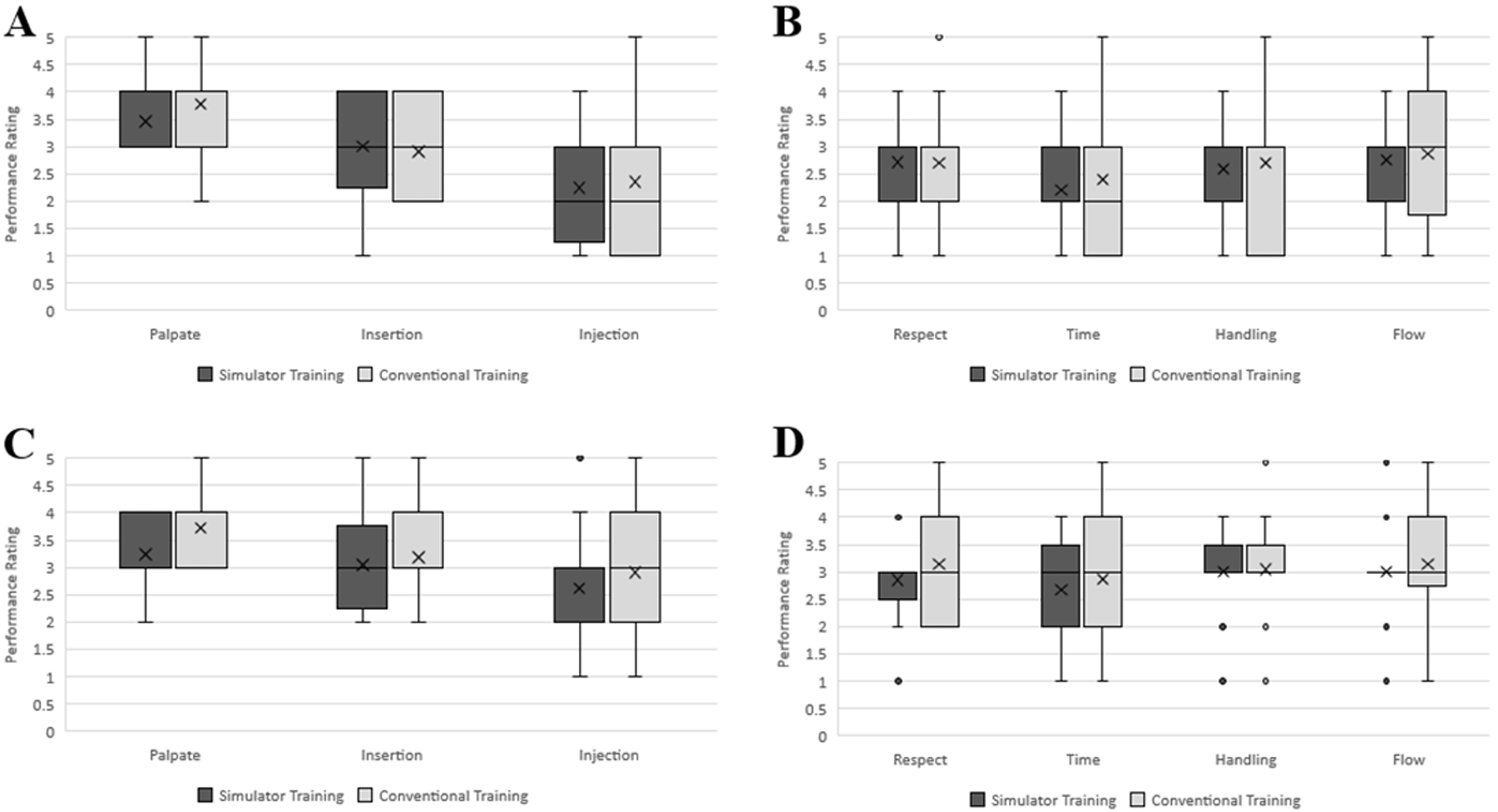
Description:Objective: ; Simulation may be a valuable tool in training laryngology office procedures on unsedated patients. However, no studies have examined whether existing awake procedure simulators improve trainee performance in laryngology. Our objective was to evaluate the transfer validity of a previously published 3D-printed laryngeal simulator in improving percutaneous injection laryngoplasty (PIL) competency compared to conventional educational materials with a single-blinded randomized controlled trial. ; Methods: ; Otolaryngology residents with fewer than 10 PIL procedures in their case logs were recruited. A pre-training survey was administered to participants to evaluate baseline procedure-specific knowledge and confidence. Participants underwent block randomization by postgraduate year to receive conventional educational materials either with or without additional training with a 3D-printed laryngeal simulator. Participants performed PIL on an anatomically distinct laryngeal model via trans-thyrohyoid and trans-cricothyroid approaches. Endoscopic and external performance recordings were de-identified and evaluated by two blinded laryngologists using an OSATS scale and PIL-specific checklist. ; Results: ; Twenty residents completed testing. Baseline characteristics demonstrate no significant differences in confidence level or PIL experience between groups. Senior residents receiving simulator training had significantly better respect for tissue during the trans-thyrohyoid approach compared to control (p < 0.0005). There were no significant differences in performance for junior residents. ; Conclusions: ; In this first transfer validity study of a simulator for office awake procedure in laryngology, we found that a previously described low-cost, high-fidelity 3D-printed PIL simulator improved performance of PIL amongst senior otolaryngology residents, suggesting this accessible model may be a valuable educational adjunct for advanced trainees to practice PIL.
-
Subjects:
-
Keywords:
-
Source:Laryngoscope. 134(1):318-323
-
Pubmed ID:37466294
-
Pubmed Central ID:PMC10796838
-
Document Type:
-
Funding:
-
Volume:134
-
Issue:1
-
Download URL:
-
File Type:
 [PDF - 847.91 KB]
 -
Collection(s):
-
Main Document Checksum:urn:sha-512:c3e0cc554be592debb0d3f589ab5a2c3c97f5de809d4766b07ee41131df6c1fa6f79ea71733a2547bc71799341aa4f3458889ef8fadb9d1fc3cc201e4a6fd4b6
Supporting Files


File Language:
English
 Was this page helpful?
 Found an issue?

CDC STACKS serves as an archival repository of CDC-published products including
scientific findings, journal articles, guidelines, recommendations, or other public health information authored or
co-authored by CDC or funded partners.
As a repository, CDC STACKS retains documents in their original published format to ensure public access to scientific information.
As a repository, CDC STACKS retains documents in their original published format to ensure public access to scientific information.
You May Also Like
COLLECTION
CDC Public Access