



Wind in November, Q Fever in December
Supporting Files
Public Domain

-
Jul 2004
File Language:
English
Details
-
Alternative Title:Emerg Infect Dis
-
Personal Author:
-
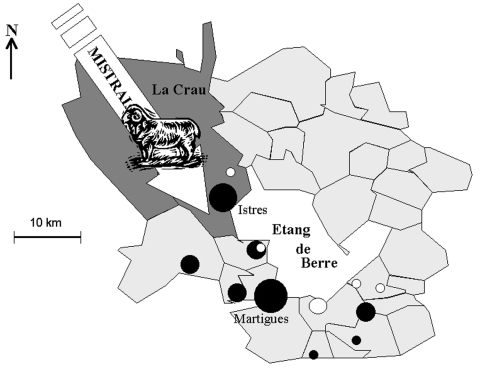
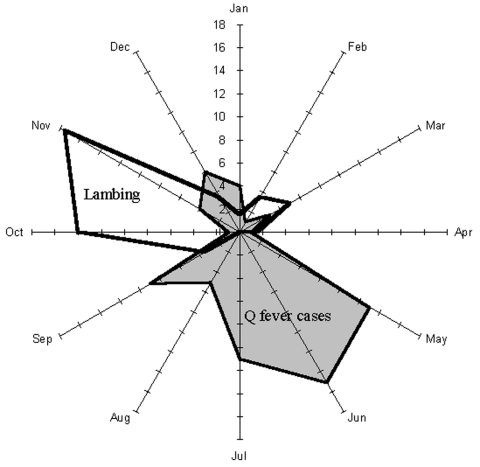
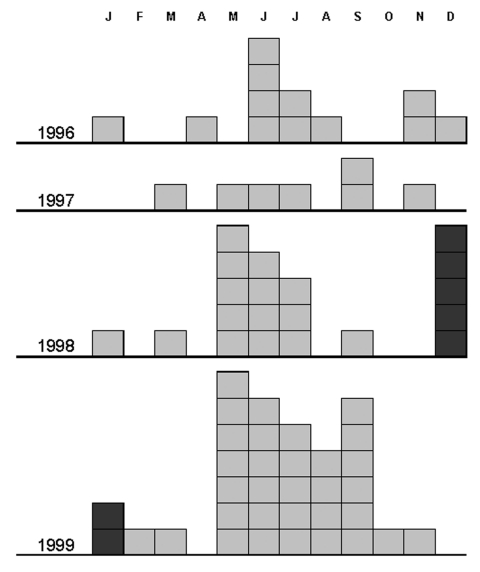
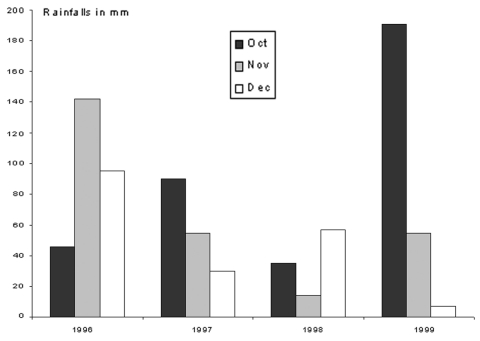
Description:Q fever, a worldwide zoonosis caused by Coxiella burnetii, can be transmitted from animal reservoirs to humans by the inhalation of infected aerosols. We investigated the epidemiology of Q fever in the Bouches-du-Rhone district of southern France, particularly the role of wind and rainfall in C. burnetii transmission. During the winter of 1998 to 1999, an unexpected number of cases were diagnosed in the area. This statistically higher incidence was associated with an increased frequency of the mistral 1 month before onset of disease, i.e., shortly after the main lambing season. These data confirm that wind plays a role in C. burnetii transmission, a factor that can be monitored but not prevented. Further studies are needed to identify and confirm preventable individual behavioral risk factors for Q fever.
-
Subjects:
-
Source:Emerg Infect Dis. 10(7):1264-1269.
-
Document Type:
-
Place as Subject:
-
Volume:10
-
Issue:7
-
Download URL:
-
File Type:
 [PDF - 178.52 KB]
 -
Collection(s):
-
Main Document Checksum:urn:sha256:b61a6ce4d79c305048b13c6c212ddaee73244ef7e54a043a51baebd94c0b7680
Supporting Files


File Language:
English
 Was this page helpful?
 Found an issue?


CDC STACKS serves as an archival repository of CDC-published products including
scientific findings, journal articles, guidelines, recommendations, or other public health information authored or
co-authored by CDC or funded partners.
As a repository, CDC STACKS retains documents in their original published format to ensure public access to scientific information.
As a repository, CDC STACKS retains documents in their original published format to ensure public access to scientific information.
You May Also Like
COLLECTION
Emerging Infectious Diseases