



Clinical Manifestations, Laboratory Findings, and Treatment Outcomes of SARS Patients
Supporting Files
Public Domain

-
May 2004
Details
-
Alternative Title:Emerg Infect Dis
-
Personal Author:
-
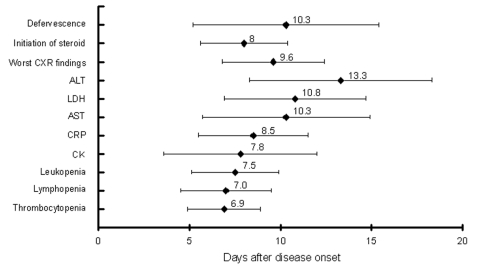
Description:Clinical and laboratory data on severe acute respiratory syndrome (SARS), particularly on the temporal progression of abnormal laboratory findings, are limited. We conducted a prospective study on the clinical, radiologic, and hematologic findings of SARS patients with pneumonia, who were admitted to National Taiwan University Hospital from March 8 to June 15, 2003. Fever was the most frequent initial symptom, followed by cough, myalgia, dyspnea, and diarrhea. Twenty-four patients had various underlying diseases. Most patients had elevated C-reactive protein (CRP) levels and lymphopenia. Other common abnormal laboratory findings included leukopenia, thrombocytopenia, and elevated levels of aminotransferase, lactate dehydrogenase, and creatine kinase. These clinical and laboratory findings were exacerbated in most patients during the second week of disease. The overall case-fatality rate was 19.7%. By multivariate analysis, underlying disease and initial CRP level were predictive of death.
-
Subjects:
- Research
- severe acute respiratory syndrome
- C-reactive protein
- intravenous immunoglobulin
- Adult
- Aged
- Aged, 80 and over
- Clinical Laboratory Techniques
- Communicable Diseases, Emerging
- Disease Outbreaks
- Female
- Hospitalization
- Humans
- Male
- Middle Aged
- Prospective Studies
- SARS Virus
- Severe Acute Respiratory Syndrome
- Taiwan
- Treatment Outcome
-
Source:Emerg Infect Dis. 10(5):818-824.
-
Document Type:
-
Volume:10
-
Issue:5
-
Download URL:
-
File Type:
 [PDF - 64.51 KB]
 -
Collection(s):
-
Main Document Checksum:urn:sha256:f828011cebaec420aec391368b8e68df0cf155a2690655af9e3bb2825d13a392
Supporting Files


 Was this page helpful?
 Found an issue?


CDC STACKS serves as an archival repository of CDC-published products including
scientific findings, journal articles, guidelines, recommendations, or other public health information authored or
co-authored by CDC or funded partners.
As a repository, CDC STACKS retains documents in their original published format to ensure public access to scientific information.
As a repository, CDC STACKS retains documents in their original published format to ensure public access to scientific information.
You May Also Like
COLLECTION
Emerging Infectious Diseases