



Raccoon Roundworm Eggs near Homes and Risk for Larva Migrans Disease, California Communities
Supporting Files
Public Domain

-
Dec 2003
File Language:
English
Details
-
Alternative Title:Emerg Infect Dis
-
Personal Author:
-
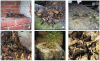
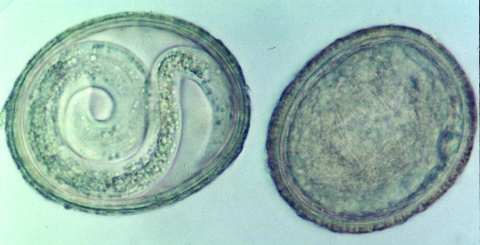
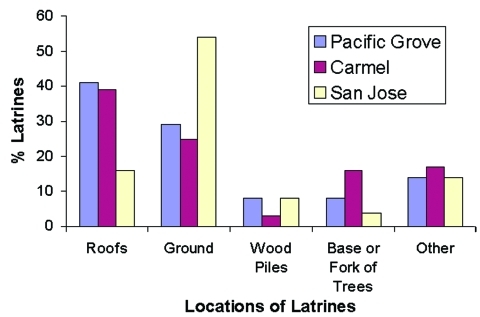
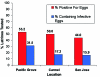
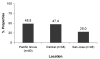
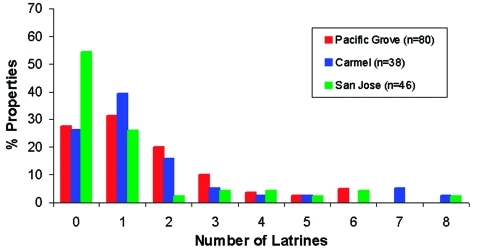
Description:The raccoon roundworm, Baylisascaris procyonis, is increasingly recognized as a cause of serious or fatal larva migrans disease in humans and animals. We assessed the potential for infection in three northern California communities by determining the density and distribution of raccoon latrines, where transmission primarily occurs, and the prevalence of eggs at private residences. We collected fecal samples from 215 latrines and found that 44%-53% of the latrines contained B. procyonis eggs and that 16%-32% contained infective eggs. Among the properties surveyed, 28%-49% harbored at least one latrine that was positive for B. procyonis eggs. The latrine densities in these communities were higher than any previously reported. The presence of B. procyonis eggs in raccoon latrines was common, widespread, and closely associated with human habitation. Where raccoon densities are high, education of the public and removal of raccoons may be necessary.
-
Subjects:
-
Source:Emerg Infect Dis. 9(12):1516-1522.
-
Document Type:
-
Place as Subject:
-
Location:
-
Volume:9
-
Issue:12
-
Collection(s):
-
Main Document Checksum:urn:sha256:30ffecf6767d46647da15a2bd8de1747efa6bc883a1734e57b63bd45ce1a7b5d
-
Download URL:
-
File Type:
 [PDF
- 517.99 KB
]
[PDF
- 517.99 KB
]
Supporting Files


File Language:
English
 Was this page helpful?
 Found an issue?







CDC STACKS serves as an archival repository of CDC-published products including
scientific findings,
journal articles, guidelines, recommendations, or other public health information authored or
co-authored by CDC or funded partners.
As a repository, CDC STACKS retains documents in their original published format to ensure public access to scientific information.
As a repository, CDC STACKS retains documents in their original published format to ensure public access to scientific information.
You May Also Like
COLLECTION
Emerging Infectious Diseases