



Molecular Epidemiology of O139 Vibrio cholerae: Mutation, Lateral Gene Transfer, and Founder Flush
Supporting Files
Public Domain

-
Jul 2003
File Language:
English
Details
-
Alternative Title:Emerg Infect Dis
-
Personal Author:
-
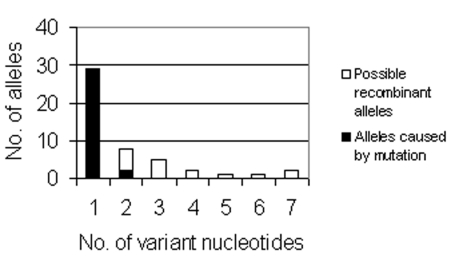
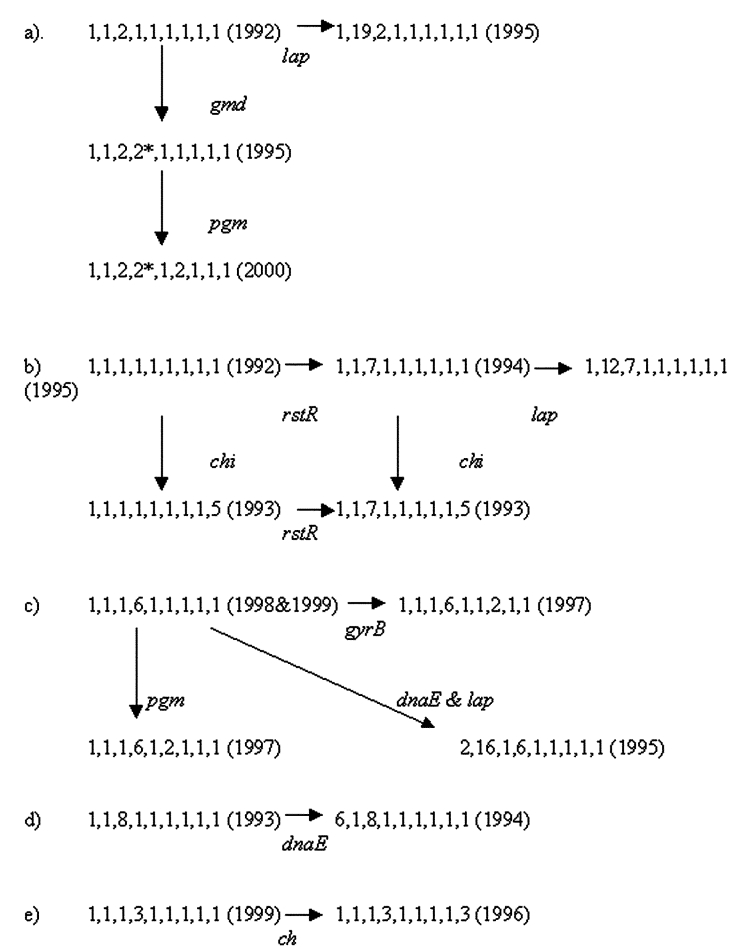
Description:Vibrio cholerae in O-group 139 was first isolated in 1992 and by 1993 had been found throughout the Indian subcontinent. This epidemic expansion probably resulted from a single source after a lateral gene transfer (LGT) event that changed the serotype of an epidemic V. cholerae O1 El Tor strain to O139. However, some studies found substantial genetic diversity, perhaps caused by multiple origins. To further explore the relatedness of O139 strains, we analyzed nine sequenced loci from 96 isolates from patients at the Infectious Diseases Hospital, Calcutta, from 1992 to 2000. We found 64 novel alleles distributed among 51 sequence types. LGT events produced three times the number of nucleotide changes compared to mutation. In contrast to the traditional concept of epidemic spread of a homogeneous clone, the establishment of variant alleles generated by LGT during the rapid expansion of a clonal bacterial population may be a paradigm in infections and epidemics.
-
Subjects:
-
Source:Emerg Infect Dis. 9(7):810-814.
-
Document Type:
-
Place as Subject:
-
Location:
-
Volume:9
-
Issue:7
-
Download URL:
-
File Type:
 [PDF - 215.22 KB]
 -
Collection(s):
-
Main Document Checksum:urn:sha256:74c6bd7432b77fcc40d7af3c82861a9845528f311c4538879c9d6f8eac01da94
Supporting Files


File Language:
English
 Was this page helpful?
 Found an issue?



CDC STACKS serves as an archival repository of CDC-published products including
scientific findings, journal articles, guidelines, recommendations, or other public health information authored or
co-authored by CDC or funded partners.
As a repository, CDC STACKS retains documents in their original published format to ensure public access to scientific information.
As a repository, CDC STACKS retains documents in their original published format to ensure public access to scientific information.
You May Also Like
COLLECTION
Emerging Infectious Diseases