



First Isolation of West Nile virus from a Patient with Encephalitis in the United States
Supporting Files

-
Dec 2002
File Language:
English
Details
-
Alternative Title:Emerg Infect Dis
-
Personal Author:
-
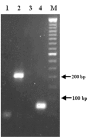
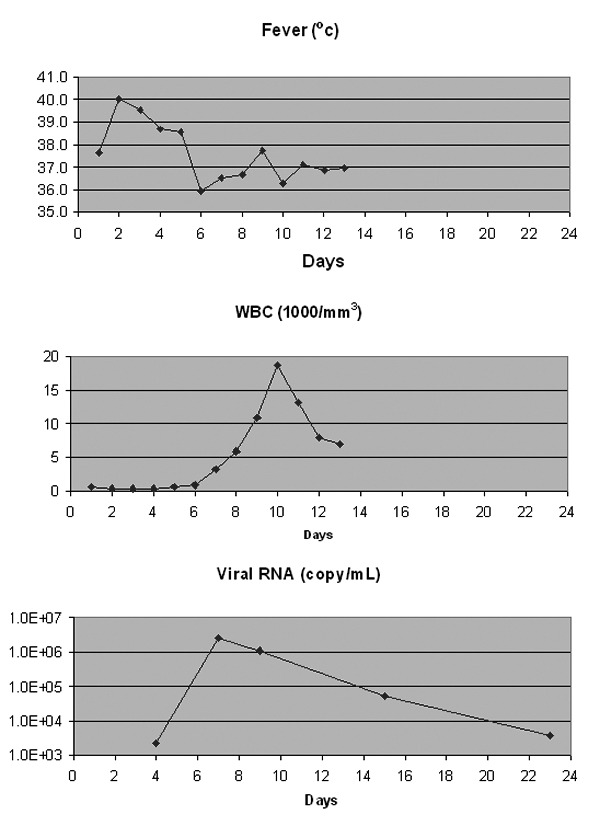
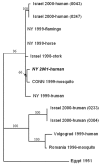
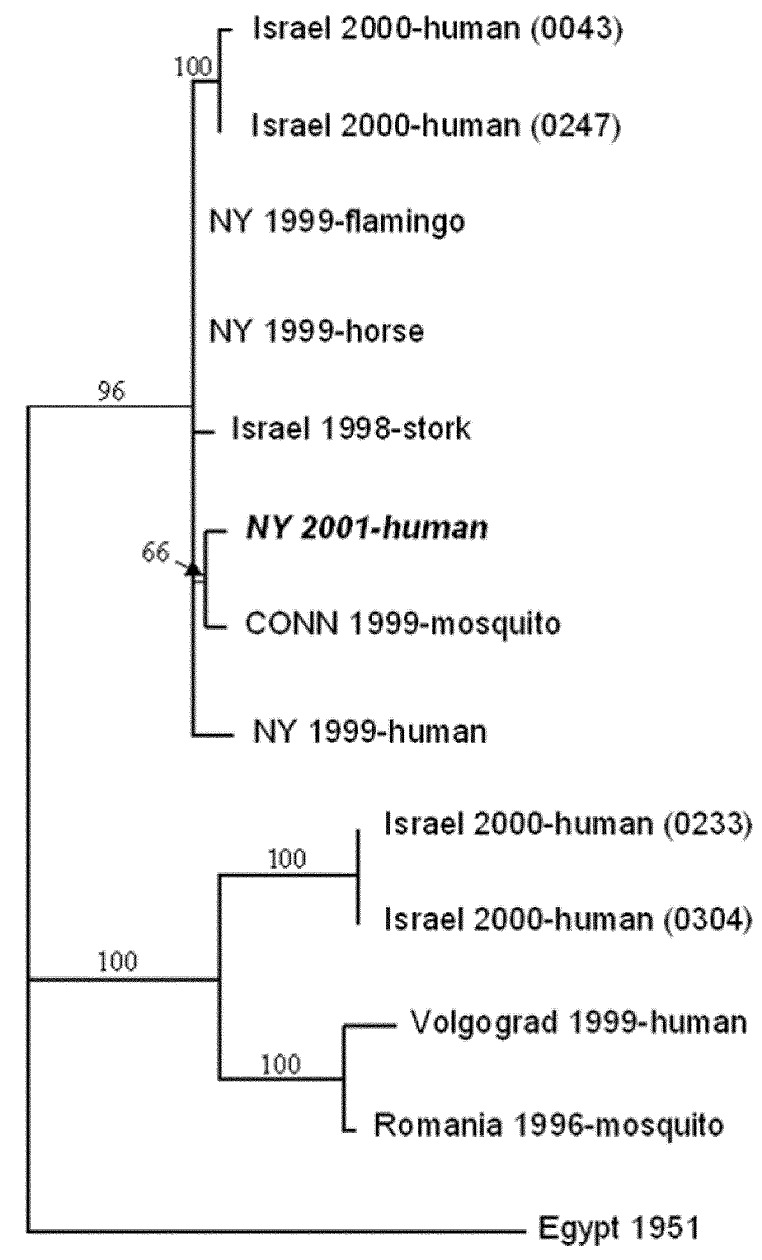
Description:West Nile virus (WNV) was isolated from a patient who developed encephalitis while undergoing treatment with CHOP (cyclophosphamide, hydroxydoxorubicin, vincristine Oncovin, predisone) and rituximab for a non-Hodgkin B-cell lymphoma. Both standard reverse transcription-polymerase chain reaction (RT-PCR) and Taqman RT-PCR established the diagnosis of WNV infection from cerebrospinal fluid (CSF). Several whole blood samples and one serum sample underwent further testing. CSF and serum samples were negative for WNV antibody; however, all samples were positive by both RT-PCR assays. Infectious virus was recovered from a blood sample, and its identity was confirmed by using a WNV-specific immunofluorescence assay. The complete WNV genomes determined from CSF and from the virus isolate adapted from cell culture were the same. The results represent the first complete WNV genome sequence obtained directly from human CSF and the first time that infectious WNV has been recovered from a patient with encephalitis in North America.
-
Subjects:
-
Source:Emerg Infect Dis. 8(12):1367-1371.
-
Document Type:
-
Funding:
-
Place as Subject:
-
Location:
-
Volume:8
-
Issue:12
-
Download URL:
-
File Type:
 [PDF - 490.31 KB]
 -
Collection(s):
-
Main Document Checksum:urn:sha256:d8366f240f00e1d08ffd6dc1d231d8be826d8d283657685878c93ea415a2af46
Supporting Files


File Language:
English
 Was this page helpful?
 Found an issue?



CDC STACKS serves as an archival repository of CDC-published products including
scientific findings, journal articles, guidelines, recommendations, or other public health information authored or
co-authored by CDC or funded partners.
As a repository, CDC STACKS retains documents in their original published format to ensure public access to scientific information.
As a repository, CDC STACKS retains documents in their original published format to ensure public access to scientific information.
You May Also Like
COLLECTION
Emerging Infectious Diseases