



New Lyssavirus Genotype from the Lesser Mouse-eared Bat (Myotis blythi), Kyrghyzstan
Supporting Files
Public Domain

-
Mar 2003
File Language:
English
Details
-
Alternative Title:Emerg Infect Dis
-
Personal Author:
-
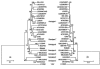
Description:The Aravan virus was isolated from a Lesser Mouse-eared Bat (Myotis blythi) in the Osh region of Kyrghyzstan, central Asia, in 1991. We determined the complete sequence of the nucleoprotein (N) gene and compared it with those of 26 representative lyssaviruses obtained from databases. The Aravan virus was distinguished from seven distinct genotypes on the basis of nucleotide and amino acid identity. Phylogenetic analysis based on both nucleotide and amino acid sequences showed that the Aravan virus was more closely related to genotypes 4, 5, and--to a lesser extent--6, which circulates among insectivorus bats in Europe and Africa. The Aravan virus does not belong to any of the seven known genotypes of lyssaviruses, namely, rabies, Lagos bat, Mokola, and Duvenhage viruses and European bat lyssavirus 1, European bat lyssavirus 2, and Australian bat lyssavirus. Based on these data, we propose a new genotype for the Lyssavirus genus.
-
Subjects:
-
Source:Emerg Infect Dis. 9(3):333-337
-
Pubmed ID:12643828
-
Pubmed Central ID:PMC2958534
-
Document Type:
-
Volume:9
-
Issue:3
-
Download URL:
-
File Type:
 [PDF - 417.86 KB]
 -
Collection(s):
-
Main Document Checksum:urn:sha256:a790ea8d29121cb673484e6f404ba06cd82f61d503d3a09beb66b55ab084d45d
Supporting Files


File Language:
English
 Was this page helpful?
 Found an issue?


CDC STACKS serves as an archival repository of CDC-published products including
scientific findings, journal articles, guidelines, recommendations, or other public health information authored or
co-authored by CDC or funded partners.
As a repository, CDC STACKS retains documents in their original published format to ensure public access to scientific information.
As a repository, CDC STACKS retains documents in their original published format to ensure public access to scientific information.
You May Also Like
COLLECTION
Emerging Infectious Diseases