



Demographic Factors Associated with Hantavirus Infection in Bank Voles (Clethrionomys glareolus)
Supporting Files
Public Domain

-
2002/09/01
-
Series: Emerging Infectious Diseases
File Language:
English
Details
-
Journal Article:Emerging Infectious Diseases
-
Personal Author:
-
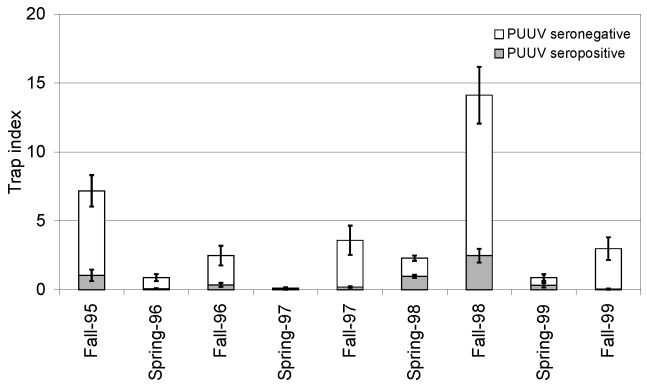
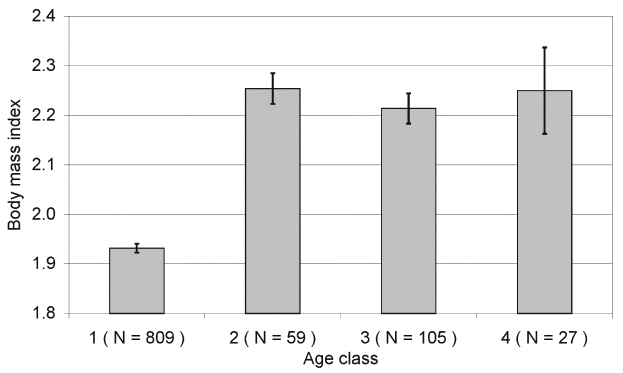
Description:The bank vole (Clethrionomys glareolus) is the natural reservoir of Puumala virus (PUUV), a species in the genus Hantavirus. PUUV is the etiologic agent of nephropathia epidemica, a mild form of hemorrhagic fever with renal syndrome. Factors that influence hantavirus transmission within host populations are not well understood. We evaluated a number of factors influencing on the association of increased PUUV infection in bank voles captured in a region in northern Sweden endemic for the virus. Logistic regression showed four factors that together correctly predicted 80% of the model outcome: age, body mass index, population phase during sampling (increase, peak, or decline/low), and gender. This analysis highlights the importance of population demography in the successful circulation of hantavirus. The chance of infection was greatest during the peak of the population cycle, implying that the likelihood of exposure to hantavirus increases with increasing population density.
-
Subjects:
- Bank Vole
- Clethrionomys Glareolus
- Logistic Regression
- Hantavirus
- Hemorrhagic Fever With Renal Syndrome
- Nephropathia Epidemica
- Odds Ratio
- Population Density
- Puumala Virus
- Rodents
- Aging
- Animals
- Antibodies, Viral
- Arvicolinae
- Body Mass Index
- Disease Reservoirs
- Disease Susceptibility
- Female
- Hantavirus Infections
- Logistic Models
- Male
- Rodent Diseases
- Seasons
- Sex Factors
- Orthohantavirus
- Zoonoses
-
Keywords:
-
Series:
-
DOI:
-
ISSN:1080-6059 (digital) ; 1080-6040 (print)
-
Pubmed ID:12194768
-
Pubmed Central ID:PMC2732544
-
Document Type:
-
Genre:
-
Place as Subject:
-
Rights:Public Domain
-
Topic:
-
Location:
-
Volume:8
-
Issue:9
-
Citation:Emerg Infect Dis. 8(9):924-929.
-
Download URL:
-
File Type:
 [PDF - 358.40 KB]
 -
Collection(s):
-
Main Document Checksum:urn:sha-512:bc4ce0d71f3508b8443a488350f6191318ca8068c6f8bd300bc26ab8b9a655e13d34154d95704bb51061693dbe02631537806ed705a66422c365308350412395
Supporting Files


File Language:
English
 Was this page helpful?
 Found an issue?



CDC STACKS serves as an archival repository of CDC-published products including
scientific findings, journal articles, guidelines, recommendations, or other public health information authored or
co-authored by CDC or funded partners.
As a repository, CDC STACKS retains documents in their original published format to ensure public access to scientific information.
As a repository, CDC STACKS retains documents in their original published format to ensure public access to scientific information.
You May Also Like
COLLECTION
Emerging Infectious Diseases