



The GPCR–Gαs–PKA signaling axis promotes T cell dysfunction and cancer immunotherapy failure
Supporting Files

-
8 2023 ; 8-2023
-
Available in CDC Stacks on December 21, 2023, 12:00 AM
File Language:
English
Details
-
Alternative Title:Nat Immunol
-
Personal Author:Wu, Victoria H. ; Yung, Bryan S. ; Faraji, Farhoud
 ;
Saddawi-Konefka, Robert
;
Wang, Zhiyong
;
Wenzel, Alexander T.
;
Song, Miranda J.
;
Pagadala, Meghana S.
;
Clubb, Lauren M.
;
Chiou, Joshua
;
Sinha, Sanju
;
Matic, Marin
;
Raimondi, Francesco
;
Hoang, Thomas S.
;
Berdeaux, Rebecca
;
Vignali, Dario A. A.
;
Iglesias-Bartolome, Ramiro
;
Carter, Hannah
;
Ruppin, Eytan
;
Mesirov, Jill P.
;
Silvio Gutkind, J.
;
Saddawi-Konefka, Robert
;
Wang, Zhiyong
;
Wenzel, Alexander T.
;
Song, Miranda J.
;
Pagadala, Meghana S.
;
Clubb, Lauren M.
;
Chiou, Joshua
;
Sinha, Sanju
;
Matic, Marin
;
Raimondi, Francesco
;
Hoang, Thomas S.
;
Berdeaux, Rebecca
;
Vignali, Dario A. A.
;
Iglesias-Bartolome, Ramiro
;
Carter, Hannah
;
Ruppin, Eytan
;
Mesirov, Jill P.
;
Silvio Gutkind, J.
-
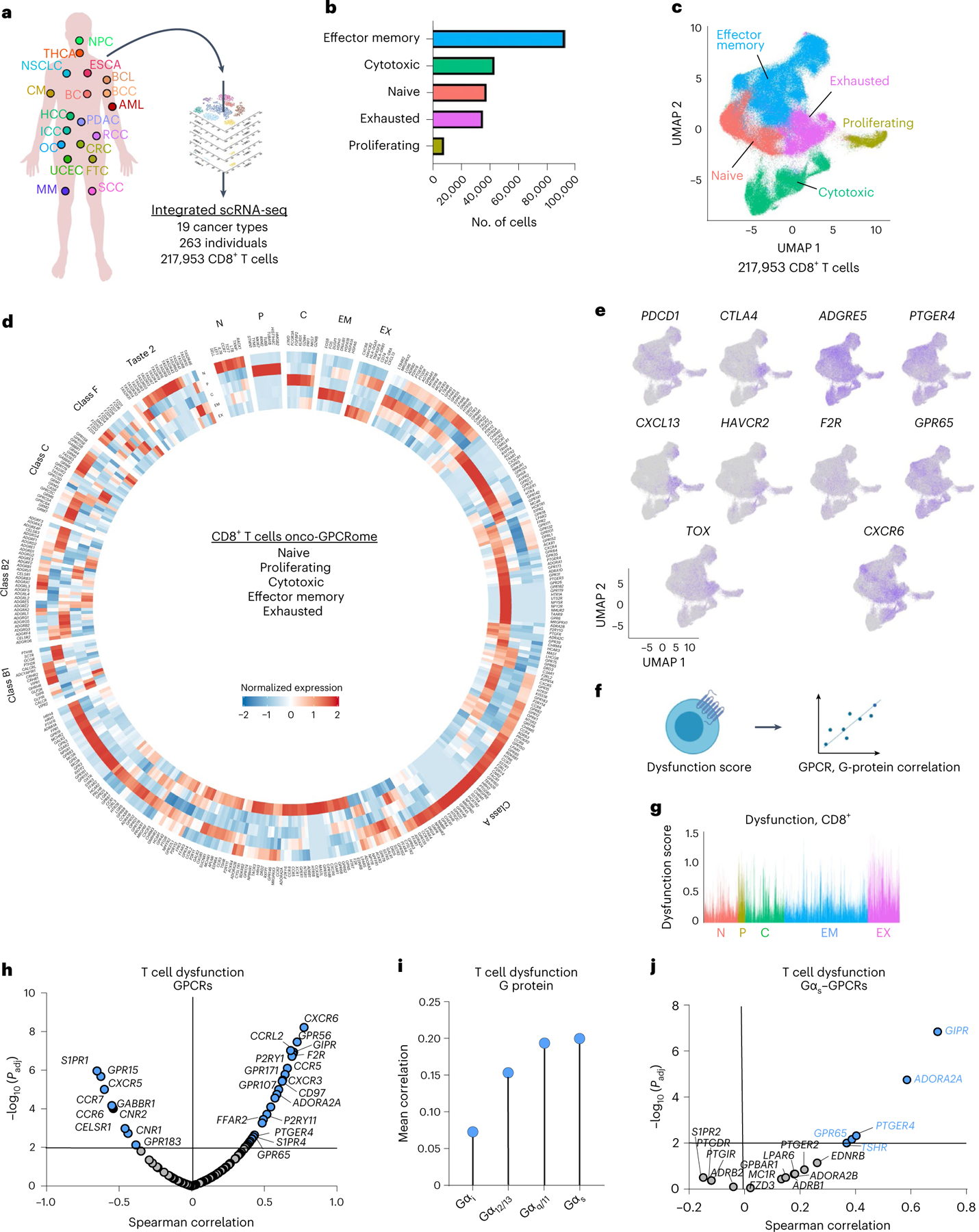
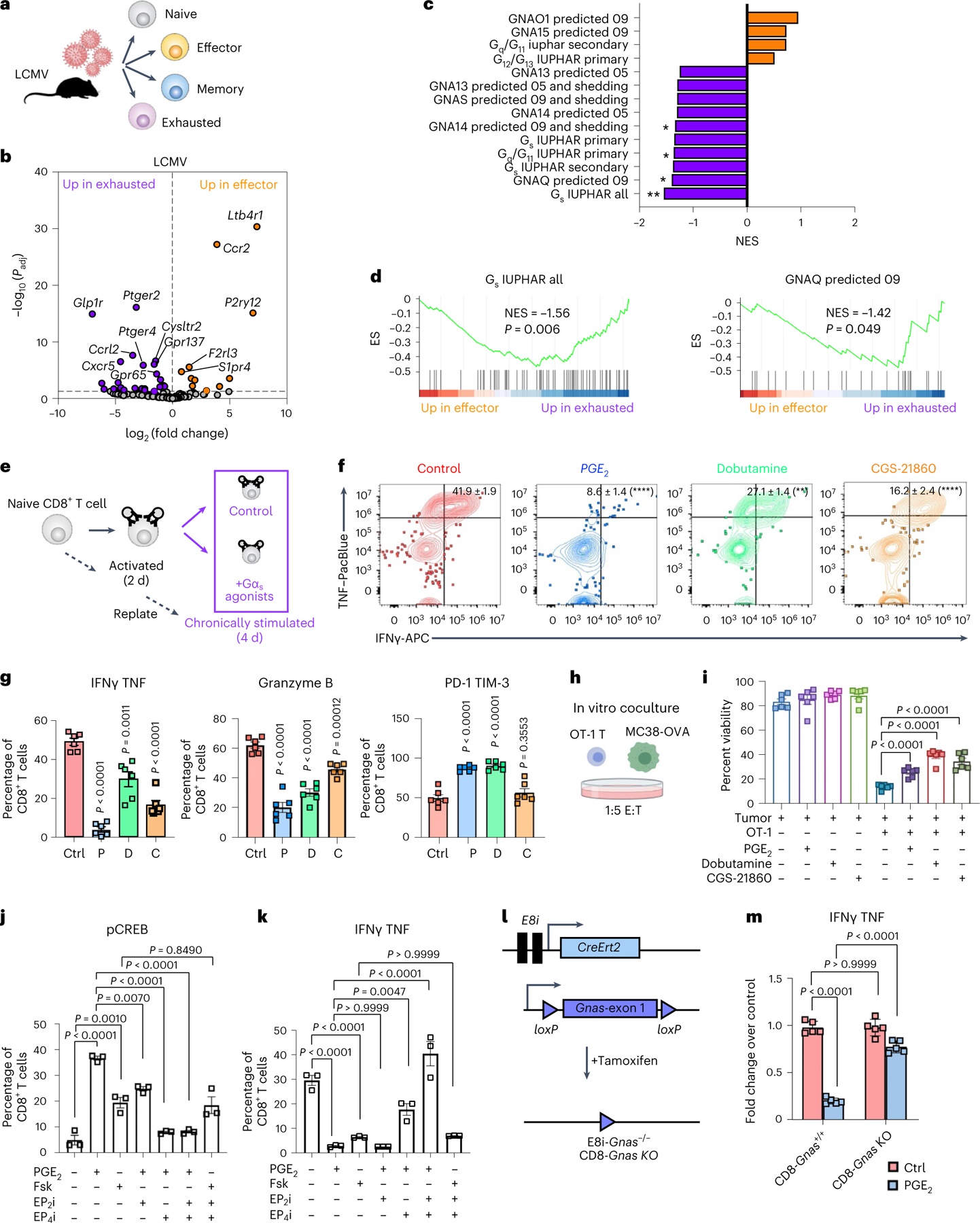
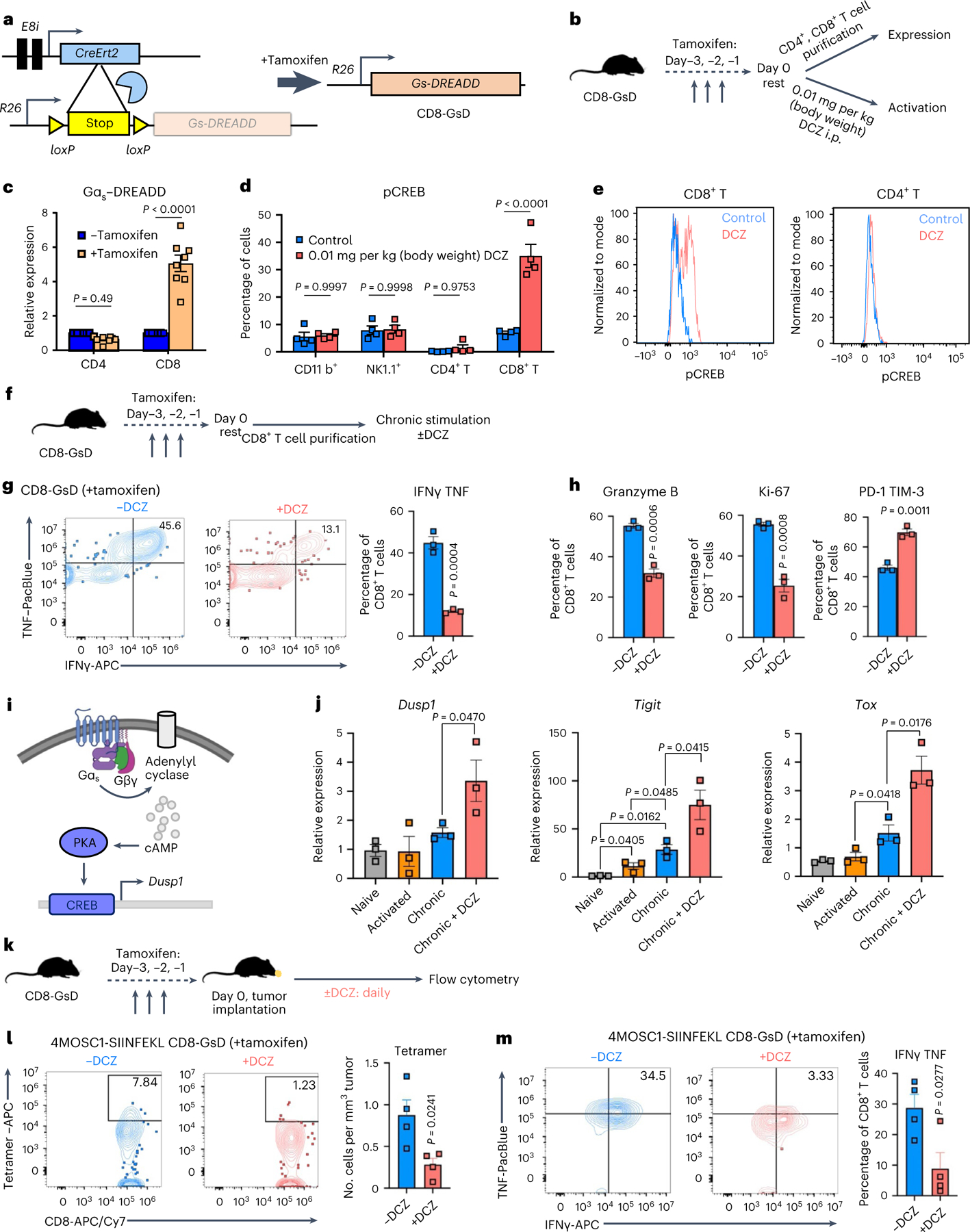
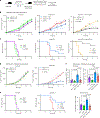
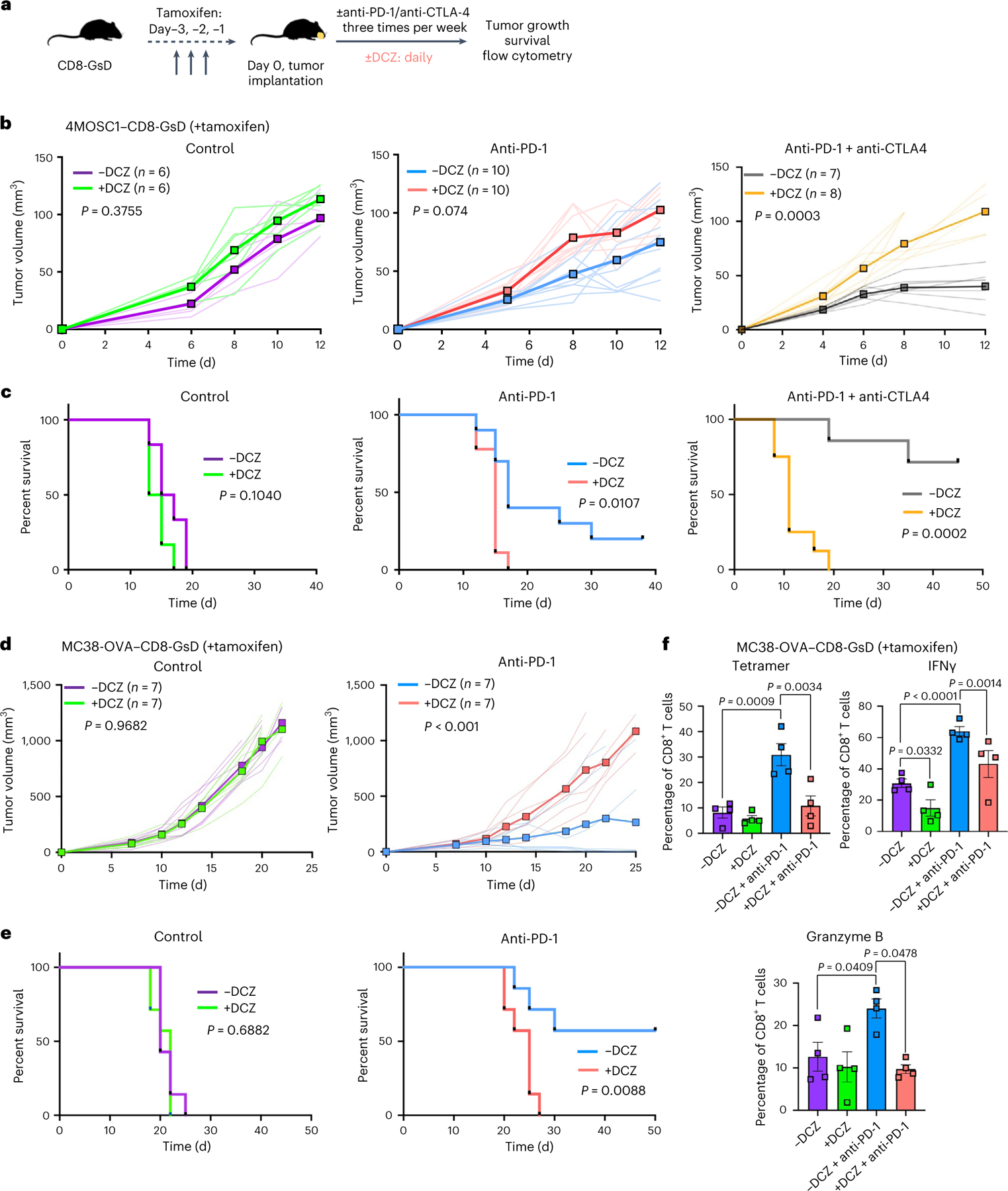
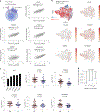
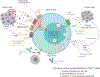
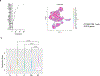
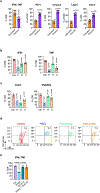
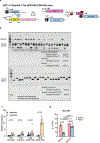
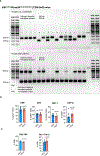
Description:Immune checkpoint blockade (ICB) targeting PD-1 and CTLA-4 has revolutionized cancer treatment. However, many cancers do not respond to ICB, prompting the search for additional strategies to achieve durable responses. G-protein-coupled receptors (GPCRs) are the most intensively studied drug targets but are underexplored in immuno-oncology. Here, we cross-integrated large singe-cell RNA-sequencing datasets from CD8| T cells covering 19 distinct cancer types and identified an enrichment of Gα|-coupled GPCRs on exhausted CD8| T cells. These include EP|, EP|, A|R, β|AR and β|AR, all of which promote T cell dysfunction. We also developed transgenic mice expressing a chemogenetic CD8-restricted Gα|-DREADD to activate CD8-restricted Gα| signaling and show that a Gα|-PKA signaling axis promotes CD8| T cell dysfunction and immunotherapy failure. These data indicate that Gα|-GPCRs are druggable immune checkpoints that might be targeted to enhance the response to ICB immunotherapies.
-
Keywords:
-
Source:Nat Immunol. 24(8):1318-1330
-
Pubmed ID:37308665
-
Pubmed Central ID:PMC10735169
-
Document Type:
-
Funding:1F31CA250488-01/CA/NCI NIH HHSUnited States/ ; F31 DE031961/DE/NIDCR NIH HHSUnited States/ ; R01-DK092590/DK/NIDDK NIH HHSUnited States/ ; R01CA247551/CA/NCI NIH HHSUnited States/ ; U24CA220341/CA/NCI NIH HHSUnited States/ ; R01DE026870/DE/NIDCR NIH HHSUnited States/ ; U24 CA248457/CA/NCI NIH HHSUnited States/ ; 1F31DE031961-01/DE/NIDCR NIH HHSUnited States/ ; F31CA257344/CA/NCI NIH HHSUnited States/ ; F32 DE029990/DE/NIDCR NIH HHSUnited States/ ; U24 CA220341/CA/NCI NIH HHSUnited States/ ; F32DE029990-01/DE/NIDCR NIH HHSUnited States/ ; F31 CA250488/CA/NCI NIH HHSUnited States/ ; ZIA BC011764/ImNIH/Intramural NIH HHSUnited States/ ; T15LM011271/LM/NLM NIH HHSUnited States/ ; U24CA248457/CA/NCI NIH HHSUnited States/ ; T15 LM011271/LM/NLM NIH HHSUnited States/ ; R01 AR072368/AR/NIAMS NIH HHSUnited States/ ; R01-AR-072368/AR/NIAMS NIH HHSUnited States/ ; T32 GM007752/GM/NIGMS NIH HHSUnited States/ ; U01 DE028227/DE/NIDCR NIH HHSUnited States/ ; R01 CA247551/CA/NCI NIH HHSUnited States/ ; R01 DE026870/DE/NIDCR NIH HHSUnited States/ ; U54 CA209891/CA/NCI NIH HHSUnited States/ ; U54CA209891/IP/NCIRD CDC HHSUnited States/ ; F31 CA257344/CA/NCI NIH HHSUnited States/ ; T32 DK007752/DK/NIDDK NIH HHSUnited States/ ; R01 DK092590/DK/NIDDK NIH HHSUnited States/
-
Volume:24
-
Issue:8
-
Download URL:
-
File Type:
 [PDF - 3.88 MB]
 -
Collection(s):
-
Main Document Checksum:urn:sha256:c9cb3c581818fc63ad4a8f798768193e2ada09530e902d08f835ef05e9a38abe
Supporting Files


File Language:
English
 Was this page helpful?
 Found an issue?













CDC STACKS serves as an archival repository of CDC-published products including
scientific findings, journal articles, guidelines, recommendations, or other public health information authored or
co-authored by CDC or funded partners.
As a repository, CDC STACKS retains documents in their original published format to ensure public access to scientific information.
As a repository, CDC STACKS retains documents in their original published format to ensure public access to scientific information.
You May Also Like
COLLECTION
CDC Public Access