



Parachlamydiaceae: Potential Emerging Pathogens
Supporting Files
Public Domain

-
Jun 2002
Details
-
Alternative Title:Emerg Infect Dis
-
Personal Author:
-
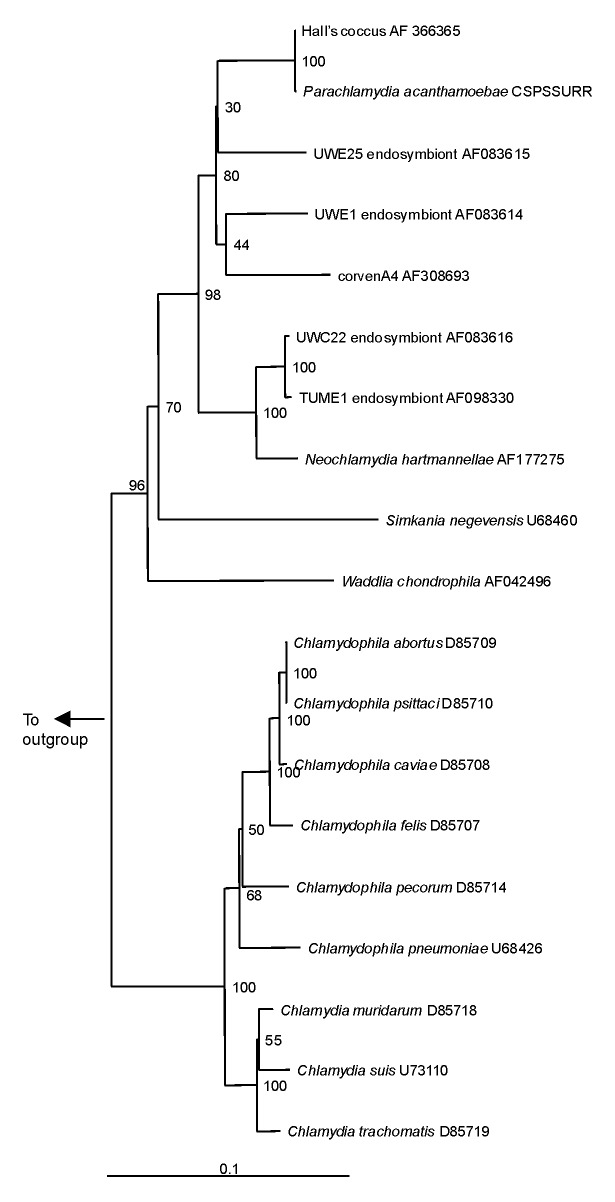
Description:Parachlamydiaceae, which naturally infect amoebae, form a sister taxon to the Chlamydiaceae on the basis of the Chlamydia-like cycle of replication and 80% to 90% homology of ribosomal RNA genes. Because intra-amoebal growth could increase the virulence of some intracellular bacteria, Parachlamydiaceae may be pathogenic. Arguments supporting a pathogenic role are that Chlamydia pneumoniae, a well-recognized agent of pneumonia, was shown to infect free-living amoebae and that another member of the Chlamydiales, Simkania negevensis, which has 88% homology with Parachlamydia acanthamoebae, has caused pneumonia in adults and acute bronchiolitis in infants. The recent identification of a 16S rRNA gene sequence of a Parachlamydiaceae from bronchoalveolar lavage is additional evidence supporting potential for pathogenicity.
-
Subjects:
-
Source:Emerg Infect Dis. 8(6):626-630.
-
Document Type:
-
Volume:8
-
Issue:6
-
Download URL:
-
File Type:
 [PDF - 690.33 KB]
 -
Collection(s):
-
Main Document Checksum:urn:sha256:6b654b81f0d2e6a67bfa911804b290a0a3fbfb854b459eece08f511f5bfe8256
Supporting Files


 Was this page helpful?
 Found an issue?


CDC STACKS serves as an archival repository of CDC-published products including
scientific findings, journal articles, guidelines, recommendations, or other public health information authored or
co-authored by CDC or funded partners.
As a repository, CDC STACKS retains documents in their original published format to ensure public access to scientific information.
As a repository, CDC STACKS retains documents in their original published format to ensure public access to scientific information.
You May Also Like
COLLECTION
Emerging Infectious Diseases