



Megadrought and Megadeath in 16th Century Mexico
Supporting Files
Public Domain

-
Apr 2002
File Language:
English
Details
-
Alternative Title:Emerg Infect Dis
-
Personal Author:
-
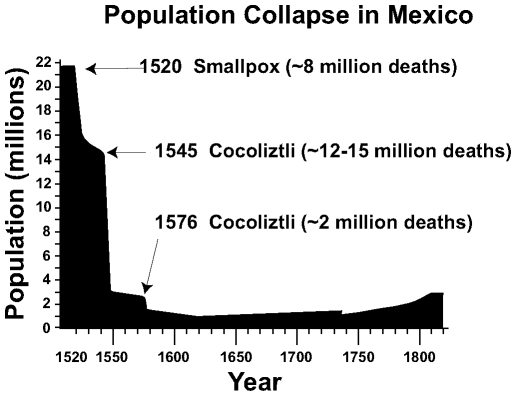
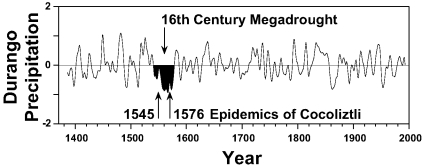
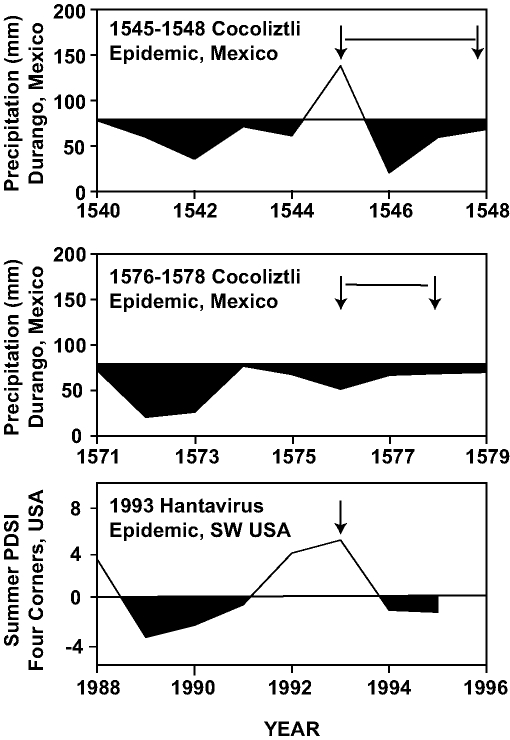
Description:The native population collapse in 16th century Mexico was a demographic catastrophe with one of the highest death rates in history. Recently developed tree-ring evidence has allowed the levels of precipitation to be reconstructed for north central Mexico, adding to the growing body of epidemiologic evidence and indicating that the 1545 and 1576 epidemics of cocoliztli (Nahuatl for "pest") were indigenous hemorrhagic fevers transmitted by rodent hosts and aggravated by extreme drought conditions.
-
Subjects:
-
Source:Emerg Infect Dis. 8(4):360-362.
-
Document Type:
-
Place as Subject:
-
Location:
-
Volume:8
-
Issue:4
-
Download URL:
-
File Type:
 [PDF - 166.31 KB]
 -
Collection(s):
-
Main Document Checksum:urn:sha256:5c34f236ffbe9f007aa25be8ac2ab7bdced63474d3bfb2b52df480c7c2026eac
Supporting Files


File Language:
English
 Was this page helpful?
 Found an issue?

CDC STACKS serves as an archival repository of CDC-published products including
scientific findings, journal articles, guidelines, recommendations, or other public health information authored or
co-authored by CDC or funded partners.
As a repository, CDC STACKS retains documents in their original published format to ensure public access to scientific information.
As a repository, CDC STACKS retains documents in their original published format to ensure public access to scientific information.
You May Also Like
COLLECTION
Emerging Infectious Diseases