


A Hamster-Derived West Nile Virus Isolate Induces Persistent Renal Infection in Mice
Supporting Files
Public Domain

-
Jun 13 2013
-
File Language:
English
Details
-
Alternative Title:PLoS Negl Trop Dis
-
Personal Author:
-
Description:Background
West Nile virus (WNV) can persist long term in the brain and kidney tissues of humans, non-human primates, and hamsters. In this study, mice were infected with WNV strain H8912, previously cultured from the urine of a persistently infected hamster, to determine its pathogenesis in a murine host.
Methodology/Principal Findings
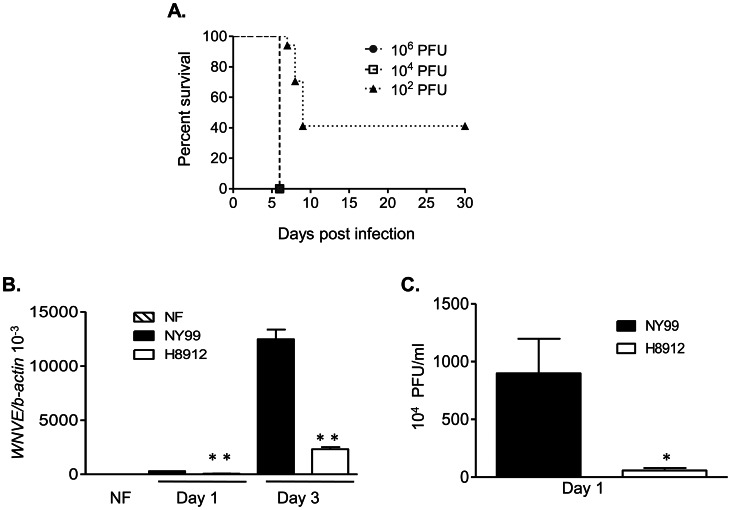
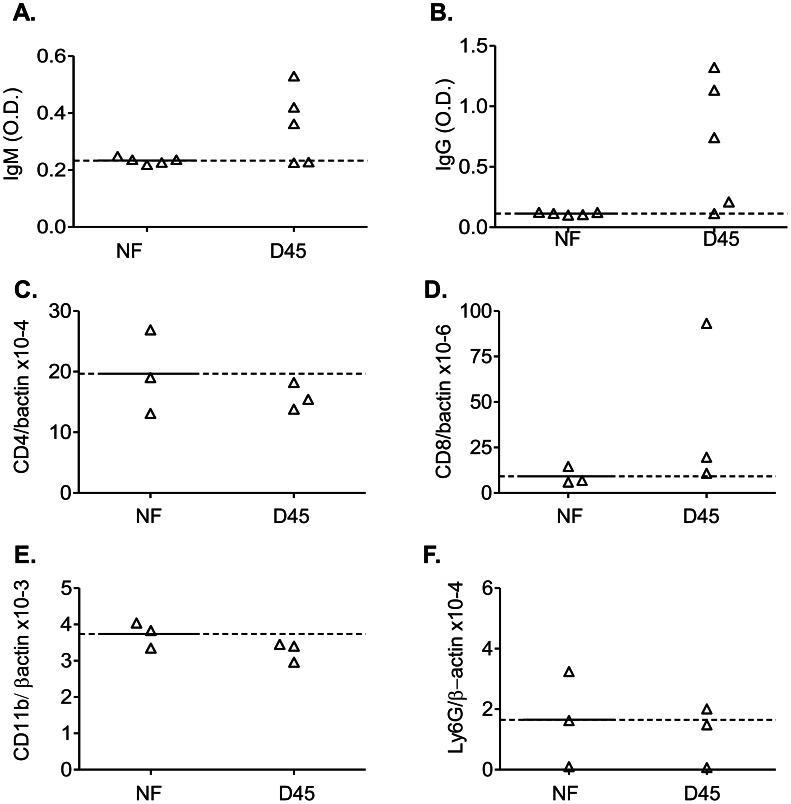
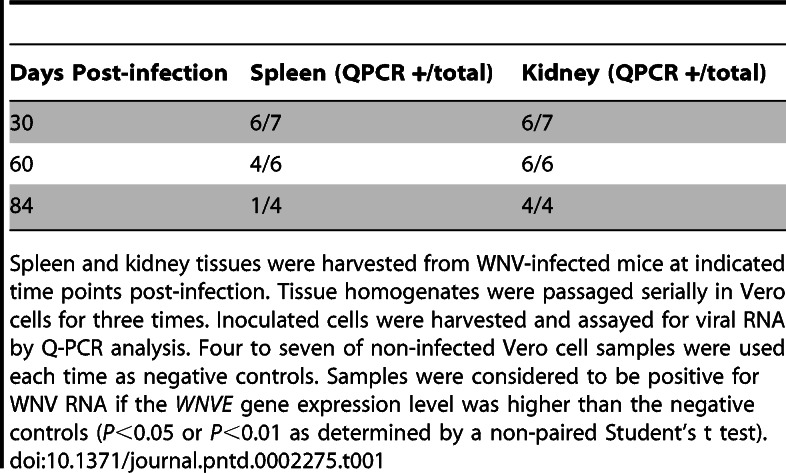
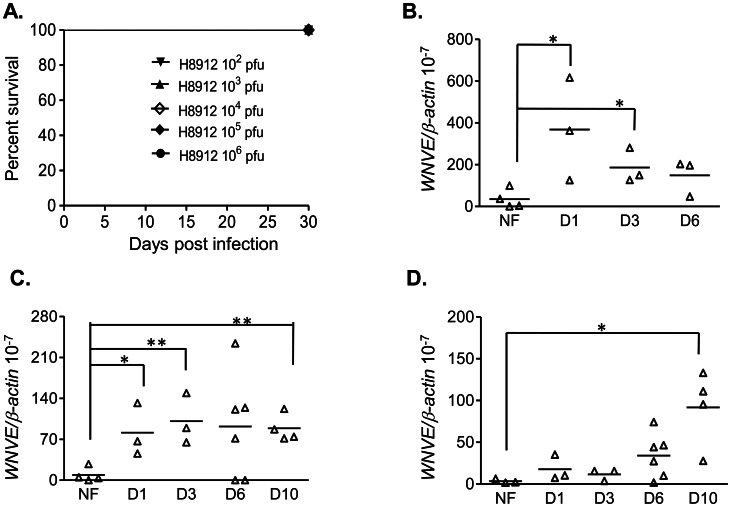
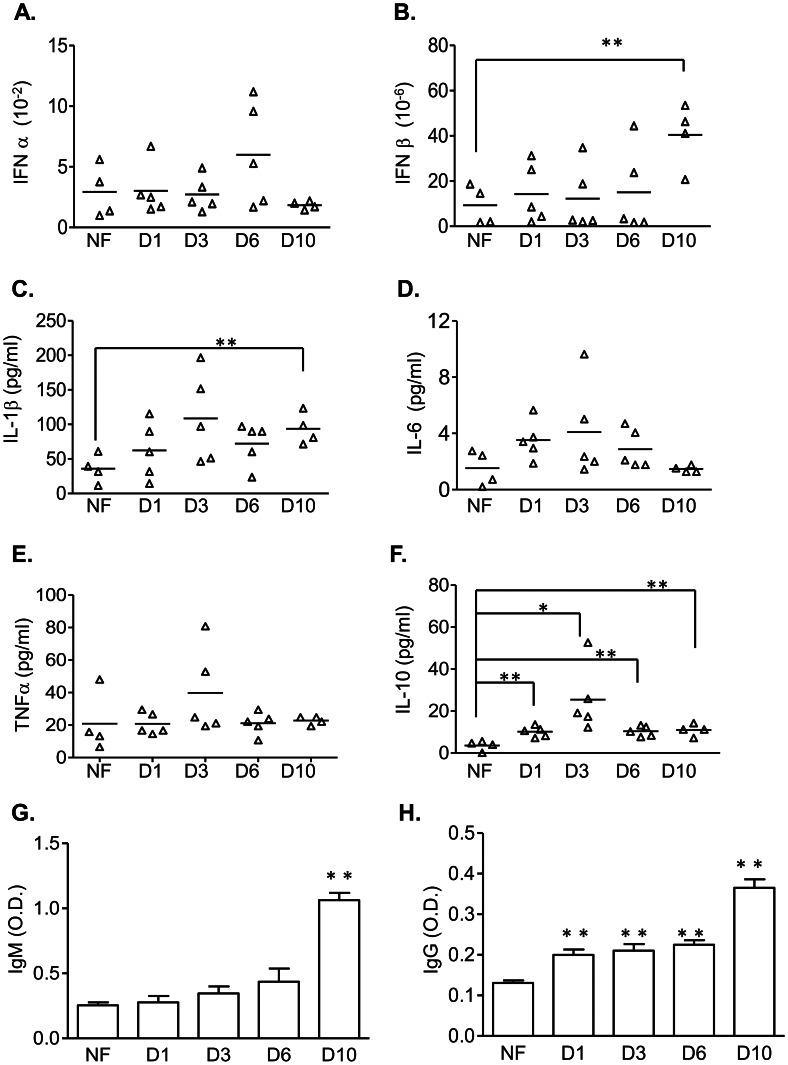
We found that WNV H8912 was highly attenuated for neuroinvasiveness in mice. Following a systemic infection, viral RNA could be detected quickly in blood and spleen and much later in kidneys. WNV H8912 induced constitutive IL-10 production, upregulation of IFN-β and IL-1β expression, and a specific IgM response on day 10 post-infection. WNV H8912 persisted preferentially in kidneys with mild renal inflammation, and less frequently in spleen for up to 2.5 months post infection. This was concurrent with detectable serum WNV-specific IgM and IgG production. There were also significantly fewer WNV- specific T cells and lower inflammatory responses in kidneys than in spleen. Previous studies have shown that systemic wild-type WNV NY99 infection induced virus persistence preferentially in spleen than in mouse kidneys. Here, we noted that splenocytes of WNV H8912-infected mice produced significantly less IL-10 than those of WNV NY99-infected mice. Finally, WNV H8912 was also attenuated in neurovirulence. Following intracranial inoculation, WNV persisted in the brain at a low frequency, concurrent with neither inflammatory responses nor neuronal damage in the brain.
Conclusions
WNV H8912 is highly attenuated in both neuroinvasiveness and neurovirulence in mice. It induces a low and delayed anti-viral response in mice and preferentially persists in the kidneys.
-
Subjects:
-
Source:PLoS Negl Trop Dis. 2013; 7(6).
-
Document Type:
-
Volume:7
-
Issue:6
-
Collection(s):
-
Main Document Checksum:urn:sha256:fcecd28493dd322c7d796f3ce65ca92d475a5391db400eff28cfde1455547f5b
-
Download URL:
-
File Type:
 [PDF
- 2.10 MB
]
[PDF
- 2.10 MB
]
Supporting Files


File Language:
English
ON THIS PAGE






CDC STACKS serves as an archival repository of CDC-published products including
scientific findings,
journal articles, guidelines, recommendations, or other public health information authored or
co-authored by CDC or funded partners.
As a repository, CDC STACKS retains documents in their original published format to ensure public access to scientific information.
As a repository, CDC STACKS retains documents in their original published format to ensure public access to scientific information.
You May Also Like
COLLECTION
CDC Public Access