



Risk Factors for Recent HIV Infections among Adults in 14 Countries in Africa Identified by Population-Based HIV Impact Assessment Surveys, 2015–2019
Supporting Files

-
11 2023
File Language:
English
Details
-
Alternative Title:Emerg Infect Dis
-
Personal Author:Currie, Dustin W. ; West, Christine A. ; Patel, Hetal K. ; Favaloro, Jennifer ; Asiimwe, Fred ; Ndagije, Felix ; Silver, Rachel ; Mugurungi, Owen ; Shang, Judith ; Ndongmo, Clement B. ; Williams, Daniel B. ; Dzinotyiweyi, Edington ; Waruru, Anthony ; Pasipamire, Munyaradzi ; Nuwagaba-Biribonwoha, Harriet ; Dlamini, Sindisiwe ; McLeod, Natasha ; Kayirangwa, Eugenie ; Rwibasira, Gallican ; Minchella, Peter A. ; Auld, Andrew F. ; Nyirenda, Rose ; Getaneh, Yimam ; Hailemariam, Ashenafi Haile ; Tondoh-Koui, Isabelle ; Kohemun, Natacha ; Mgomella, George S. ; Njau, Prosper Faustine ; Kirungi, Wilford L. ; Dalhatu, Ibrahim ; Stafford, Kristen A. ; Bodika, Stephane M. ; Ussery, Faith ; McCracken, Stephen ; Stupp, Paul ; Brown, Kristin ; Duong, Yen T. ; Parekh, Bharat S. ; Voetsch, Andrew C.
-
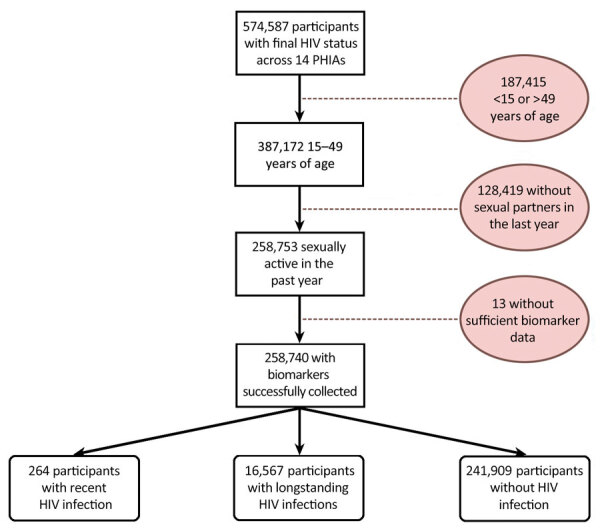
Description:Identifying persons who have newly acquired HIV infections is critical for characterizing the HIV epidemic direction. We analyzed pooled data from nationally representative Population-Based HIV Impact Assessment surveys conducted across 14 countries in Africa for recent infection risk factors. We included adults 15-49 years of age who had sex during the previous year and used a recent infection testing algorithm to distinguish recent from long-term infections. We collected risk factor information via participant interviews and assessed correlates of recent infection using multinomial logistic regression, incorporating each survey's complex sampling design. Compared with HIV-negative persons, persons with higher odds of recent HIV infection were women, were divorced/separated/widowed, had multiple recent sex partners, had a recent HIV-positive sex partner or one with unknown status, and lived in communities with higher HIV viremia prevalence. Prevention programs focusing on persons at higher risk for HIV and their sexual partners will contribute to reducing HIV incidence.
-
Subjects:
-
Keywords:
-
Source:Emerg Infect Dis. 2023; 29(11):2325-2334
-
Pubmed ID:37877591
-
Pubmed Central ID:PMC10617335
-
Document Type:
-
Funding:
-
Place as Subject:
-
Volume:29
-
Issue:11
-
Download URL:
-
File Type:
 [PDF - 788.63 KB]
 -
Collection(s):
-
Main Document Checksum:urn:sha256:13626f19ff68a832620f4e21e7d6120c6ce625f31a9906ba5a184cd8eea60388
Supporting Files


File Language:
English
 Was this page helpful?
 Found an issue?

CDC STACKS serves as an archival repository of CDC-published products including
scientific findings, journal articles, guidelines, recommendations, or other public health information authored or
co-authored by CDC or funded partners.
As a repository, CDC STACKS retains documents in their original published format to ensure public access to scientific information.
As a repository, CDC STACKS retains documents in their original published format to ensure public access to scientific information.
You May Also Like
COLLECTION
Emerging Infectious Diseases