



Evaluation of a Methoprene Aerial Application for the Control of Culiseta melanura (Diptera: Culicidae) in Wetland Larval Habitats
Supporting Files

-
11 09 2021 ; 11-09-
-
Available in CDC Stacks on October 23, 2023, 12:00 AM

File Language:
English
Details
-
Alternative Title:J Med Entomol
-
Personal Author:
-
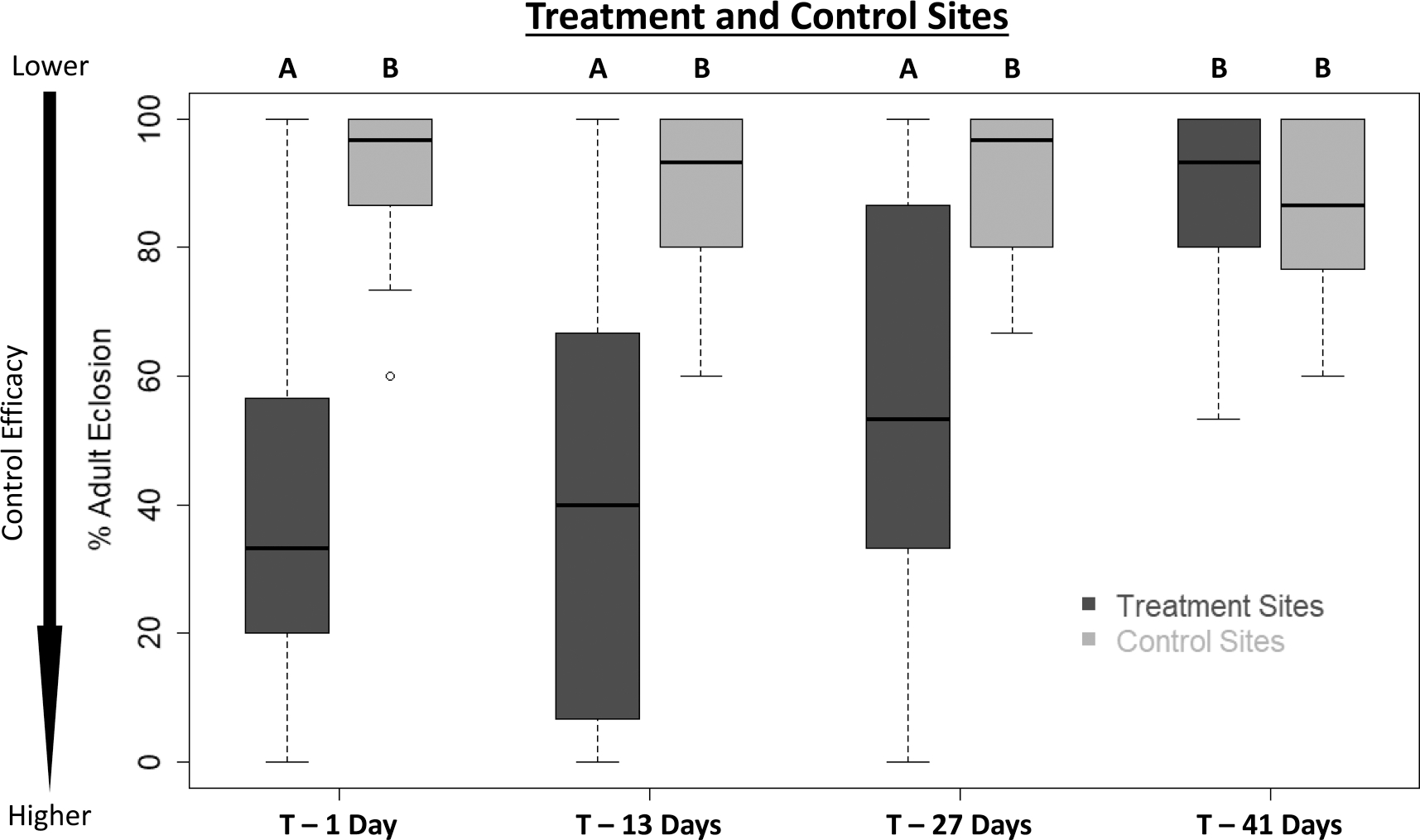
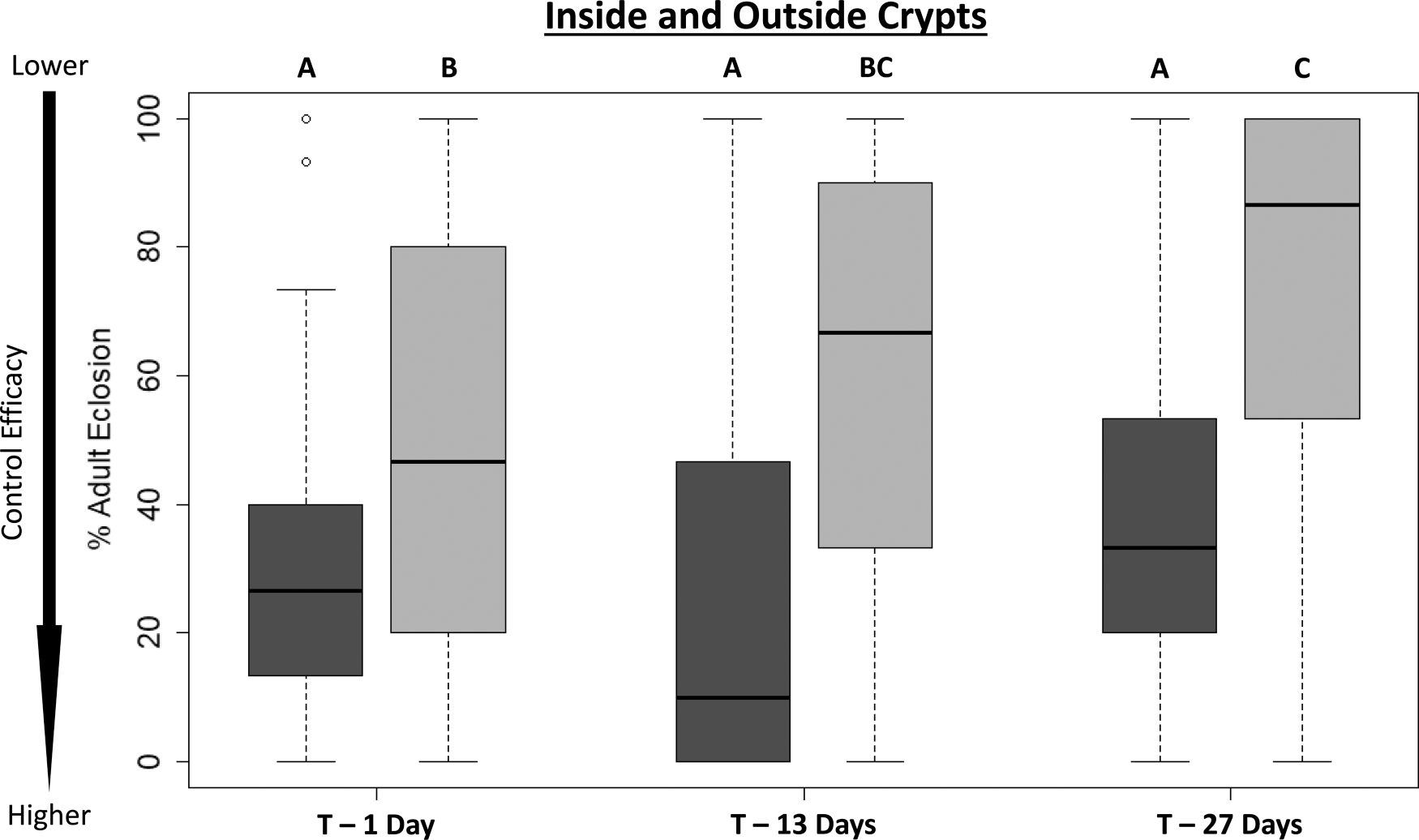
Description:Eastern equine encephalitis virus (EEEV) is an arbovirus endemic to the eastern United States. Human cases are rare but can be serious. The primary enzootic vector is Culiseta melanura (Coquillett) (Diptera: Culicidae), an ornithophagic mosquito. We conducted an aerial application of a granular methoprene formulation in Hockomock Swamp (Massachusetts), which represents a focus of EEEV transmission. Water collected from inside and outside Cs. melanura crypts was evaluated in bioassays of early fourth instar Cs. melanura larvae using treated and untreated water. Adult eclosion rates were 36% significantly lower in treated compared with untreated water (P < 0.05). Eclosion rates for water collected from inside crypts were significantly higher (62%) than rates from outside crypts (30%) (P < 0.05), indicating higher efficacy outside crypts. We tested whether reduced methoprene efficacy inside the crypts was due to reduced chemical penetration into this habitat. Chemical water analyses confirmed that methoprene concentrations were lower inside the crypts (0.1 ± 0.05 ppb) compared to water from outside crypts (1.79 ± 0.41 ppb). The susceptibility of Cs. melanura to methoprene was also determined to allow for comparison against concentrations observed in water collected from the field (LC-95: 1.95 ± 0.5 ppb). Overall, methoprene-treated water prevented mosquito development for up to 4 wk, but with a reduction in efficacy between 4- and 6-wk post-application. Our results suggest that aerial methoprene applications can effectively treat open water in wetlands but may not provide efficacious control of Cs. melanura due to an inability to penetrate larval habitats.
-
Keywords:
-
Source:J Med Entomol. 58(6):2330-2337
-
Pubmed ID:34144601
-
Pubmed Central ID:PMC10591452
-
Document Type:
-
Funding:
-
Volume:58
-
Issue:6
-
Download URL:
-
File Type:
 [PDF - 909.15 KB]
 -
Collection(s):
-
Main Document Checksum:urn:sha256:a53893de8dca5c110aa2d3350178a85676558d96f27c4ac5e58094d0578b1048
Supporting Files


File Language:
English
 Was this page helpful?
 Found an issue?

CDC STACKS serves as an archival repository of CDC-published products including
scientific findings, journal articles, guidelines, recommendations, or other public health information authored or
co-authored by CDC or funded partners.
As a repository, CDC STACKS retains documents in their original published format to ensure public access to scientific information.
As a repository, CDC STACKS retains documents in their original published format to ensure public access to scientific information.
You May Also Like
COLLECTION
CDC Public Access