



Dynamics of Eastern equine encephalitis virus during the 2019 outbreak in the Northeast United States
Supporting Files

-
6 19 2023 ; 6-19-
-
Available in CDC Stacks on June 19, 2024, 12:00 AM
File Language:
English
Details
-
Alternative Title:Curr Biol
-
Personal Author:Hill, Verity ; Koch, Robert T. ; Bialosuknia, Sean M. ; Ngo, Kiet ; Zink, Steven D. ; Koetzner, Cheri A. ; Maffei, Joseph G. ; Dupuis, Alan P. ; Backenson, P. Bryon ; Oliver, JoAnne ; Bransfield, Angela B. ; Misencik, Michael J. ; Petruff, Tanya A. ; Shepard, John J. ; Warren, Joshua L. ; Gill, Mandev S. ; Baele, Guy ; Vogels, Chantal B.F. ; Gallagher, Glen ; Burns, Paul ; Hentoff, Aaron ; Smole, Sandra ; Brown, Catherine ; Osborne, Matthew ; Kramer, Laura D. ; Armstrong, Philip M. ; Ciota, Alexander T. ; Grubaugh, Nathan D.
-
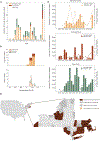
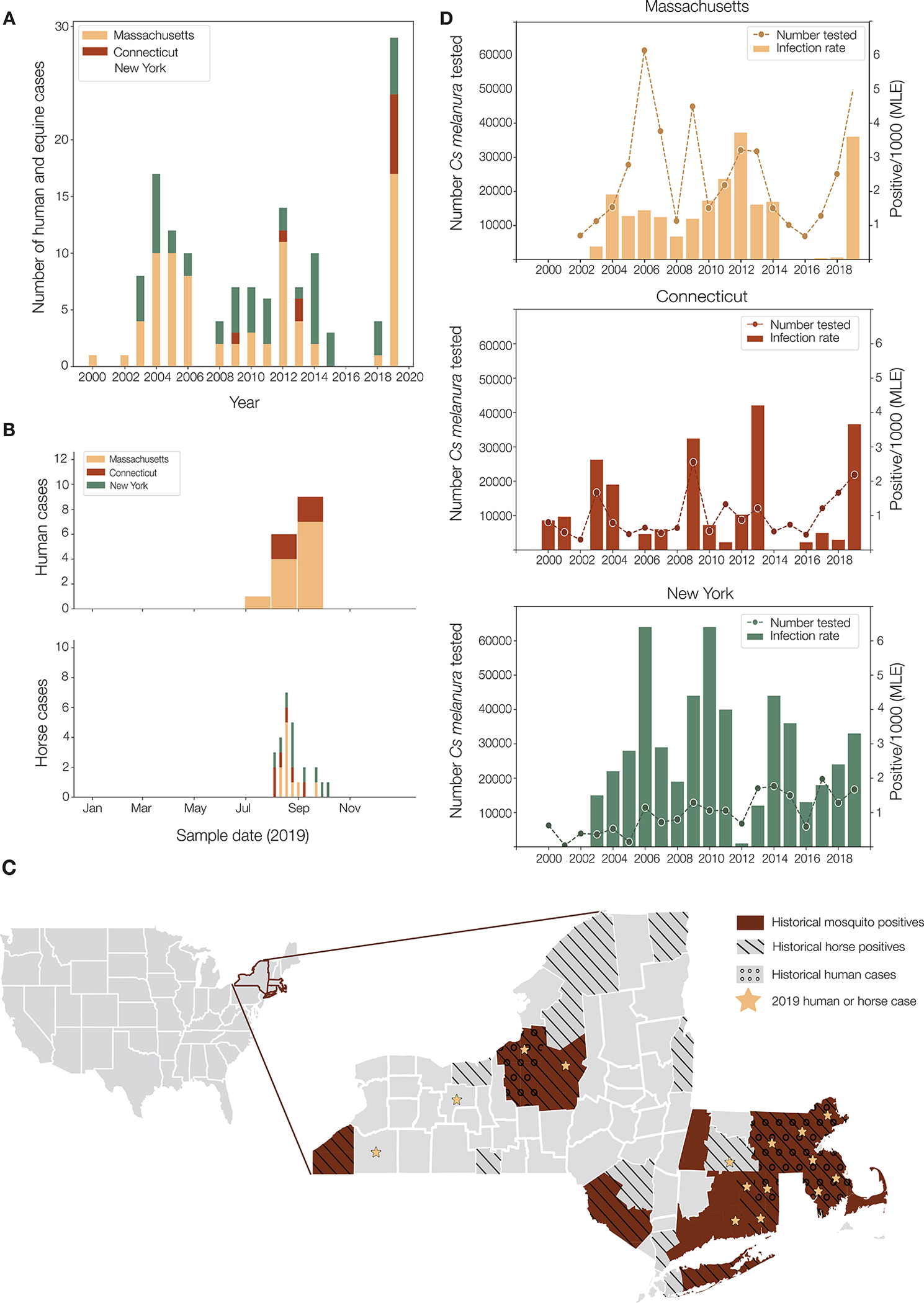
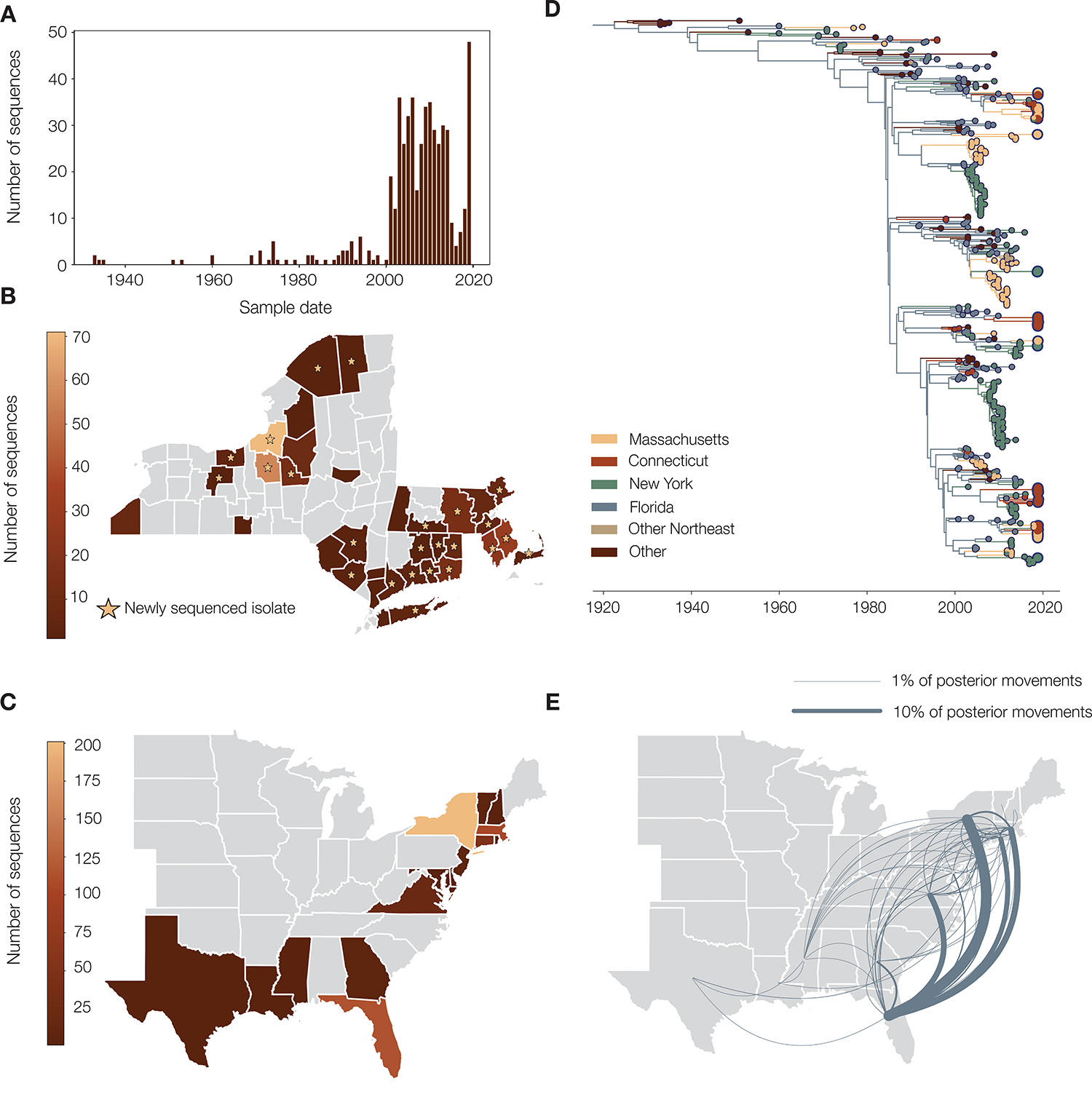
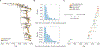
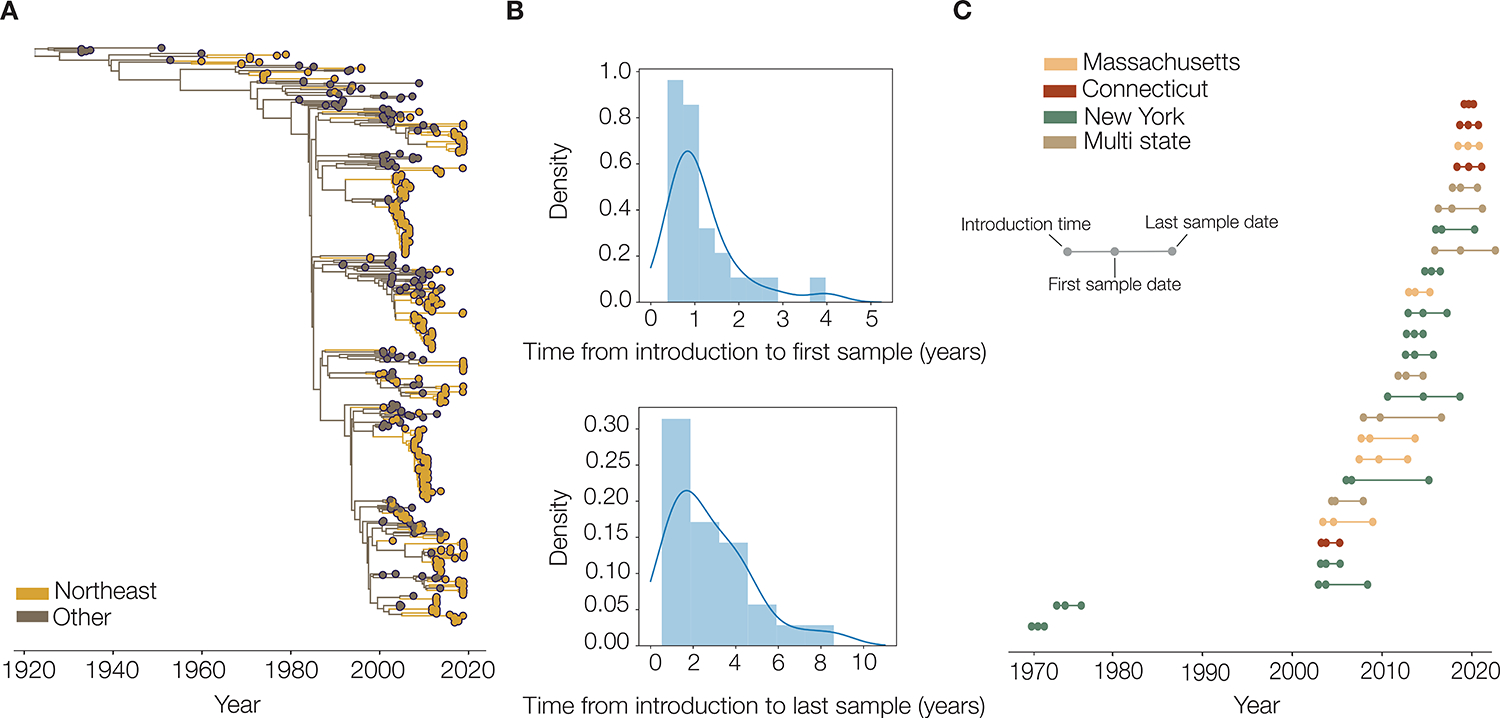
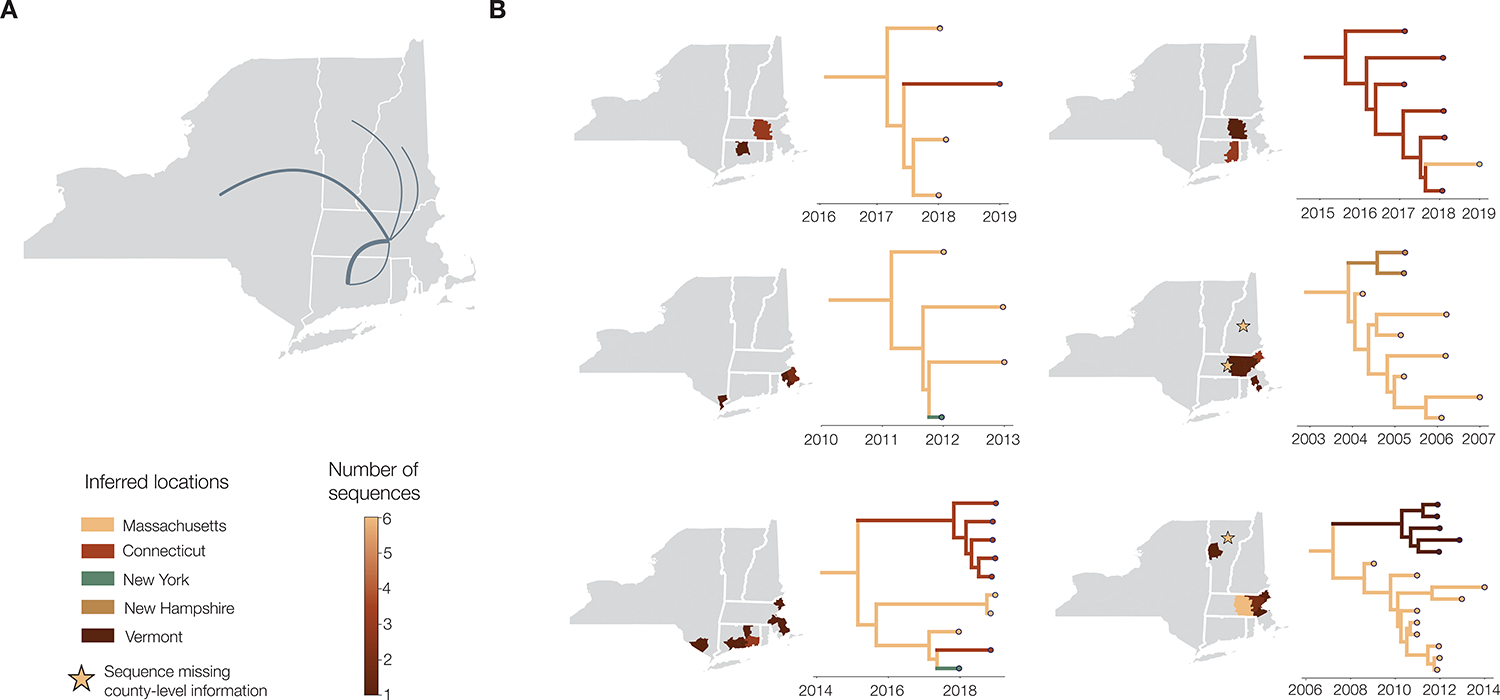
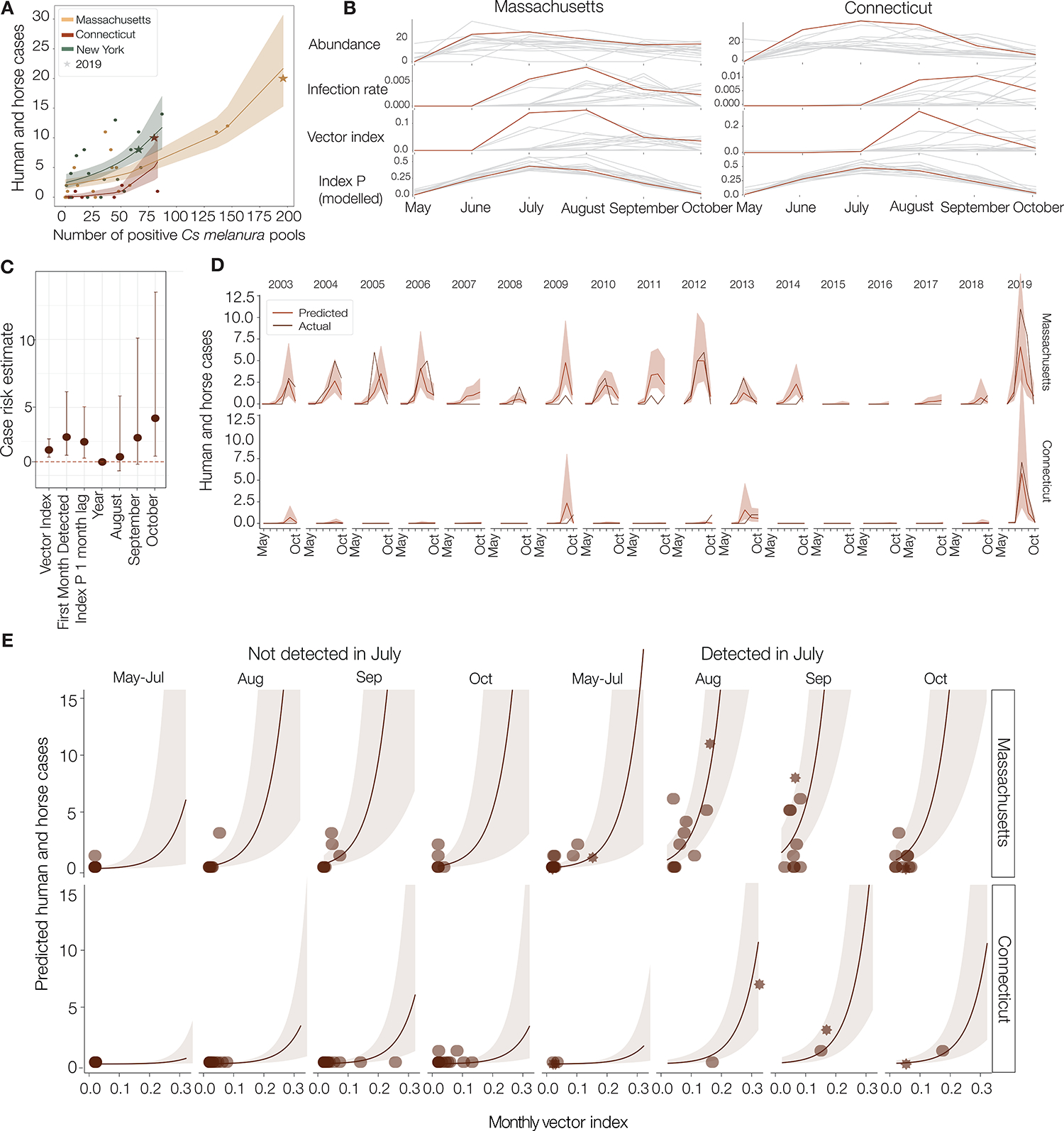
Description:Eastern equine encephalitis virus (EEEV) causes a rare but severe disease in horses and humans and is maintained in an enzootic transmission cycle between songbirds and Culiseta melanura mosquitoes. In 2019, the largest EEEV outbreak in the United States for more than 50 years occurred, centered in the Northeast. To explore the dynamics of the outbreak, we sequenced 80 isolates of EEEV and combined them with existing genomic data. We found that, similar to previous years, cases were driven by multiple independent but short-lived virus introductions into the Northeast from Florida. Once in the Northeast, we found that Massachusetts was important for regional spread. We found no evidence of any changes in viral, human, or bird factors which would explain the increase in cases in 2019, although the ecology of EEEV is complex and further data is required to explore these in more detail. By using detailed mosquito surveillance data collected by Massachusetts and Connecticut, however, we found that the abundance of Cs. melanura was exceptionally high in 2019, as was the EEEV infection rate. We employed these mosquito data to build a negative binomial regression model and applied it to estimate early season risks of human or horse cases. We found that the month of first detection of EEEV in mosquito surveillance data and vector index (abundance multiplied by infection rate) were predictive of cases later in the season. We therefore highlight the importance of mosquito surveillance programs as an integral part of public health and disease control.
-
Subjects:
-
Source:Curr Biol. 33(12):2515-2527.e6
-
Pubmed ID:37295427
-
Pubmed Central ID:PMC10316540
-
Document Type:
-
Funding:
-
Volume:33
-
Issue:12
-
Download URL:
-
File Type:
 [PDF - 1.27 MB]
 -
Collection(s):
-
Main Document Checksum:urn:sha256:a4e5c7cc7a07e7841ecf2acc401cb326263bcb929397efb5d42d1c2d0b914082
Supporting Files


File Language:
English
 Was this page helpful?
 Found an issue?

CDC STACKS serves as an archival repository of CDC-published products including
scientific findings, journal articles, guidelines, recommendations, or other public health information authored or
co-authored by CDC or funded partners.
As a repository, CDC STACKS retains documents in their original published format to ensure public access to scientific information.
As a repository, CDC STACKS retains documents in their original published format to ensure public access to scientific information.
You May Also Like
COLLECTION
CDC Public Access