



Identifying suitable habitat for Ixodes scapularis (Acari: Ixodidae) infected with Anaplasma phagocytophilum (Rickettsiales: Anaplasmataceae), Babesia microti (Piroplasmida: Babesiidae), and Borrelia miyamotoi (Spirochaetales: Spirochaetaceae) to guide surveillance efforts in the eastern United States
Supporting Files

-
5 12 2023 ; 5-12-
-
Available in CDC Stacks on 2024-05-12T00:00:00Z
File Language:
English
Details
-
Alternative Title:J Med Entomol
-
Personal Author:
-
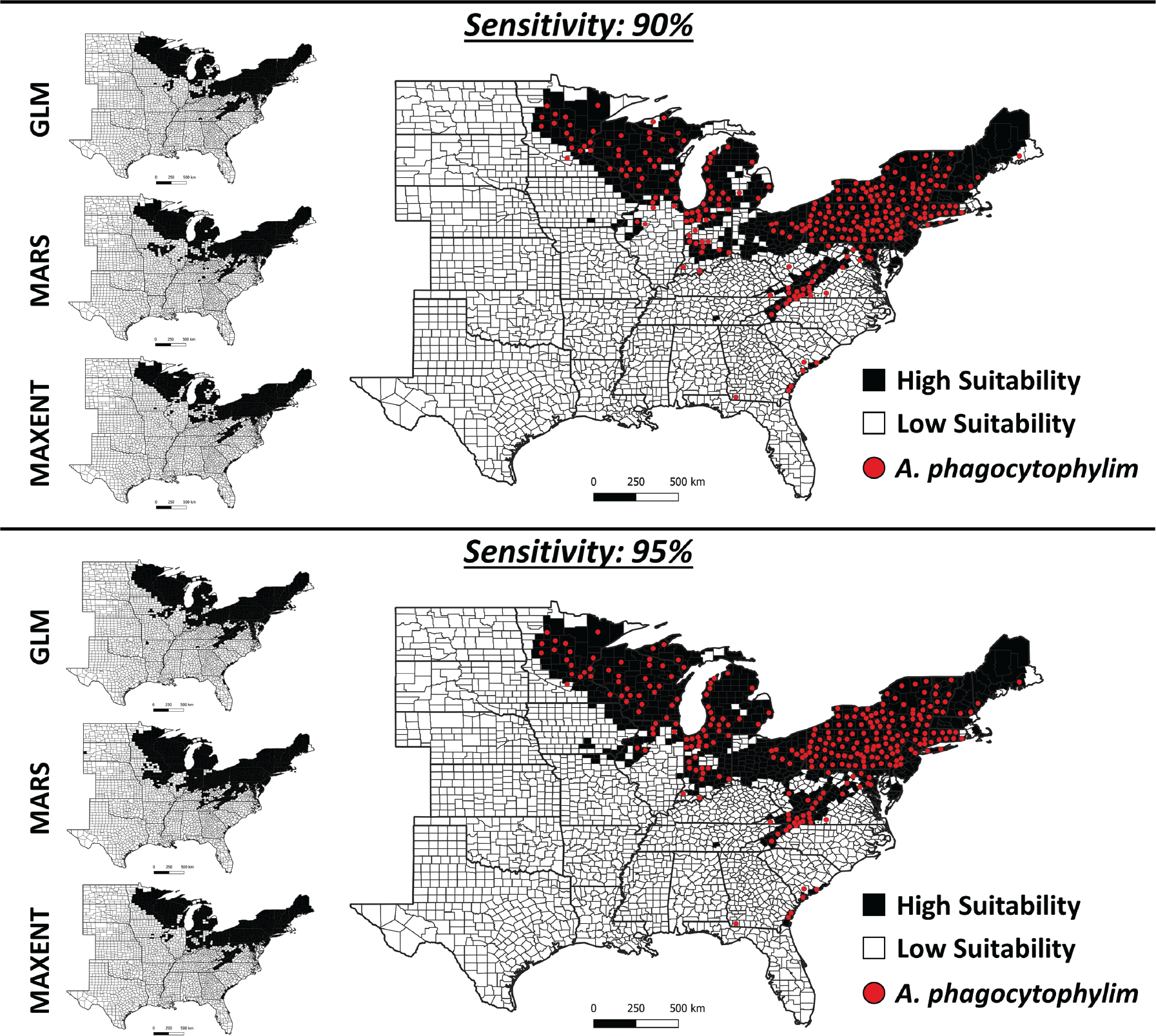
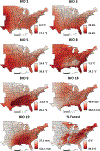
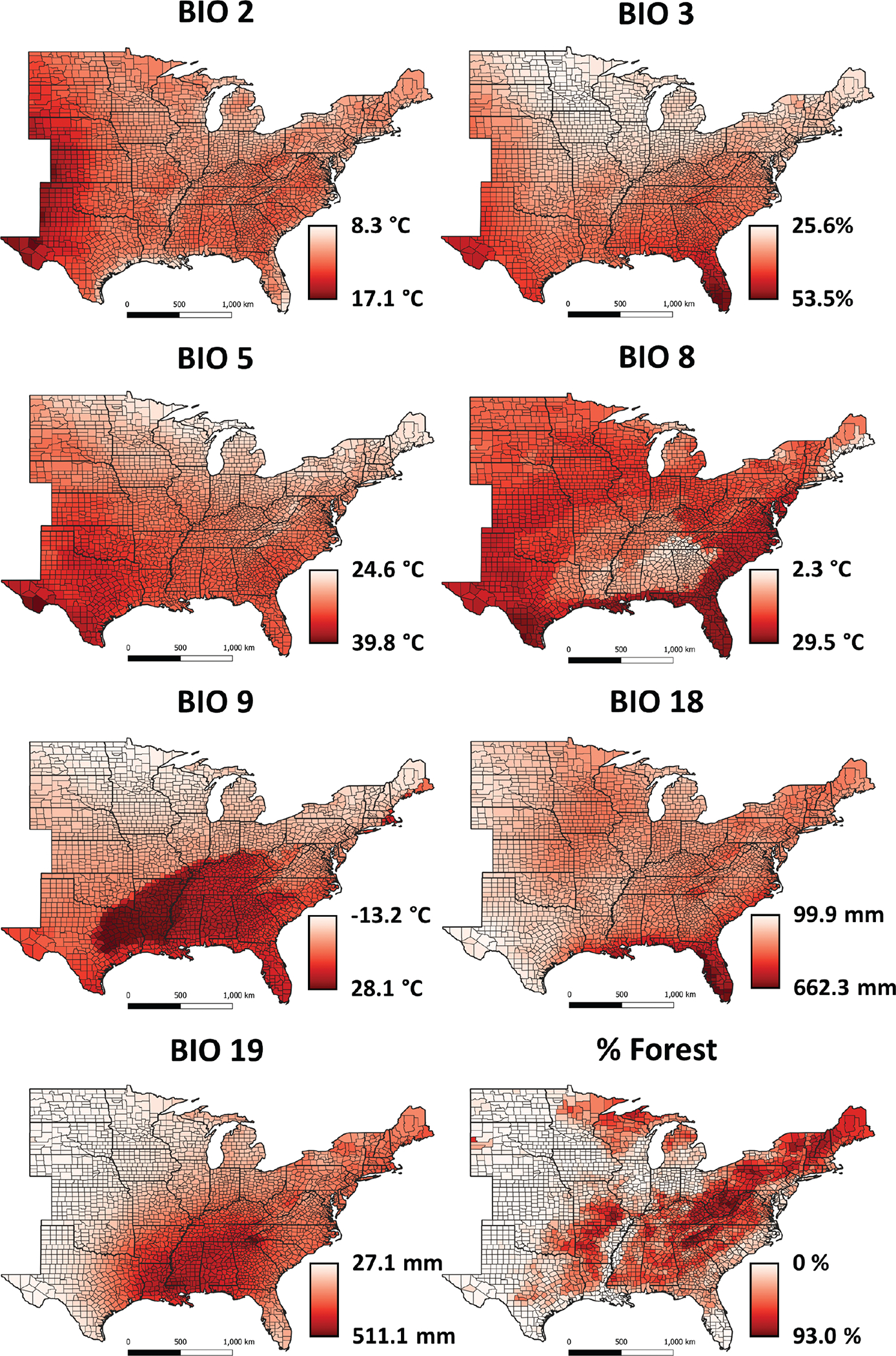
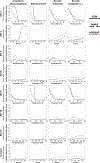
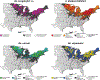
Description:Understanding the distribution of infected ticks is informative for the estimation of risk for tickborne diseases. The blacklegged tick, Ixodes scapularis (Acari: Ixodidae), is the primary vector for 7 medically significant pathogens in United States. However, knowledge of the ranges of these pathogens in host-seeking ticks is incomplete, particularly for those occurring at low prevalence. To aid in prioritizing costly field sampling efforts, we estimated ranges of suitable habitat for Anaplasma phagocytophilum, Babesia microti, and Borrelia miyamotoi in the eastern United States based on existing county-level surveillance records. The resulting suitability maps were compared against those developed previously for Bo. burgdorferi s.s., which shares similar ecology but has been detected in a greater number of counties. The overall accuracy of the habitat suitability models was high (AUC ≥ 0.92) for all 4 pathogens. The most important predictors were related to temperature and moisture. The upper midwestern and northeastern states were predicted to be highly suitable for all 4 pathogens. Based on our models, we prioritized sampling in 431, 275, and 539 counties currently lacking pathogen records that our models classified as suitable for A. phagocytophilum, Ba. microti, and Bo. miyamotoi, respectively. As a second-tier priority, we identified 311 (A. phagocytophilum), 590 (Ba. microti), and 252 (Bo. miyamotoi) counties, based on high suitability scores for Bo. burgdorferi. Our models can be used to improve cost-effectiveness of field sampling efforts aimed at improving accuracy and completeness of pathogen distribution maps.
-
Subjects:
-
Keywords:
-
Source:J Med Entomol. 60(3):590-603
-
Pubmed ID:37052414
-
Pubmed Central ID:PMC10588143
-
Document Type:
-
Funding:
-
Volume:60
-
Issue:3
-
Download URL:
-
File Type:
 [PDF - 3.76 MB]
 -
Collection(s):
-
Main Document Checksum:urn:sha256:ff4d8389ed9dd245d52bc70d3ddad6f379d0ed78b923a8dff60ac75fe06c41d4
Supporting Files


File Language:
English
 Was this page helpful?
 Found an issue?





CDC STACKS serves as an archival repository of CDC-published products including
scientific findings, journal articles, guidelines, recommendations, or other public health information authored or
co-authored by CDC or funded partners.
As a repository, CDC STACKS retains documents in their original published format to ensure public access to scientific information.
As a repository, CDC STACKS retains documents in their original published format to ensure public access to scientific information.
You May Also Like
COLLECTION
CDC Public Access