



Meta-Analysis of Pulsed-Field Gel Electrophoresis Fingerprints Based on a Constructed Salmonella Database
Supporting Files
Public Domain

-
Mar 14 2013
File Language:
English
Details
-
Alternative Title:PLoS One
-
Personal Author:
-
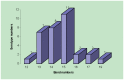
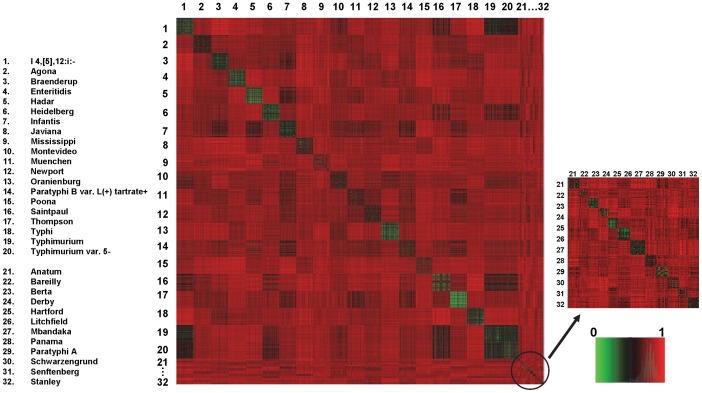
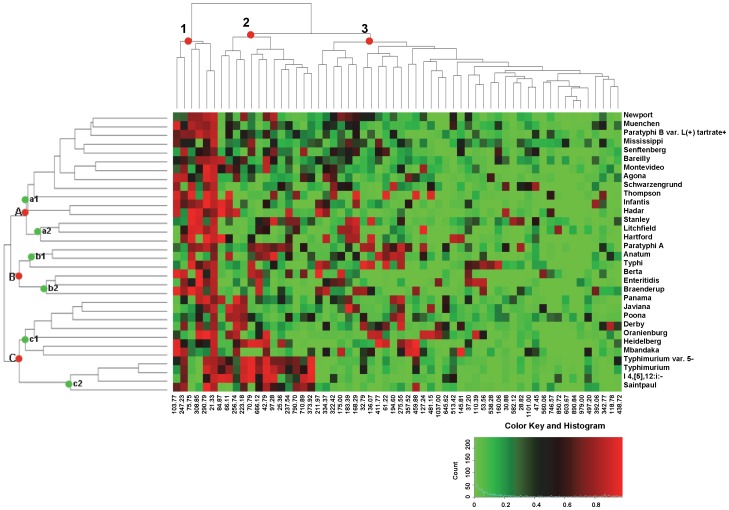
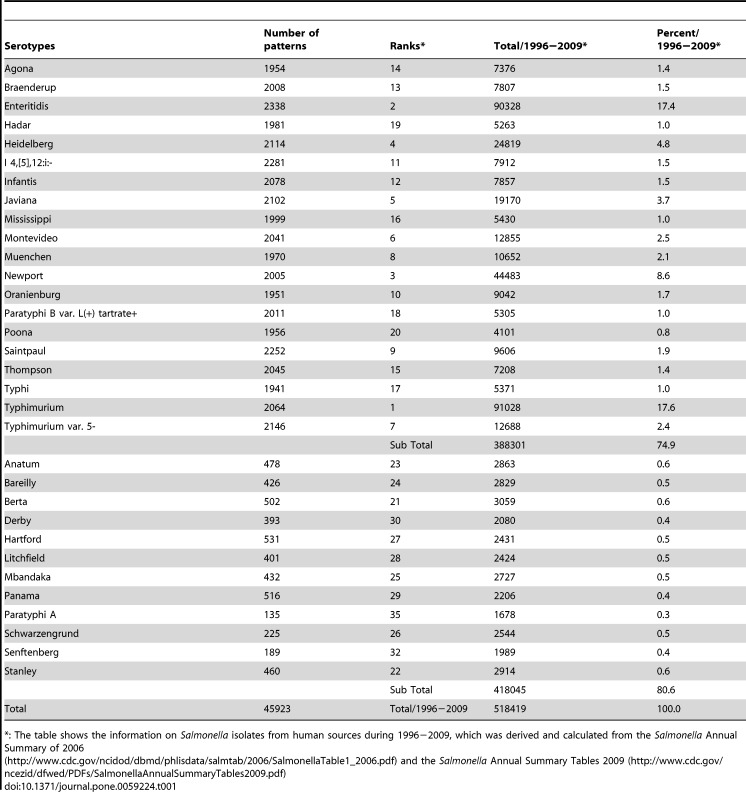
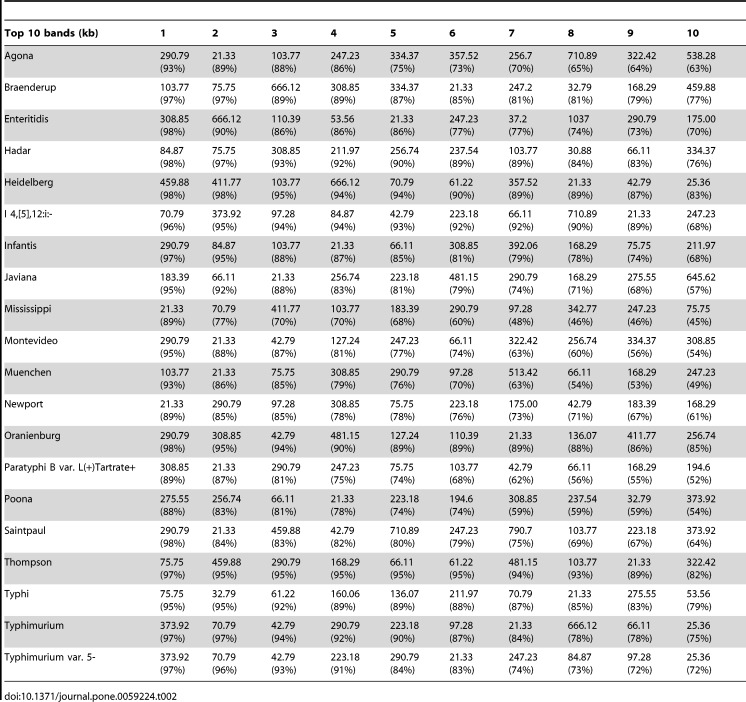
Description:A database was constructed consisting of 45,923 Salmonella pulsed-field gel electrophoresis (PFGE) patterns. The patterns, randomly selected from all submissions to CDC PulseNet during 2005 to 2010, included the 20 most frequent serotypes and 12 less frequent serotypes. Meta-analysis was applied to all of the PFGE patterns in the database. In the range of 20 to 1100 kb, serotype Enteritidis averaged the fewest bands at 12 bands and Paratyphi A the most with 19, with most serotypes in the 13-15 range among the 32 serptypes. The 10 most frequent bands for each of the 32 serotypes were sorted and distinguished, and the results were in concordance with those from distance matrix and two-way hierarchical cluster analyses of the patterns in the database. The hierarchical cluster analysis divided the 32 serotypes into three major groups according to dissimilarity measures, and revealed for the first time the similarities among the PFGE patterns of serotype Saintpaul to serotypes Typhimurium, Typhimurium var. 5-, and I 4,5,12:i:-; of serotype Hadar to serotype Infantis; and of serotype Muenchen to serotype Newport. The results of the meta-analysis indicated that the pattern similarities/dissimilarities determined the serotype discrimination of PFGE method, and that the possible PFGE markers may have utility for serotype identification. The presence of distinct, serotype specific patterns may provide useful information to aid in the distribution of serotypes in the population and potentially reduce the need for laborious analyses, such as traditional serotyping.
-
Subjects:
-
Source:PLoS One. 2013; 8(3).
-
Document Type:
-
Volume:8
-
Issue:3
-
Download URL:
-
File Type:
 [PDF - 953.05 KB]
 -
Collection(s):
-
Main Document Checksum:urn:sha256:a8fd58424f2d40961f60a5eac78a940ab767b521aefe8bd6fd33d1bac4b7a1ad
Supporting Files


File Language:
English
 Was this page helpful?
 Found an issue?





CDC STACKS serves as an archival repository of CDC-published products including
scientific findings, journal articles, guidelines, recommendations, or other public health information authored or
co-authored by CDC or funded partners.
As a repository, CDC STACKS retains documents in their original published format to ensure public access to scientific information.
As a repository, CDC STACKS retains documents in their original published format to ensure public access to scientific information.
You May Also Like
COLLECTION
CDC Public Access