


Detection of Vaccine-Derived Polioviruses in Mexico Using Environmental Surveillance
Supporting Files

-
11 01 2014
File Language:
English
Details
-
Alternative Title:J Infect Dis
-
Personal Author:
-
Description:Background.
Early detection and control of vaccine-derived poliovirus (VDPV) emergences are essential to secure the gains of polio eradication.
Methods.
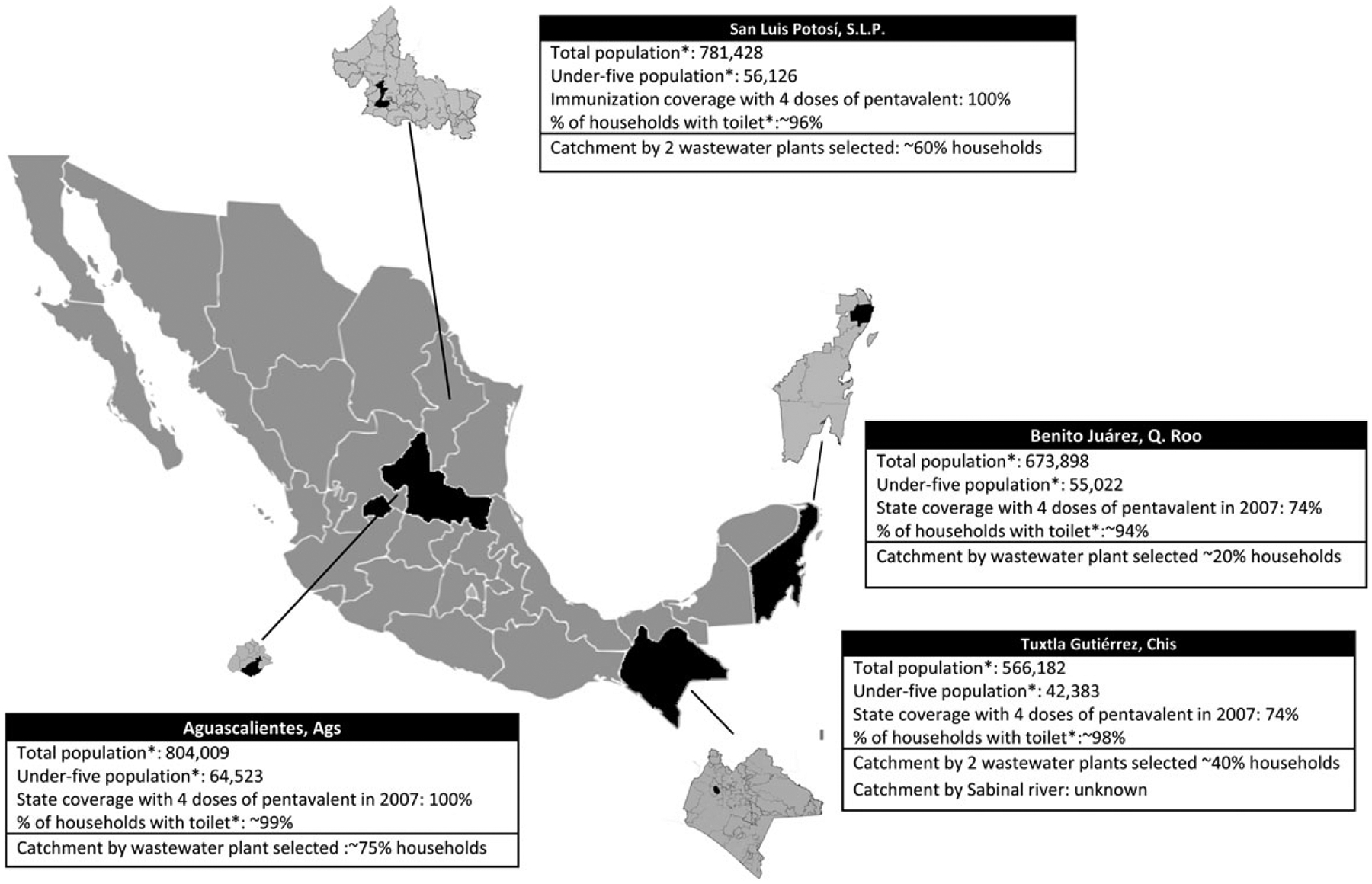
Serial sewage samples were collected in 4 towns of Mexico before, throughout, and after the May 2010 oral poliovirus vaccine (OPV) mass immunization campaign. Isolation and molecular analysis of polioviruses from sewage specimens monitored the duration of vaccine-related strains in the environment and emergence of vaccine-derived polioviruses in a population partially immunized with inactivated poliovirus vaccine (IPV).
Results.
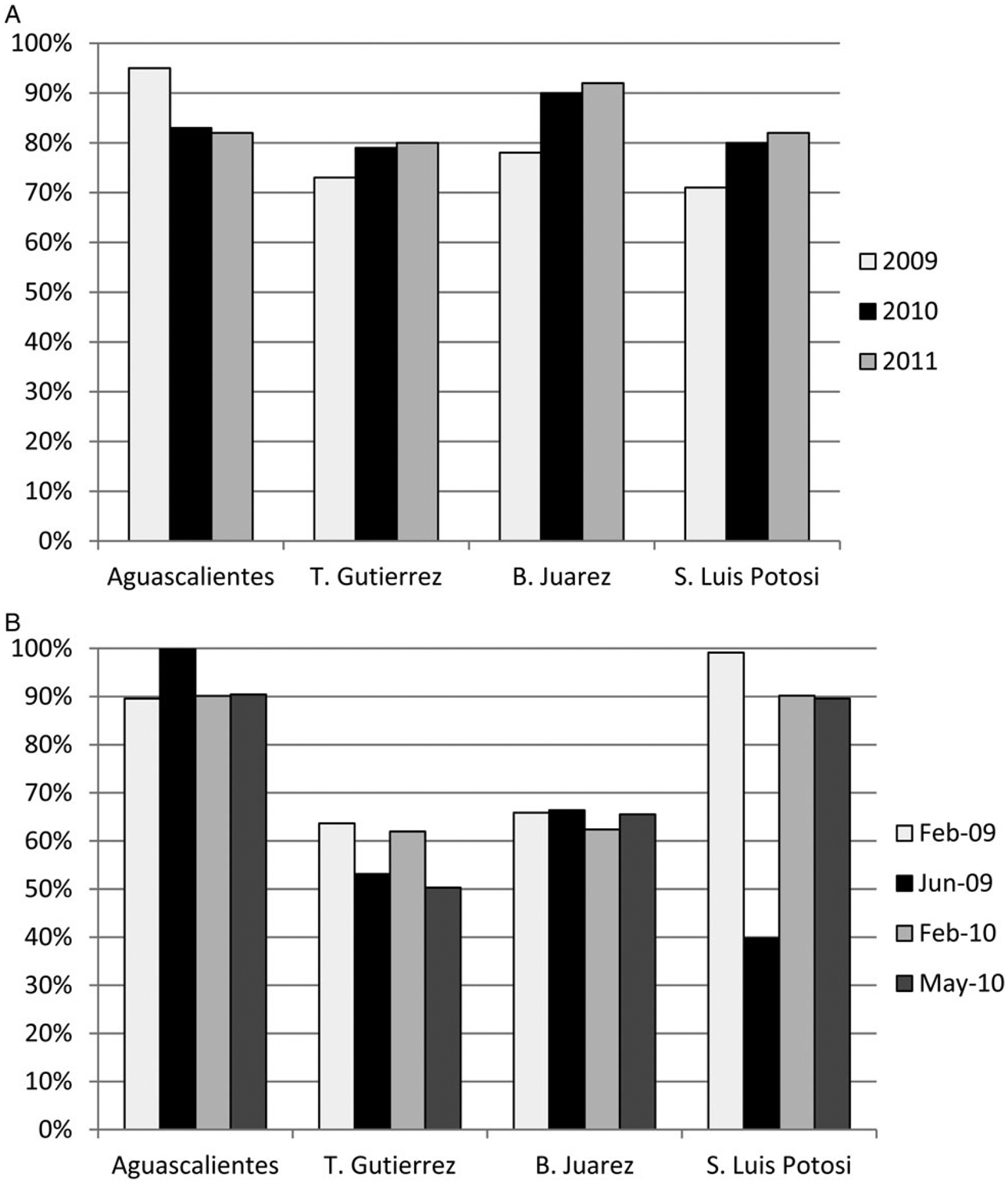
Sabin strains were identified up to 5–8 weeks after the campaign in all towns; in Aguascalientes, 1 Sabin 3 was isolated 16 weeks after the campaign, following 7 weeks with no Sabin strains detected. In Tuxtla Gutiérrez, type 2 VDPV was isolated from 4 samples collected before and during the campaign, and type 1 VDPV from 1 sample collected 19 weeks afterward. During 2009–2010, coverage in 4 OPV campaigns conducted averaged only 57% and surveillance for acute flaccid paralysis (AFP) was suboptimal (AFP rate <1 per 100 000 population <15 years of age) in Tuxtla Gutierrez.
Conclusions.
VDPVs may emerge and spread in settings with inadequate coverage with IPV/OPV vaccination. Environmental surveillance can facilitate early detection in these settings.
-
Subjects:
-
Source:J Infect Dis. 210(Suppl 1):S315-S323
-
Pubmed ID:25316850
-
Pubmed Central ID:PMC10389690
-
Document Type:
-
Funding:
-
Place as Subject:
-
Volume:210
-
Collection(s):
-
Main Document Checksum:urn:sha256:2dca70c2905bab15ba84353fb45ca46507335c70a68ec2edfa3d4e55cbd2be7f
-
Download URL:
-
File Type:
 [PDF
- 734.81 KB
]
[PDF
- 734.81 KB
]
Supporting Files


File Language:
English
ON THIS PAGE



CDC STACKS serves as an archival repository of CDC-published products including
scientific findings,
journal articles, guidelines, recommendations, or other public health information authored or
co-authored by CDC or funded partners.
As a repository, CDC STACKS retains documents in their original published format to ensure public access to scientific information.
As a repository, CDC STACKS retains documents in their original published format to ensure public access to scientific information.
You May Also Like
COLLECTION
CDC Public Access