



Assessing the immunogenicity of three different inactivated polio vaccine schedules for use after oral polio vaccine cessation, an open label, phase IV, randomized controlled trial
Supporting Files

-
9 24 2021 ; 9-24-
-
Available in CDC Stacks on May 02, 2022, 12:00 AM
File Language:
English
Details
-
Alternative Title:Vaccine
-
Personal Author:
-
Description:Background:
After global oral poliovirus vaccine (OPV) cessation, the Strategic Advisory Group of Experts on Immunization (SAGE) currently recommends a two-dose schedule of inactivated poliovirus vaccine (IPV) beginning ≥14-weeks of age to achieve at least 90% immune response. We aimed to compare the immunogenicity of three different two-dose IPV schedules started before or at 14-weeks of age.
Methods:
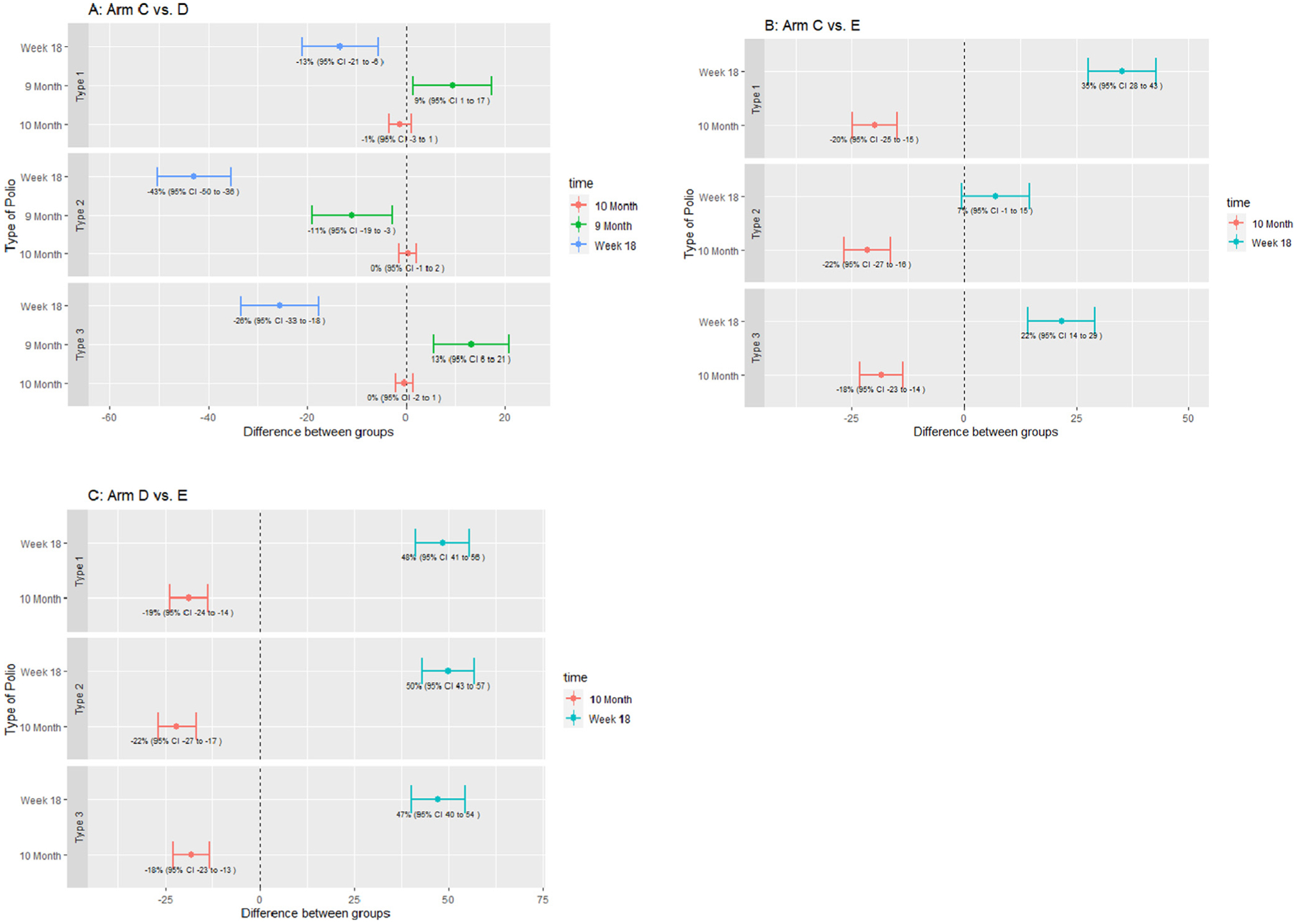
We conducted a randomized, controlled, open-label, inequality trial at two sites in Dhaka, Bangladesh. Healthy infants at 6-weeks of age were randomized into one of five arms to receive two-dose IPV schedules at different ages with and without OPV. The three IPV-only arms are presented: Arm C received IPV at 14-weeks and 9-months; Arm D received IPV at 6-weeks and 9-months; and Arm E received IPV at 6 and 14-weeks. The primary outcome was immune response defined as seroconversion from seronegative (<1:8) to seropositive (≥1:8) after vaccination, or a four-fold rise in antibody titers and median reciprocal antibody titers to all three poliovirus types measured at 10-months of age.
Findings:
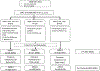
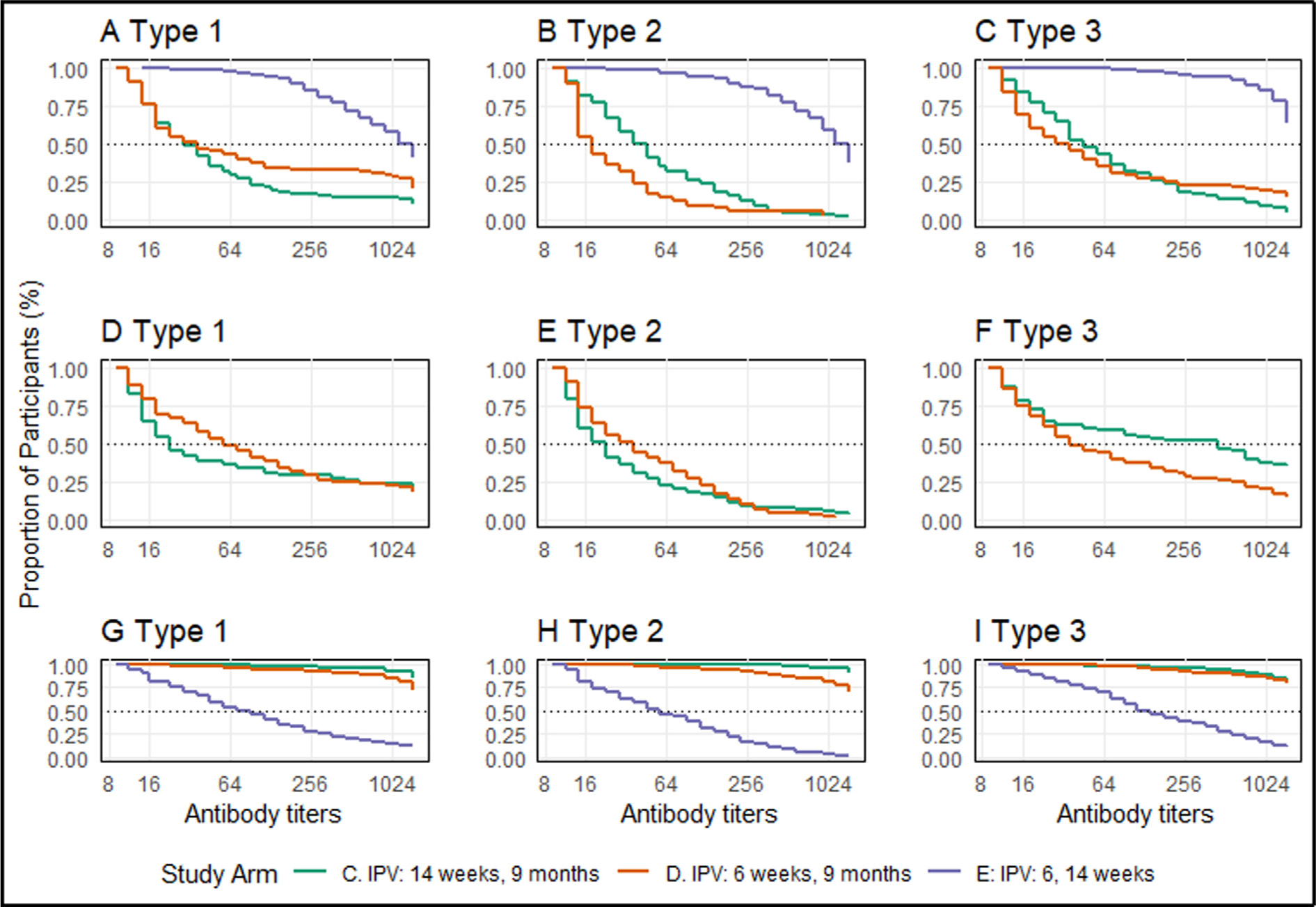
Of the 987 children randomized to Arms C, D, and E, 936 were included in the intention-to-treat analysis. At 10-months, participants in Arm C (IPV at 14-weeks and 9-months) had ≥99% cumulative immune response to all three poliovirus types which was significantly higher than the 77–81% observed in Arm E (IPV at 6 and 14-weeks). Participants in Arm D (IPV at 6-weeks and 9-months) had cumulative immune responses of 98–99% which was significantly higher than that of Arm E (p value < 0.0001) but not different from Arm C.
Interpretation:
Results support current SAGE recommendations for IPV following OPV cessation and provide evidence that the schedule of two full IPV doses could begin as early as 6-weeks. -
Subjects:
-
Keywords:
-
Source:Vaccine. 39(40):5814-5821
-
Pubmed ID:34481702
-
Pubmed Central ID:PMC9059229
-
Document Type:
-
Funding:
-
Volume:39
-
Issue:40
-
Download URL:
-
File Type:
 [PDF - 682.33 KB]
 -
Collection(s):
-
Main Document Checksum:urn:sha-512:254a4c4581cc5a325fa9afda0e8b7f6b92a157cc3581f90af0b33f30057694d0d7ddc2f921f538a562cff5463961e585466c93b686983c2a0a3138e3afa75afd
Supporting Files


File Language:
English
 Was this page helpful?
 Found an issue?


CDC STACKS serves as an archival repository of CDC-published products including
scientific findings, journal articles, guidelines, recommendations, or other public health information authored or
co-authored by CDC or funded partners.
As a repository, CDC STACKS retains documents in their original published format to ensure public access to scientific information.
As a repository, CDC STACKS retains documents in their original published format to ensure public access to scientific information.
You May Also Like
COLLECTION
CDC Public Access