


Cervical cancer stage at diagnosis and survival among women ≥65 years in California
Supporting Files

-
1 09 2023
-
File Language:
English
Details
-
Alternative Title:Cancer Epidemiol Biomarkers Prev
-
Personal Author:
-
Description:Background:
Through adequate screening and follow-up, cervical cancer can be prevented or detected at early-stage (stage I), which is related to excellent survival. Current guidelines recommend discontinuing screening for women ≥65 with history of normal Pap and/or HPV tests, potentially leaving this age group vulnerable. This study examined late-stage disease in a population-based cohort.
Methods:
Using California Cancer Registry data, we identified 12,442 patients aged ≥21 years with a first primary cervical cancer diagnosed during 2009–2018. Proportions of late-stage disease (stages II-IV) and early and late-stage 5-year relative survival are presented by age group. Among patients aged ≥65 years, multivariable logistic regression estimated associations of sociodemographic and clinical characteristics with late-stage cervical cancer.
Results:
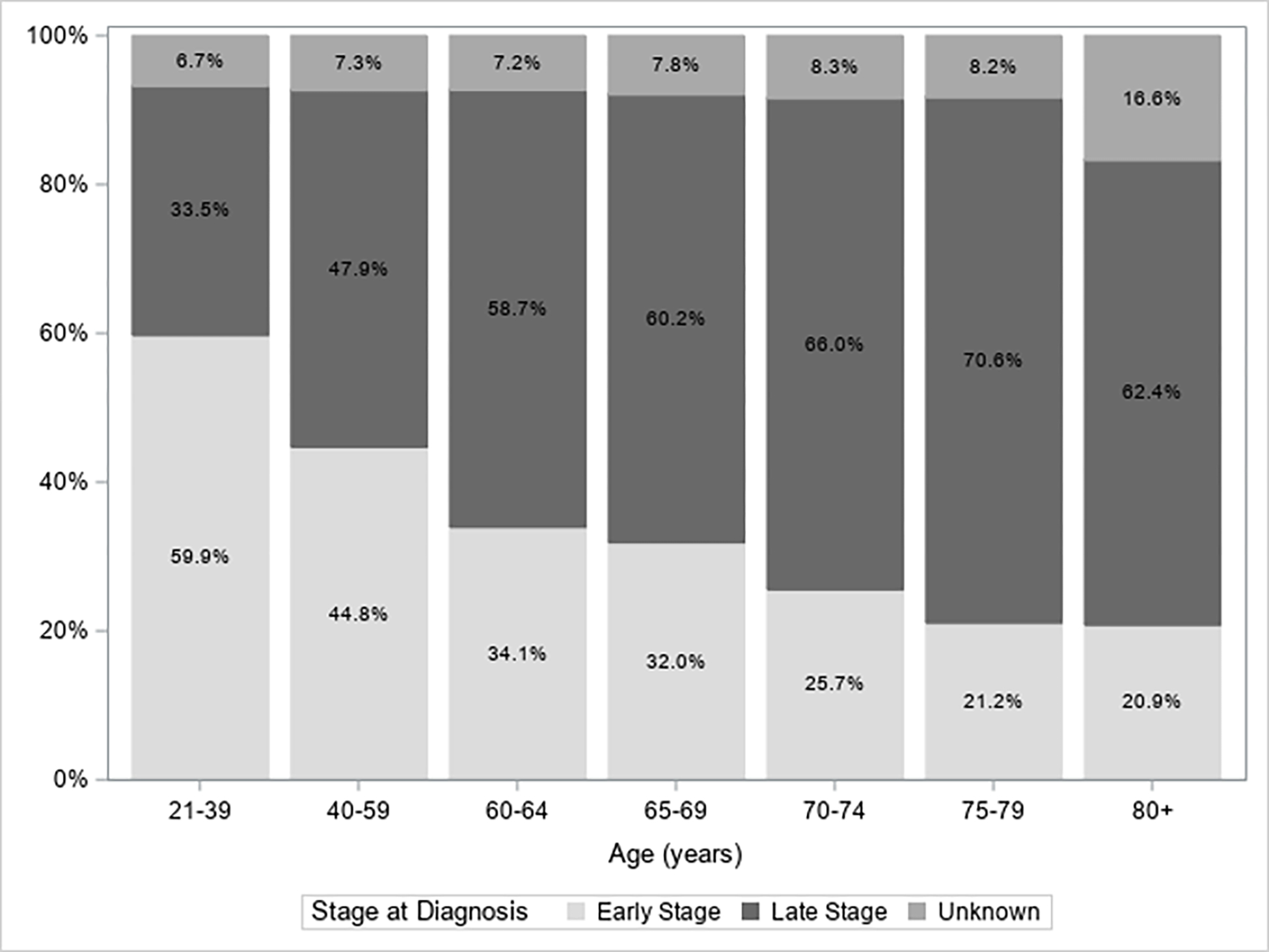
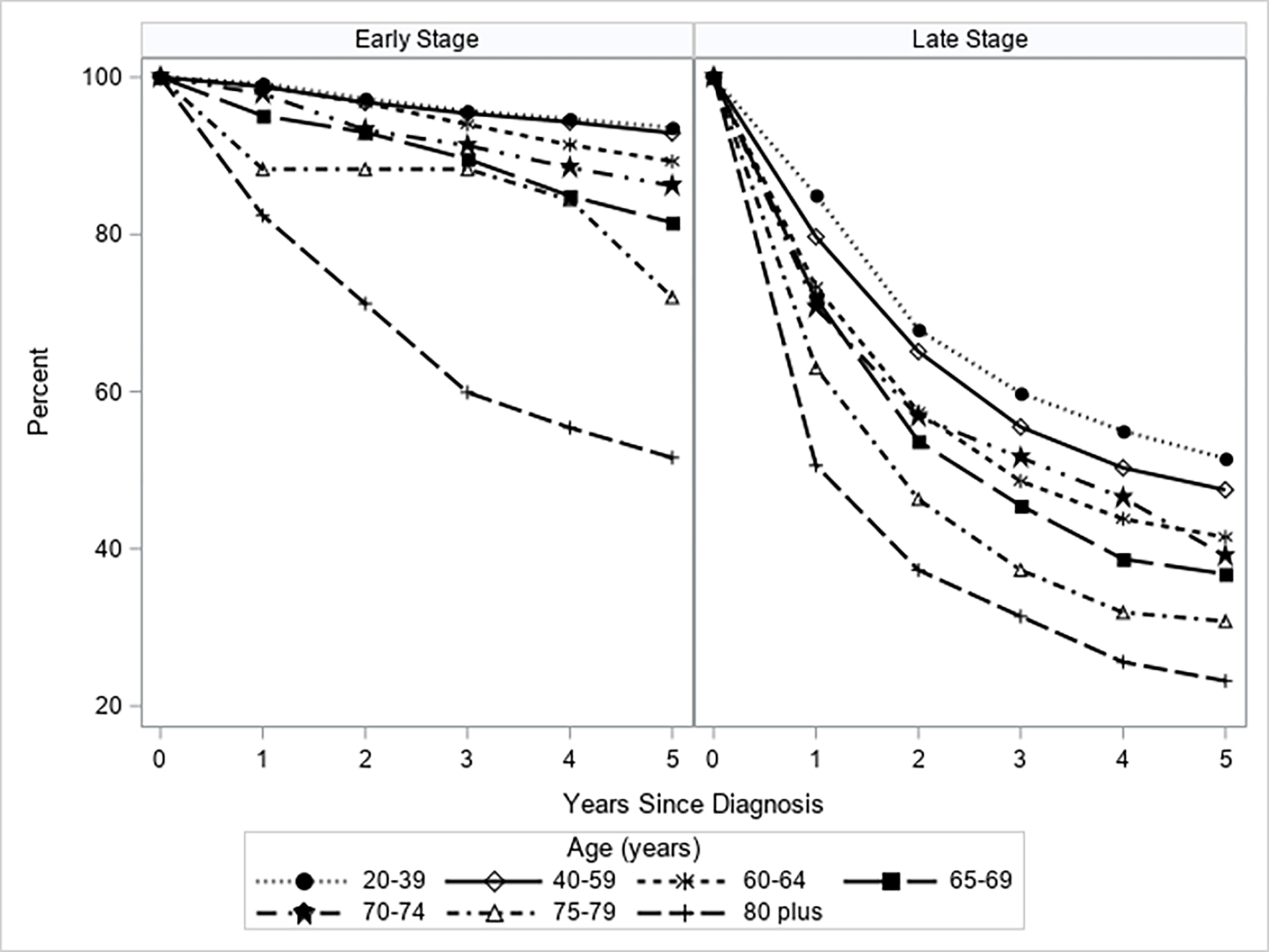
Nearly one-fifth of patients (n=2,171, 17.4%) were ≥65 years. More women aged ≥65 (71%) presented with late-stage disease than younger women (48% in patients aged <65). Late-stage 5-year relative survival was lower for women ≥65 (23.2%−36.8%) compared to patients <65 (41.5%−51.5%). Characteristics associated with late-stage cervical cancer in women ≥65 included older age (odds ratio (OR)=1.02, 95% confidence interval (CI) 1.01–1.04; each year), non-adenocarcinoma histologic subtypes, and comorbidities (OR=1.59, CI 1.21–2.08).
Conclusions:
There remains a significant burden of advanced cervical cancer in women ≥65.
Impact:
Efforts should be made to better understand how the current screening paradigm is failing women 65 years and older. Future work should focus on determining past screening history, lapses in follow-up care, and non-invasive testing approaches.
-
Subjects:
-
Source:Cancer Epidemiol Biomarkers Prev. 32(1):91-97
-
Pubmed ID:36620897
-
Pubmed Central ID:PMC9833840
-
Document Type:
-
Funding:HHSN261201800009C/CA/NCI NIH HHSUnited States/ ; NU58DP006344/DP/NCCDPHP CDC HHSUnited States/ ; HHSN261201800015I/CA/NCI NIH HHSUnited States/ ; HHSN261201800032I/CA/NCI NIH HHSUnited States/ ; HHSN261201800015C/CA/NCI NIH HHSUnited States/ ; HHSN261201800009I/CA/NCI NIH HHSUnited States/ ; HHSN261201800032C/CA/NCI NIH HHSUnited States/ ; P30 CA093373/CA/NCI NIH HHSUnited States/
-
Place as Subject:
-
Volume:32
-
Issue:1
-
Collection(s):
-
Main Document Checksum:urn:sha256:3ad51483abee9fba89e32ab6b6b33294807aab2288dad3c65bcb7e7cc0a1e194
-
Download URL:
-
File Type:
 [PDF
- 450.88 KB
]
[PDF
- 450.88 KB
]
Supporting Files


File Language:
English
ON THIS PAGE

CDC STACKS serves as an archival repository of CDC-published products including
scientific findings,
journal articles, guidelines, recommendations, or other public health information authored or
co-authored by CDC or funded partners.
As a repository, CDC STACKS retains documents in their original published format to ensure public access to scientific information.
As a repository, CDC STACKS retains documents in their original published format to ensure public access to scientific information.
You May Also Like
COLLECTION
CDC Public Access