



Etymologia: Fonsecaea pedrosoi
Supporting Files
Public Domain

-
7 2023
File Language:
English
Details
-
Alternative Title:Emerg Infect Dis
-
Personal Author:
-
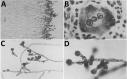
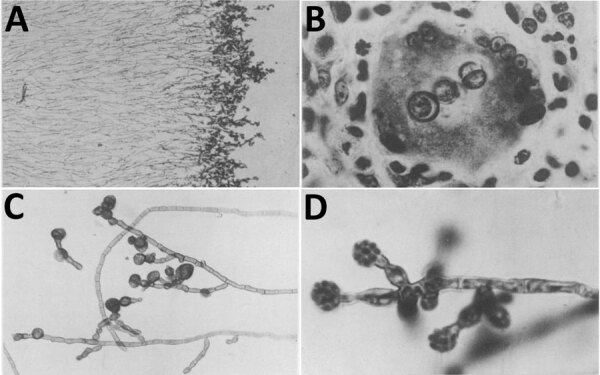
Description:Fonse caea pedrosoi fon-se-se′ə pedro´soi ; Chromoblastomycosis (CBM) is a neglected tropical disease caused by dematiaceous fungi, mainly Fonsecaea pedrosoi (Figure). This disease resembles blastomycosis in the Americas; the prefix indicates causative microorganisms’ pigmentation. In 1911, Pedroso observed histologic pathognomonic findings for CBM. He also observed rounded and brownish elements, now called muriform cells, in skin biopsy specimens from a patient in Goiás, Brazil. In 1915, Medlar described a similar cutaneous infection on the basis of culture and histologic analyses. In 1922, Brumpt reported Pedroso’s findings as Hormodendrum pedrosoi. Genus description referred to dendroidal conidial chains.
-
Subjects:
-
Source:Emerg Infect Dis. 2023; 29(7):1312
-
Pubmed Central ID:PMC10310383
-
Document Type:
-
Genre:
-
Volume:29
-
Issue:7
-
Download URL:
-
File Type:
 [PDF - 500.63 KB]
 -
Collection(s):
-
Main Document Checksum:urn:sha256:5b88e6ad6038bb242df9881e841009c14f0ce8201dab4560497eda5bb8672e06
Supporting Files


File Language:
English
 Was this page helpful?
 Found an issue?

CDC STACKS serves as an archival repository of CDC-published products including
scientific findings, journal articles, guidelines, recommendations, or other public health information authored or
co-authored by CDC or funded partners.
As a repository, CDC STACKS retains documents in their original published format to ensure public access to scientific information.
As a repository, CDC STACKS retains documents in their original published format to ensure public access to scientific information.
You May Also Like
COLLECTION
Emerging Infectious Diseases