



Use of High-Resolution Geospatial and Genomic Data to Characterize Recent Tuberculosis Transmission, Botswana
Supporting Files

-
5-2023
File Language:
English
Details
-
Alternative Title:Emerg Infect Dis
-
Personal Author:Baker, Chelsea R. ; Barilar, Ivan ; de Araujo, Leonardo S. ; Rimoin, Anne W. ; Parker, Daniel M. ; Boyd, Rosanna ; Tobias, James L. ; Moonan, Patrick K. ; Click, Eleanor S. ; Finlay, Alyssa ; Oeltmann, John E. ; Minin, Vladimir N. ; Modongo, Chawangwa ; Zetola, Nicola M. ; Niemann, Stefan ; Shin, Sanghyuk S.
-
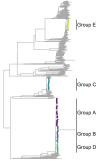
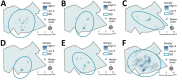
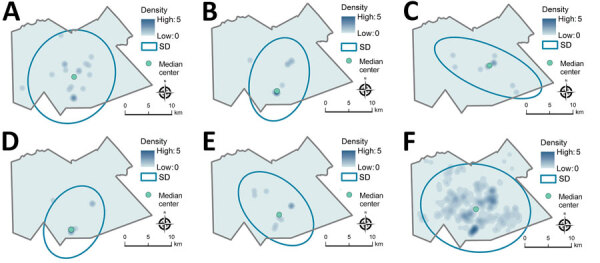
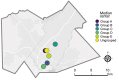
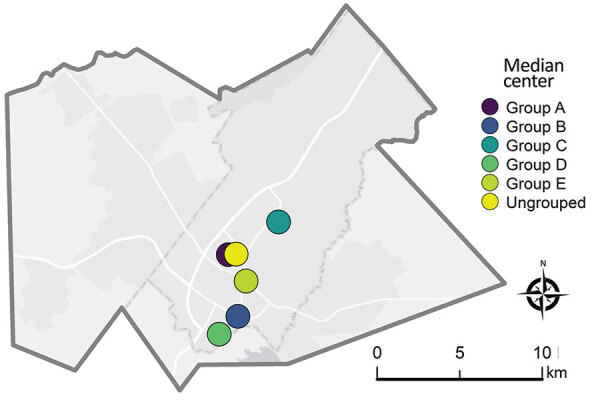
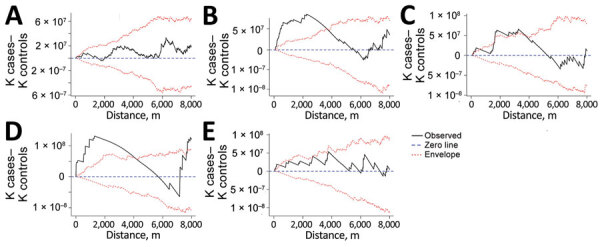
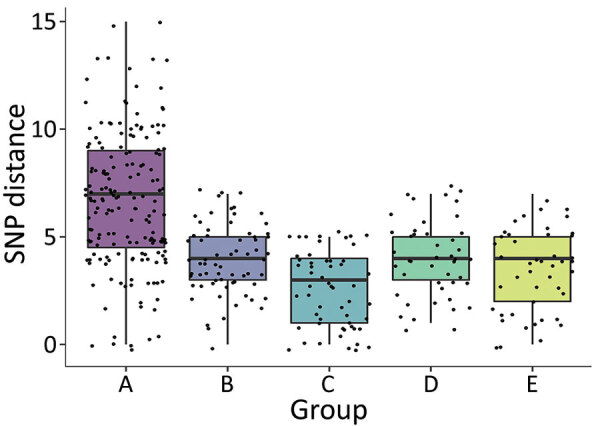
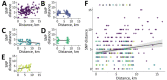
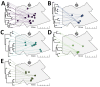
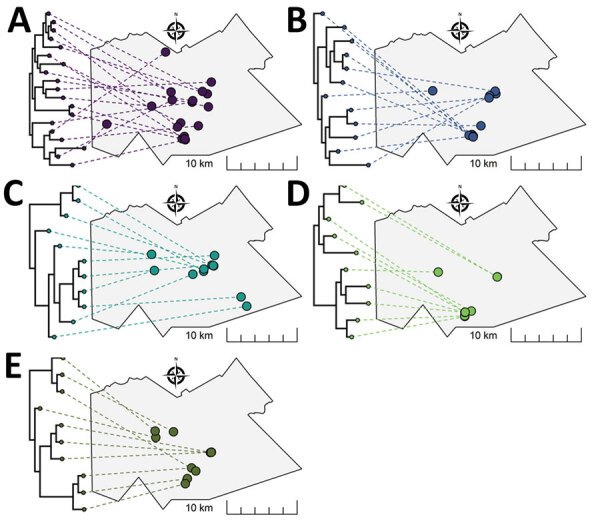
Description:Combining genomic and geospatial data can be useful for understanding Mycobacterium tuberculosis transmission in high-burden tuberculosis (TB) settings. We performed whole-genome sequencing on M. tuberculosis DNA extracted from sputum cultures from a population-based TB study conducted in Gaborone, Botswana, during 2012-2016. We determined spatial distribution of cases on the basis of shared genotypes among isolates. We considered clusters of isolates with ≤5 single-nucleotide polymorphisms identified by whole-genome sequencing to indicate recent transmission and clusters of ≥10 persons to be outbreaks. We obtained both molecular and geospatial data for 946/1,449 (65%) participants with culture-confirmed TB; 62 persons belonged to 5 outbreaks of 10-19 persons each. We detected geospatial clustering in just 2 of those 5 outbreaks, suggesting heterogeneous spatial patterns. Our findings indicate that targeted interventions applied in smaller geographic areas of high-burden TB identified using integrated genomic and geospatial data might help interrupt TB transmission during outbreaks.
-
Subjects:
- Research
- Use of High-Resolution Geospatial and Genomic Data to Characterize Recent Tuberculosis Transmission, Botswana
- tuberculosis and other mycobacteria
- bacteria
- respiratory infections
- whole-genome sequencing
- spatial analysis
- geographic heterogeneity
- outbreaks
- infectious disease control
- Botswana
- Humans
- Tuberculosis
- Mycobacterium tuberculosis
- Genotype
- Genomics
-
Source:Emerg Infect Dis. 2023; 29(5):977-987
-
Pubmed ID:37081530
-
Pubmed Central ID:PMC10124643
-
Document Type:
-
Funding:
-
Volume:29
-
Issue:5
-
Download URL:
-
File Type:
 [PDF - 2.69 MB]
 -
Collection(s):
-
Main Document Checksum:urn:sha256:3bf357d01b7b14e23e3911067c4476be3315ded4484aef0384169f68bd94772b
Supporting Files


File Language:
English
 Was this page helpful?
 Found an issue?




CDC STACKS serves as an archival repository of CDC-published products including
scientific findings, journal articles, guidelines, recommendations, or other public health information authored or
co-authored by CDC or funded partners.
As a repository, CDC STACKS retains documents in their original published format to ensure public access to scientific information.
As a repository, CDC STACKS retains documents in their original published format to ensure public access to scientific information.
You May Also Like
COLLECTION
Emerging Infectious Diseases