



Efficacy of Do-It-Yourself air filtration units in reducing exposure to simulated respiratory aerosols
Supporting Files

-
2 1 2023 ; 2-01-
-
Available in CDC Stacks on December 19, 2022, 12:00 AM
File Language:
English
Details
-
Alternative Title:Build Environ
-
Personal Author:
-
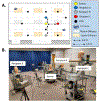
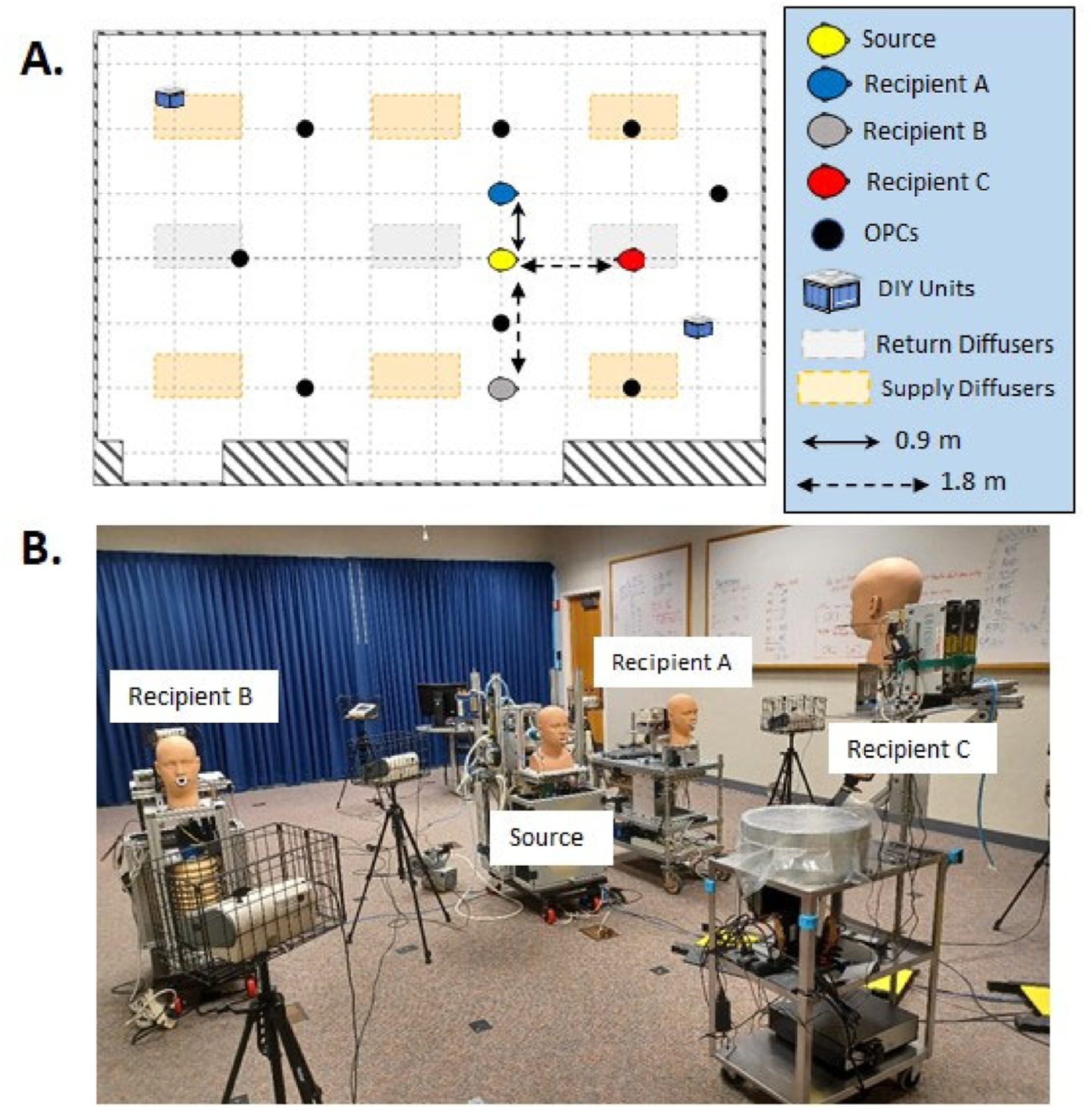
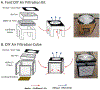
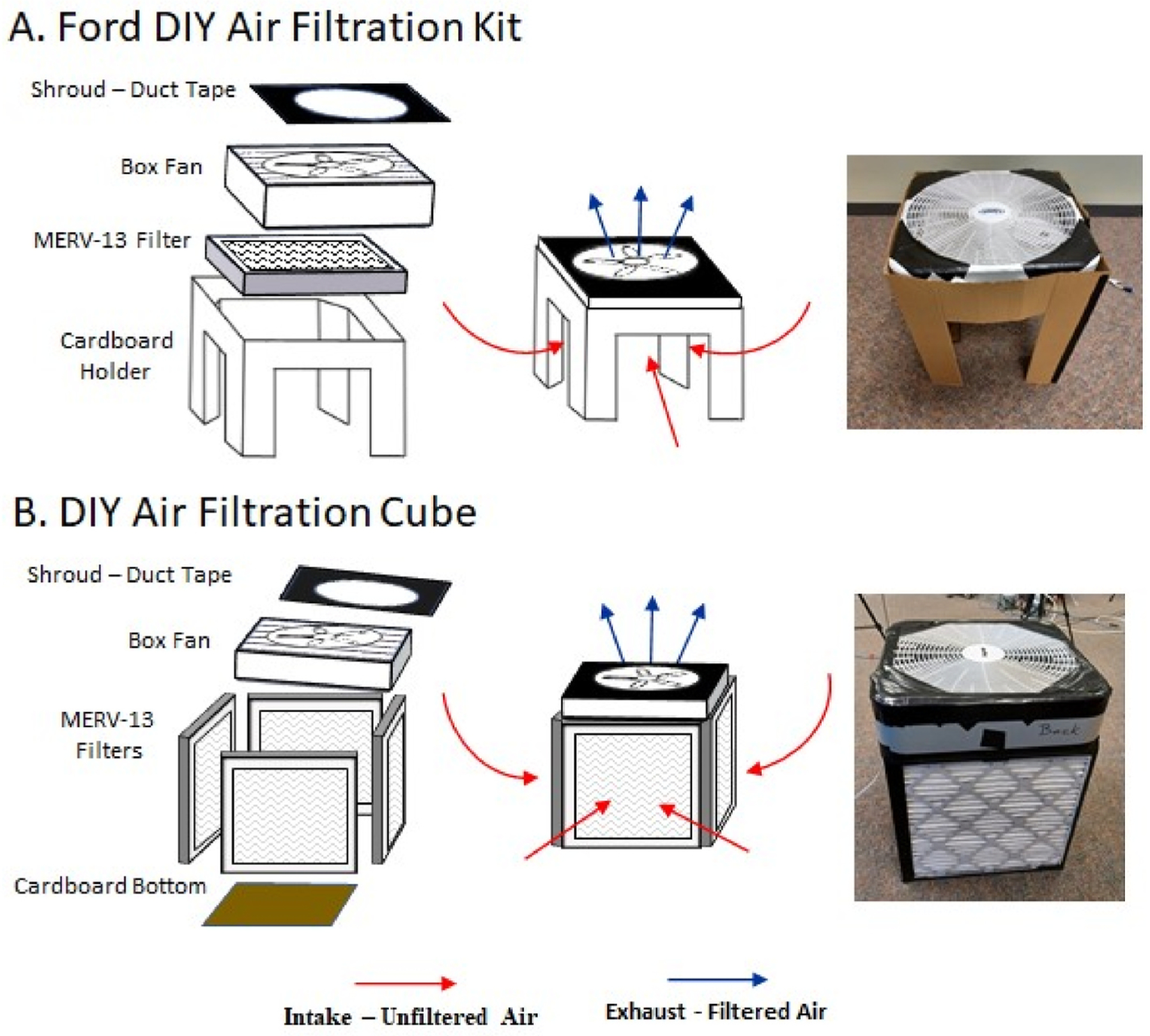
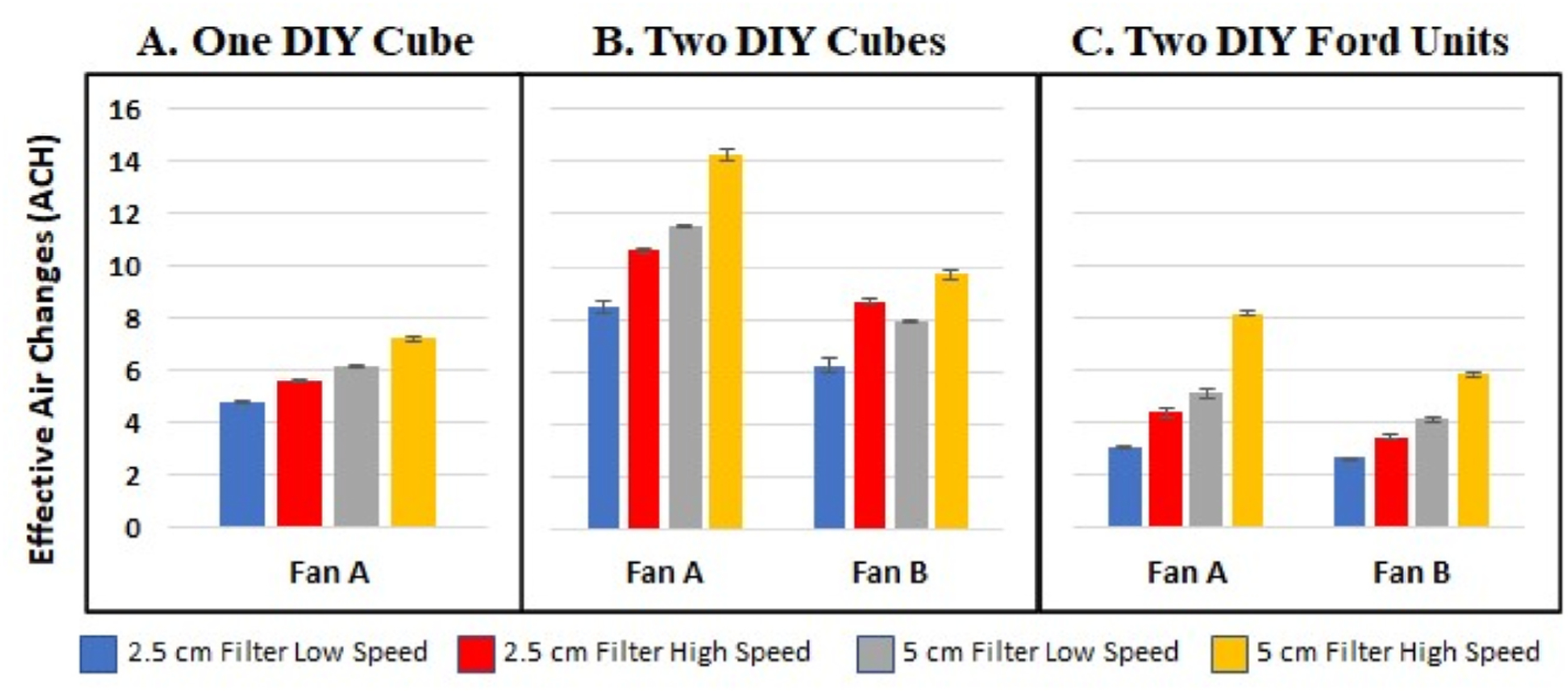
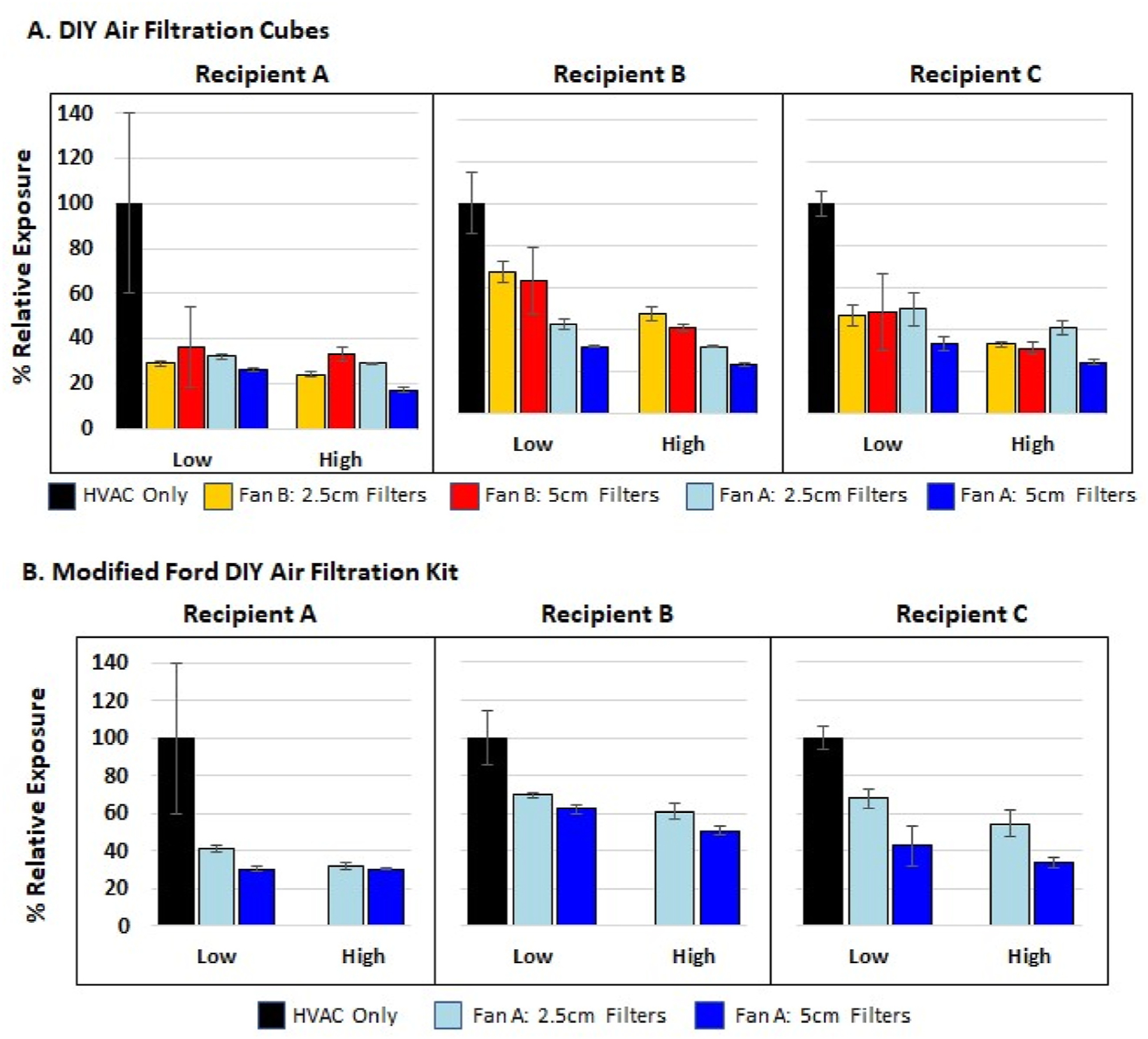
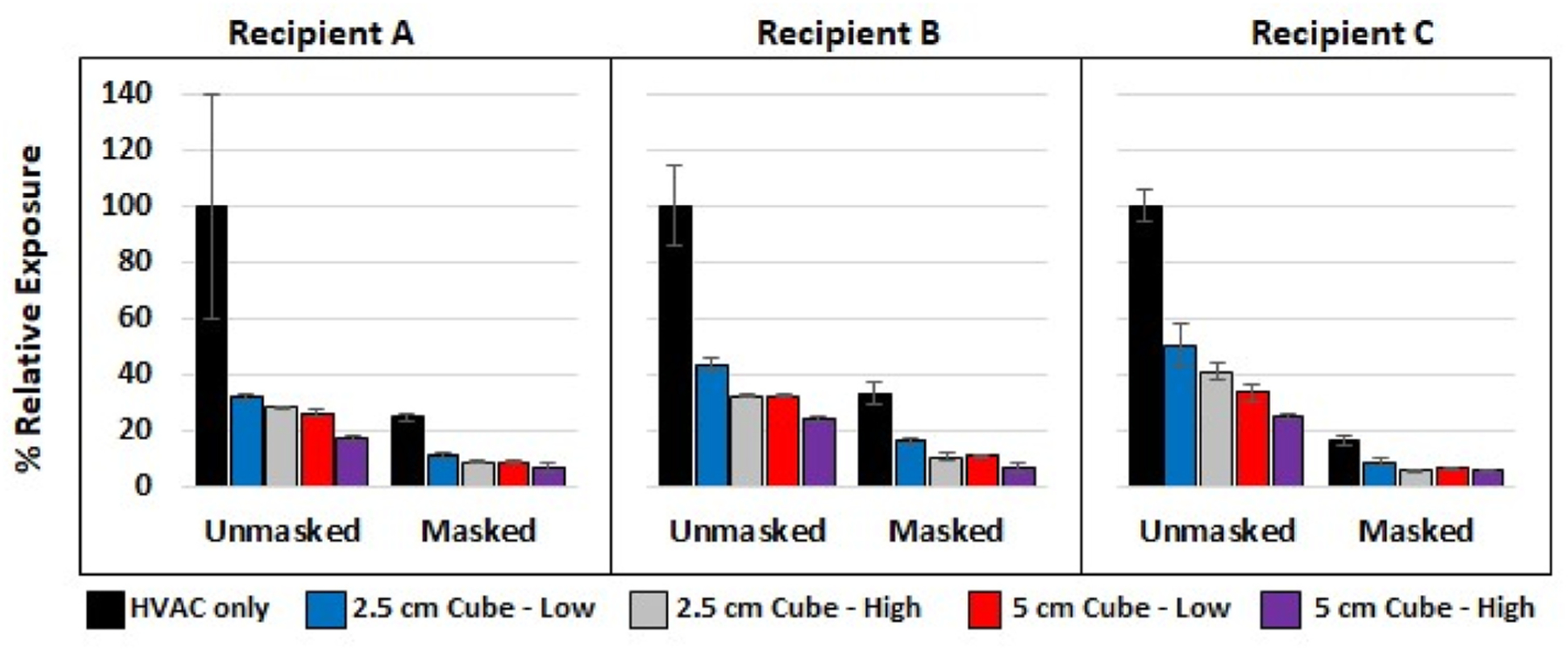
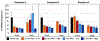
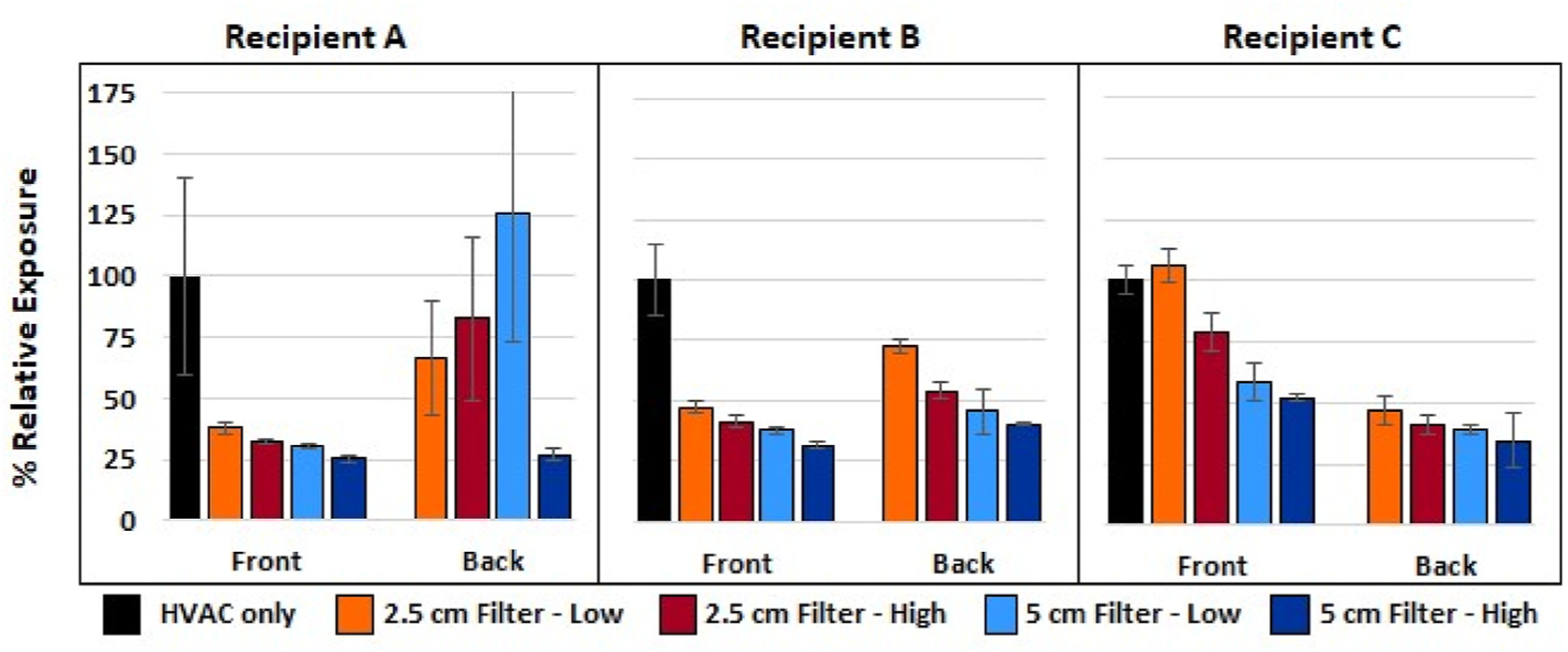
Description:Many respiratory diseases, including COVID-19, can be spread by aerosols expelled by infected people when they cough, talk, sing, or exhale. Exposure to these aerosols indoors can be reduced by portable air filtration units (air cleaners). Homemade or Do-It-Yourself (DIY) air filtration units are a popular alternative to commercially produced devices, but performance data is limited. Our study used a speaker-audience model to examine the efficacy of two popular types of DIY air filtration units, the Corsi-Rosenthal cube and a modified Ford air filtration unit, in reducing exposure to simulated respiratory aerosols within a mock classroom. Experiments were conducted using four breathing simulators at different locations in the room, one acting as the respiratory aerosol source and three as recipients. Optical particle spectrometers monitored simulated respiratory aerosol particles (0.3-3 μm) as they dispersed throughout the room. Using two DIY cubes (in the front and back of the room) increased the air change rate as much as 12.4 over room ventilation, depending on filter thickness and fan airflow. Using multiple linear regression, each unit increase of air change reduced exposure by 10%. Increasing the number of filters, filter thickness, and fan airflow significantly enhanced the air change rate, which resulted in exposure reductions of up to 73%. Our results show DIY air filtration units can be an effective means of reducing aerosol exposure. However, they also show performance of DIY units can vary considerably depending upon their design, construction, and positioning, and users should be mindful of these limitations.
-
Keywords:
-
Source:Build Environ. 229:109920
-
Pubmed ID:36569517
-
Pubmed Central ID:PMC9759459
-
Document Type:
-
Funding:
-
Volume:229
-
Download URL:
-
File Type:
 [PDF - 2.07 MB]
 -
Collection(s):
-
Main Document Checksum:urn:sha256:25162d5d3db215da0cd4dbbd5f298df1e46e4fb0665a757ae4d9f5338e2cd0a1
Supporting Files


File Language:
English
 Was this page helpful?
 Found an issue?





CDC STACKS serves as an archival repository of CDC-published products including
scientific findings, journal articles, guidelines, recommendations, or other public health information authored or
co-authored by CDC or funded partners.
As a repository, CDC STACKS retains documents in their original published format to ensure public access to scientific information.
As a repository, CDC STACKS retains documents in their original published format to ensure public access to scientific information.
You May Also Like
COLLECTION
CDC Public Access