



Optimization of the linear quantification range of an online trypsin digestion coupled liquid chromatography–tandem mass spectrometry (LC–MS/MS) platform
Supporting Files

-
4 27 2017
-
File Language:
English
Details
-
Alternative Title:Instrum Sci Technol
-
Personal Author:
-
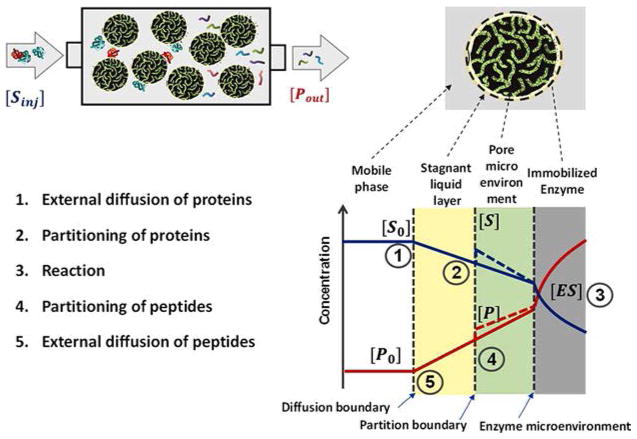
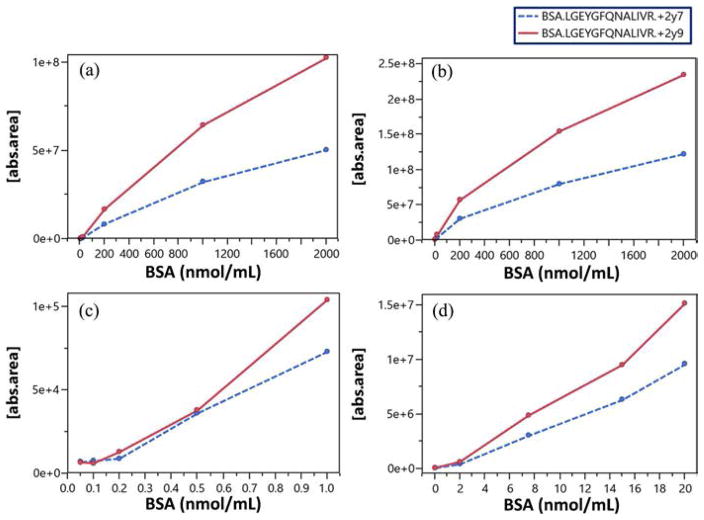
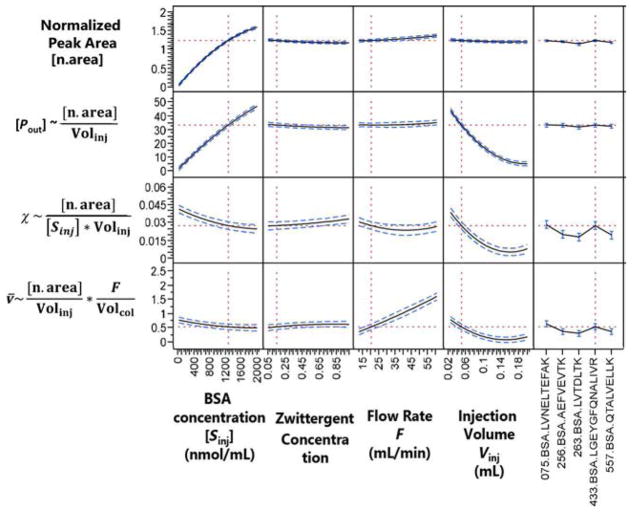
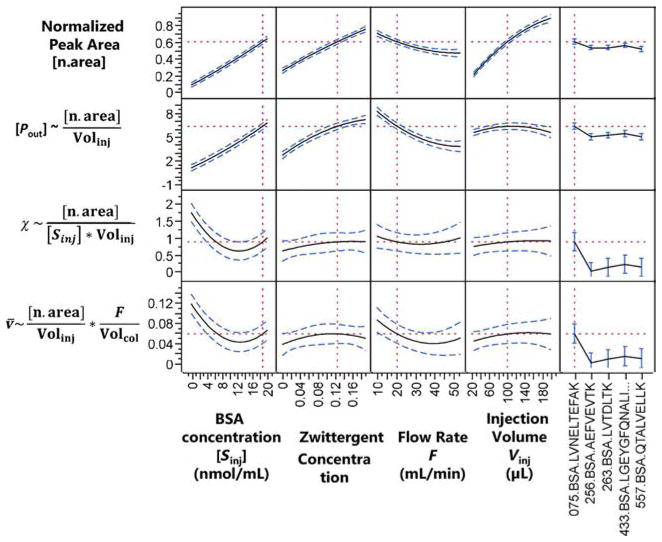
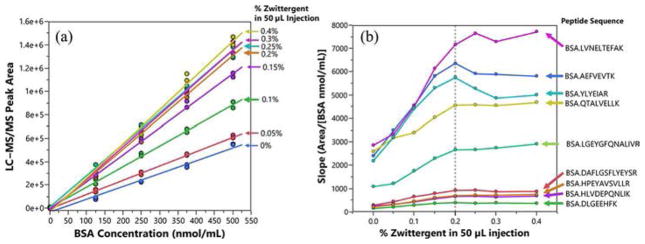
Description:Tandem mass spectrometry (MS/MS)-based proteomic workflows with a bottom-up approach require enzymatic digestion of proteins to peptide analytes, usually by trypsin. Online coupling of trypsin digestion of proteins, using an immobilized enzyme reactor (IMER), with liquid chromatography (LC) and MS/MS is becoming a frequently used approach. However, finding IMER digestion conditions that allow quantitative analysis of multiple proteins with wide range of endogenous concentration requires optimization of multiple interactive parameters: digestion buffer flow rate, injection volume, sample dilution, and surfactant type/ concentration. In this report, we present a design of experiment approach for the optimization of an integrated IMER-LC-MS/MS platform. With bovine serum albumin as a model protein, the digestion efficacy and digestion rate were monitored based on LC-MS/MS peak area count versus protein concentration regression. The optimal parameters were determined through multivariate surface response modeling and consideration of diffusion controlled immobilized enzyme kinetics. The results may provide guidance to other users for the development of quantitative IMER-LC-MS/MS methods for other proteins.
-
Subjects:
-
Source:Instrum Sci Technol. 46(1):102-114
-
Pubmed ID:37180980
-
Pubmed Central ID:PMC10174070
-
Document Type:
-
Funding:
-
Volume:46
-
Issue:1
-
Collection(s):
-
Main Document Checksum:urn:sha256:cb3382871cb77a050baaec381b0a6e09aff59c65bcaa759cab5ea728733bce48
-
Download URL:
-
File Type:
 [PDF
- 1.08 MB
]
[PDF
- 1.08 MB
]
Supporting Files


File Language:
English
 Was this page helpful?
 Found an issue?

CDC STACKS serves as an archival repository of CDC-published products including
scientific findings,
journal articles, guidelines, recommendations, or other public health information authored or
co-authored by CDC or funded partners.
As a repository, CDC STACKS retains documents in their original published format to ensure public access to scientific information.
As a repository, CDC STACKS retains documents in their original published format to ensure public access to scientific information.
You May Also Like
COLLECTION
CDC Public Access