



Provider Perspectives: Identification and Follow-up of Infants who Are Deaf or Hard of Hearing
Supporting Files

-
5 2024 ; 5-2024
-
Available in CDC Stacks on May 01, 2025, 12:00 AM

File Language:
English
Details
-
Alternative Title:Am J Perinatol
-
Personal Author:
-
Description:Objective
Without timely screening, diagnosis, and intervention, hearing loss can cause significant delays in a child’s speech, language, social, and emotional development. In 2019, Texas had nearly twice the average rate of loss to follow-up (LFU) or loss to documentation (LTD; i.e., missing documentation of services received) among infants who did not pass their newborn hearing screening compared to the United States overall (51.1 vs. 27.5%). We aimed to identify factors contributing to LFU/LTD among infants who do not pass their newborn hearing screening in Texas.
Study Design
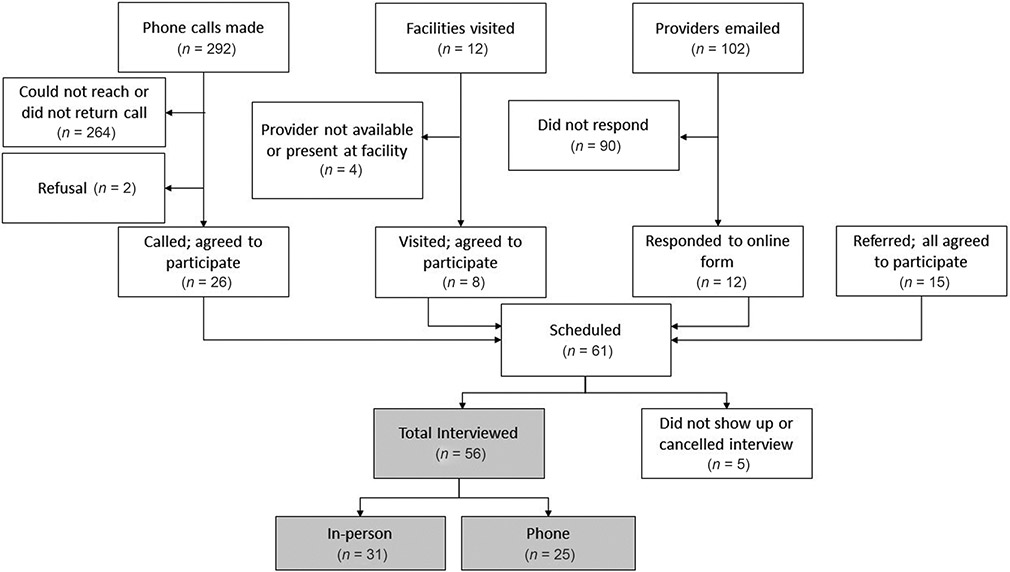
Data were collected through semistructured qualitative interviews with 56 providers along the hearing care continuum, including hospital newborn hearing screening program staff, audiologists, primary care physicians, and early intervention (EI) program staff located in three rural and urban public health regions in Texas. Following recording and transcription of the interviews, we used qualitative data analysis software to analyze themes using a conventional content analysis approach.
Results
Frequently cited barriers included problems with family access to care, difficulty contacting patients, problems with communication between providers and referrals, lack of knowledge among providers and parents, and problems using the online reporting system. Providers in rural areas more often mentioned problems with family access to care and contacting families compared to providers in urban areas.
Conclusion
These findings provide insight into strategies that public health professionals and health care providers can use to work together to help further increase the number of children identified early who may benefit from EI services. -
Subjects:
-
Keywords:
-
Source:Am J Perinatol. 41(Suppl 1):e694-e710
-
Pubmed ID:36037854
-
Pubmed Central ID:PMC10140186
-
Document Type:
-
Funding:
-
Volume:41
-
Download URL:
-
File Type:
 [PDF - 562.06 KB]
 -
Collection(s):
-
Main Document Checksum:urn:sha-512:08591bc3c7282de85ca183859fc8b97bd07192c7978f5ed7e39f68e8ca5f6adcaa15fd541cc6fd463797926923a9a2319377f22e161b5c6dc9dd237e698514be
Supporting Files


File Language:
English
 Was this page helpful?
 Found an issue?

CDC STACKS serves as an archival repository of CDC-published products including
scientific findings, journal articles, guidelines, recommendations, or other public health information authored or
co-authored by CDC or funded partners.
As a repository, CDC STACKS retains documents in their original published format to ensure public access to scientific information.
As a repository, CDC STACKS retains documents in their original published format to ensure public access to scientific information.
You May Also Like
COLLECTION
CDC Public Access