



Plasma trans-fatty acid concentrations continue to be associated with metabolic syndrome among US adults after reductions in trans-fatty acid intake
Supporting Files

-
7 2017 ; 7-2017
-
Available in CDC Stacks on 2023-04-10T00:00:00Z
File Language:
English
Details
-
Alternative Title:Nutr Res
-
Personal Author:
-
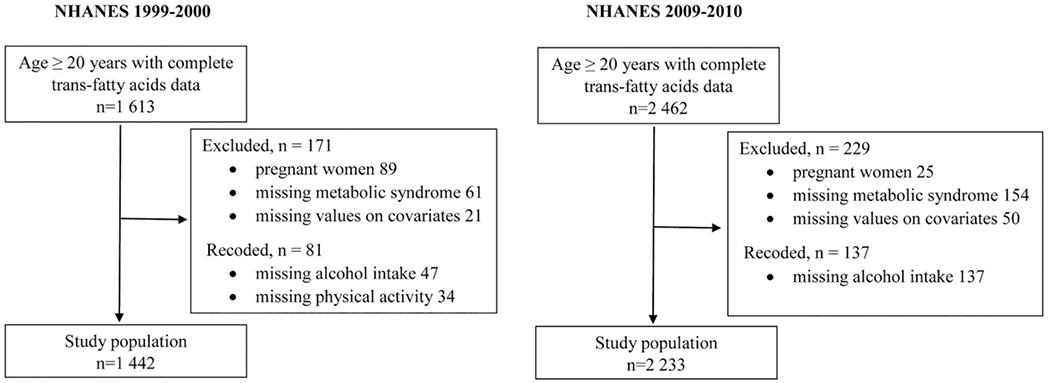
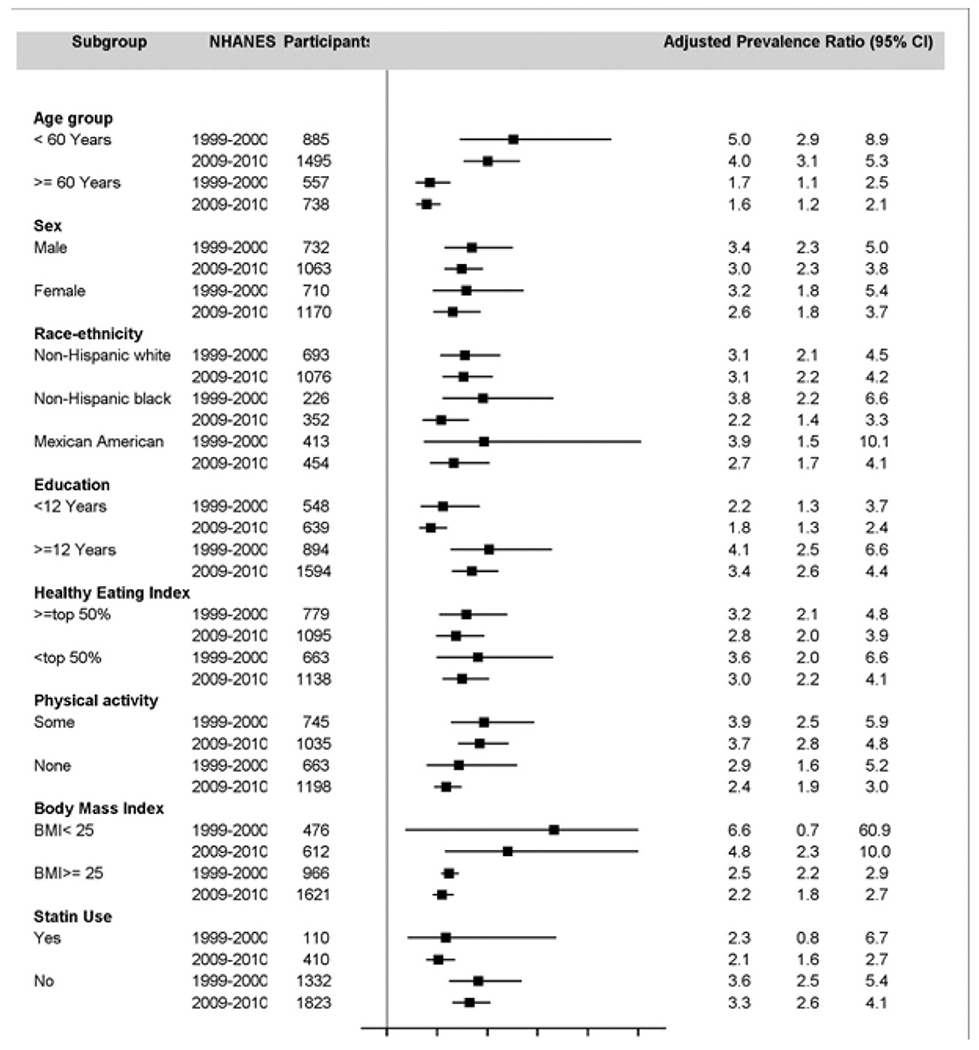
Description:No study examined and compared the association between intake of trans-fatty acids (TFAs) and risk of metabolic syndrome before and after significant reduction of TFA intakes in the US population. We hypothesized that the relationship might remain significant after substantial reduction of TFA intakes in the population. We used data on 1442 and 2233 adults aged ≥20 years from the National Health and Nutrition Examination Survey 1999-2000 and 2009-2010, respectively. Multivariable logistic regression analysis was used to assess the association between plasma TFA concentrations and metabolic syndrome, including each of its 5 components. The median plasma TFA concentrations were reduced from 79.8 μmol/L in 1999-2000 to 36.9 μmol/L in 2009-2010. The fully adjusted prevalence ratios comparing the highest vs the lowest quintile of plasma TFA concentrations in 1999-2000 were 3.43 (95% confidence interval, 2.39-4.92) for metabolic syndrome, 1.72 (1.38-2.14) for large waistline, 8.25 (6.34-10.74) for high triglycerides, 1.96 (1.46-2.62) for low high-density lipoprotein cholesterol, 1.14 (0.85-1.55) for high blood pressure, and 1.48 (1.19-1.85) for high fasting glucose, respectively. The corresponding prevalence ratios in 2009-2010 were 2.93 (2.41-3.54), 1.62 (1.39-1.89), 14.93 (9.28-24.02), 3.09 (2.18-4.37), 1.27 (1.11-1.46), and 1.24 (1.06-1.46), respectively. The pattern of association between TFAs and metabolic syndrome and its components did not differ by cycles. The observed associations were consistent across the subgroups examined. Despite a 54% decline in plasma TFA concentrations from 1999-2000 to 2009-2010, it was positively associated with risk of metabolic syndrome and its individual components except for blood pressure in 1999-2000. Our findings support Food and Drug Administration initiatives to remove TFAs from the industrially-produced foods.
-
Subjects:
- Article
- Trans-fatty acids
- Metabolic syndrome
- Prevalence ratio
- Epidemiology
- NHANES
- Adult
- Blood Glucose
- Body Mass Index
- Cholesterol, HDL
- Cholesterol, LDL
- Cross-Sectional Studies
- Dietary Fats
- Exercise
- Fasting
- Female
- Humans
- Male
- Metabolic Syndrome
- Middle Aged
- Nutrition Surveys
- Prevalence
- Trans Fatty Acids
- Triglycerides
-
Source:Nutr Res. 43:51-59
-
Pubmed ID:28739054
-
Pubmed Central ID:PMC10084882
-
Document Type:
-
Funding:
-
Volume:43
-
Download URL:
-
File Type:
 [PDF - 545.17 KB]
 -
Collection(s):
-
Main Document Checksum:urn:sha256:957ae3a93621900f4e934f3d3c60fa9c89f0735186a196aa5b667195e2aec401
Supporting Files


File Language:
English
 Was this page helpful?
 Found an issue?



CDC STACKS serves as an archival repository of CDC-published products including
scientific findings, journal articles, guidelines, recommendations, or other public health information authored or
co-authored by CDC or funded partners.
As a repository, CDC STACKS retains documents in their original published format to ensure public access to scientific information.
As a repository, CDC STACKS retains documents in their original published format to ensure public access to scientific information.
You May Also Like
COLLECTION
CDC Public Access